
The BBC is facing renewed embarrassment over what Israel calls "a fake Gaza documentary"—which the British broadcaster commissioned, funded, and then shelved—after the film won a prestigious BAFTA award and its filmmakers denounced the BBC from the awards stage.
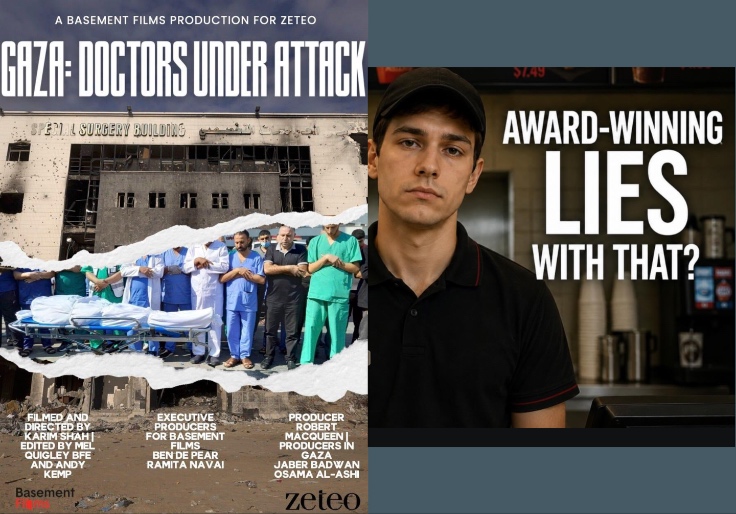
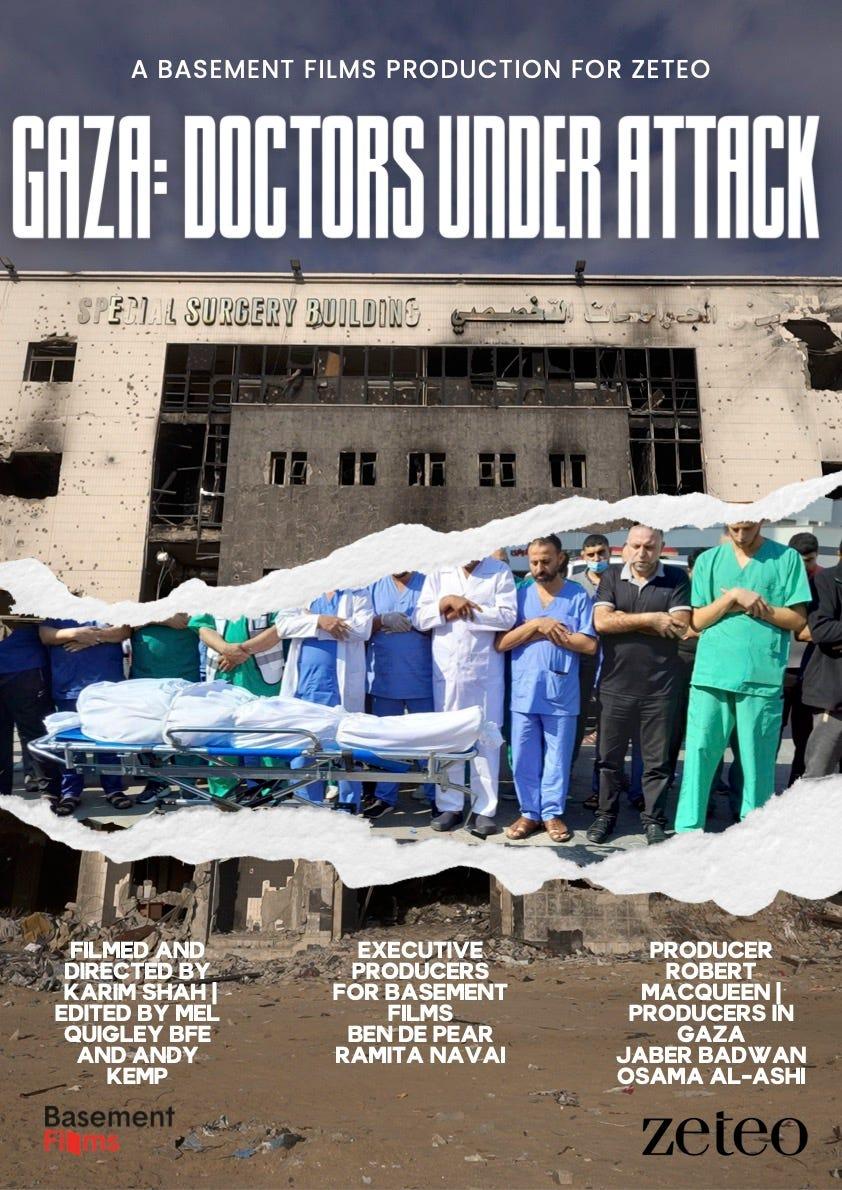
The BBC had decided last year not to air the documentary, Gaza: Doctors Under Attack, due to concerns about "impartiality." But instead of killing the project, as is customary at major news organizations, the BBC handed back the rights to the anti-Israel production company behind the film. The filmmakers then took the documentary to rival British network Channel 4, which aired it in the United Kingdom. The film was also licensed for international distribution by Zeteo, the far-left digital news operation founded by canceled MSNBC star Mehdi Hasan.
After the BAFTA win was announced, the State of Israel commented on its official Instagram page, "When a fake Gaza documentary is too biased to air on BBC but wins a BAFTA." The accompanying image shows a McDonald's worker asking, "Would you like lies with that?"
Doctors Under Attack purports to expose how Israel intentionally destroyed Gaza's hospitals and targeted medical personnel during its war against Hamas—what one of the producers called "medicide" while accepting the BAFTA. The film's detractors accused the documentarians of papering over Hamas's extensive and widely documented use of hospitals and medical facilities for its terror operations, including putting key tunnels and bunkers under the hospitals.

Kurt Schwartz, the CEO of the media watchdog group Committee for Accuracy in Middle East Reporting and Analysis (CAMERA), told the Washington Free Beacon that while the BBC would not permit Doctors Under Attack to air, it ensured the film still reached an international audience by giving it back to its filmmakers.
"It's a cynical 'win-win' for the BBC, which gets to fund and facilitate substandard journalism while simultaneously washing their hands of the editorial fallout," Schwartz said. "But it is a loss for serious inquiry and journalistic standards."
Gaza: Doctors Under Attack was commissioned in 2024 from Basement Films—a production company with a proven track record of anti-Israel work—by the BBC's prestigious newsmagazine Panorama. Production was paused last year after the state-funded broadcaster—under increasing fire from conservative lawmakers for liberal and anti-Israel bias—determined the film "would not meet the high standards that the public rightly expect of the BBC."
The BBC's June 2025 statement came a few weeks after Israel announced that one of Hamas's most senior military leaders, Mohammad Sinwar, the brother of Hamas chief Yahya Sinwar, had been killed in an Israeli airstrike while he was hiding in a Hamas tunnel complex underneath a hospital in the southern Gaza Strip. The IDF escorted foreign journalists to the tunnel, whose entrance was in front of the hospital, according to a report (perhaps ironically) by the BBC.
The controversy in London over anti-Israel bias in elite media parallels a similar debate simmering stateside. A New York Times photographer in Gaza who described Palestinian militants as "martyrs" and "resistance" fighters was awarded the Pulitzer Prize last week for his pictures depicting starving children. In both cases, critics have accused mainstream media outlets of laundering pro-Hamas propaganda—including specious "starvation" photographs—as fact-based news.
The BBC has long been dogged by accusations of antisemitism and biased reporting on Israel, with more than 200 Jewish staffers accusing the broadcaster in 2024 of "gaslighting" them over complaints of antisemitic discrimination. Britain’s powerful film community—which awards the BAFTAs—has also been accused of "institutional antisemitism."
Zeteo, which scooped up the international rights to Doctors Under Attack, in a Monday afternoon press release celebrated the film's BAFTA, saying it "is proud to have made history by supporting the film and holding power to account when the BBC was too scared to."
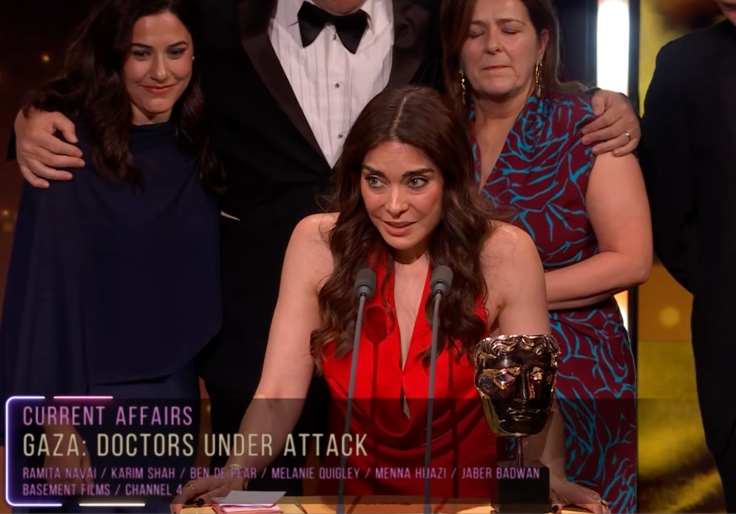
The film's creators, executive producer Ben de Pear and presenter Ramita Navai, struck a similar tone when they both bashed the BBC for ditching their documentary during their BAFTA acceptance speech—which was set to be broadcast later that evening on the BBC.
"These are the findings of our investigation that the BBC paid for but refused to show," Navai said in her acceptance speech. "But we refused to be silenced and censored, and we thank Channel 4 for showing this film." De Pear added, "Just a question to the BBC: Given that you dropped our film, will you drop us from the BAFTA screening later tonight?"
The BBC ultimately allowed the filmmakers' speeches to run, though in "a carefully edited version" that removed Navai's unfounded claim Israel killed 1,700 Palestinian doctors and imprisoned 400 others, according to the Telegraph. The filmmakers' acceptance speeches drew international headlines critical of the BBC for shelving the film, including headlines from the Qatari-funded Al Jazeera and the Iranian state-controlled Press TV.
A columnist for the Jewish Chronicle, the world's oldest Jewish newspaper, made the case that "Britain's media elites help fuel the jihadi propaganda campaign against Israel" by mainstreaming shoddy, agenda-driven journalism.
"The Gaza war might have ended in October last year, but the movement of Israelophobia that it spawned shows little sign of abating," columnist Jake Wallis Simons wrote. "So idiotic are these people that they throw all their abilities, experience and professional weight behind an effort to subvert the very society upon which they depend for their freedoms."
Doctors Under Attack is the second BBC-commissioned documentary to land the network in hot water. An earlier film, Gaza: How to Survive a Warzone, which sought to portray the horrors of war from the perspective of Gazan children, received hundreds of complaints from viewers last year and spurred a BBC investigation after it was revealed that the documentary's narrator, Abdullah Al-Yazouri, then 13, is the son of a senior Hamas government official. The film was ultimately pulled from rotation on the BBC after its initial premiere.
The controversy over bias in How to Survive a Warzone—combined with the embarrassing revelation that a Panorama documentary on Donald Trump had deceptively edited his words to make him look culpable for the Jan. 6, 2021, storming of the Capitol—led to the resignation of two of the BBC's most senior executives late last year.
Doctors Under Attack, meanwhile, drew a wave of scrutiny well before winning its BAFTA.
CAMERA, the media watchdog group, noted in a July 2025 analysis that while Doctors Under Attack purports to conduct a "forensic examination" of Israel's alleged crimes, "Hamas is erased" from the equation, pinning blame solely on the Jewish state.
"Their actions and decisions are not part of the film's investigation," CAMERA wrote. "Their documented human shield policy is similarly erased. In short, Hamas, Palestinian Islamic Jihad, and other terror groups in Gaza are treated as ghosts—as if, since Oct. 7th, they've played no role in the fate of the territory. Their role in the 'destruction of Gaza's healthcare system,' as a result of their use of such facilities for military purposes, is ignored—as is their cynical choice over 21 months not to surrender, despite the fact that surrendering would have spared Palestinian civilians, including healthcare workers, so much suffering."
Schwartz, the group's CEO, said the BBC "learned precisely nothing" from its previous reporting controversies.
"After How to Survive a Warzone was rightfully pulled for its undisclosed links to Hamas, the BBC ensured another documentary that fell short of its standards would still be aired," he said. "This time, instead of shelving the documentary, the BBC simply gave the rights back to the production company, allowing the propaganda to spread while insulating its own reputation."