




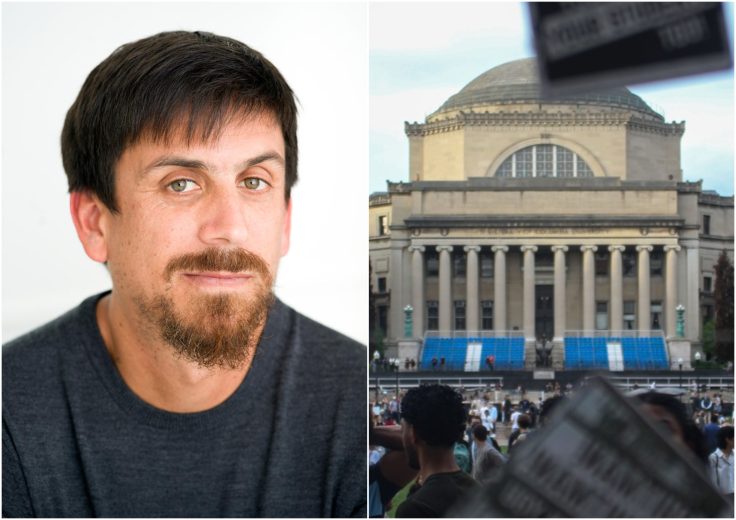
A finalist to become Columbia University’s Edward Said chair in Arab Studies was put on probation at Princeton University for holding class inside an anti-Israel encampment.
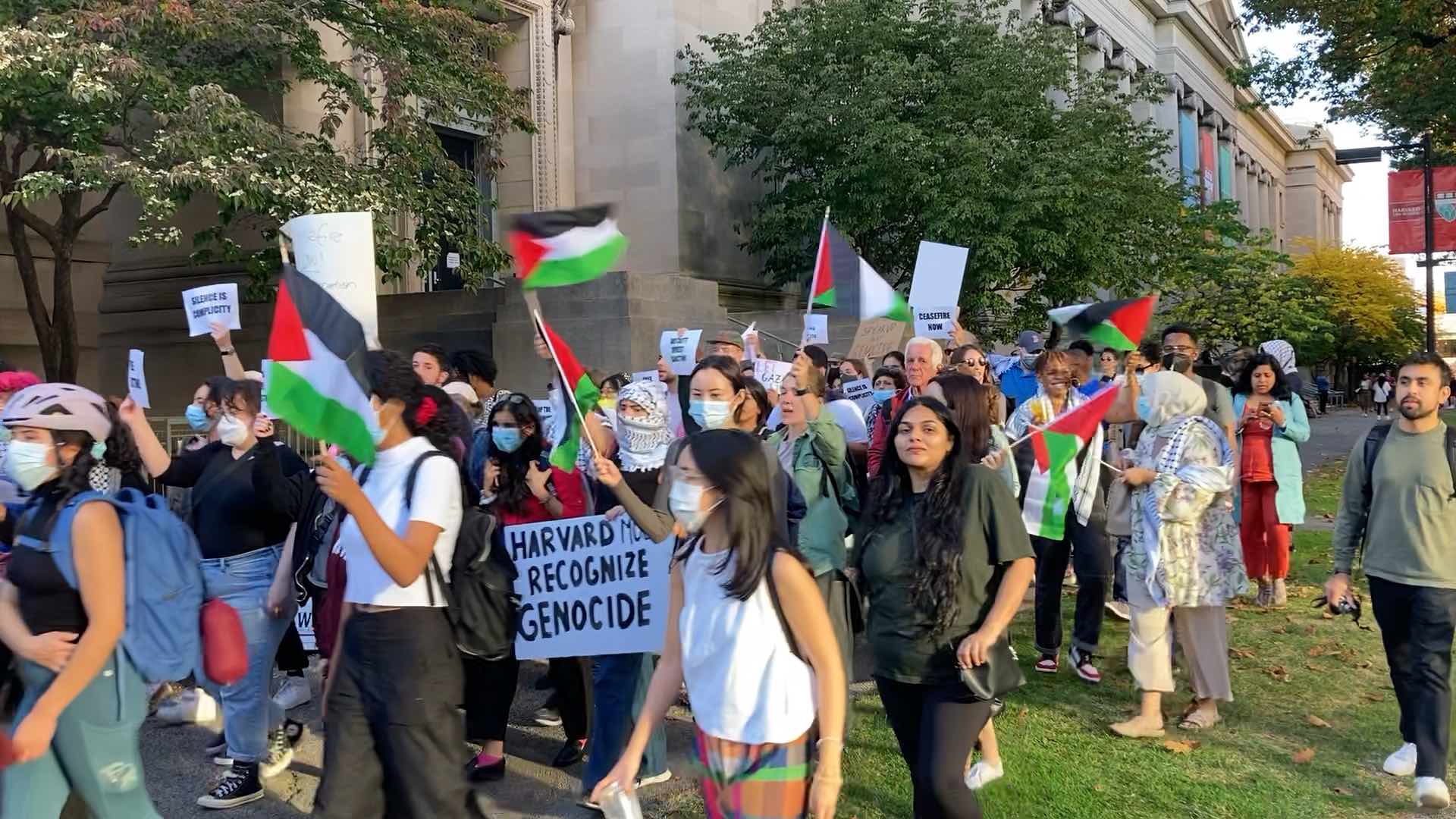
Max Weiss, a professor of history and an outspoken advocate of an academic boycott of Israel, led a walkout of his History of Palestine/Israel class in April 2024 into McCosh Courtyard, where an anti-Israel encampment was established earlier that day. He taught his lesson from there, making him the first faculty member to lecture from the encampment, the Princeton Alumni Weekly reported. Weiss told the publication he hopes the illegal encampment will one day be commemorated with "a plaque."
Princeton placed Weiss on probation through the 2024-2025 school year for the move, which dean of the faculty Gene Jarrett described as "unprofessional," "coercive," and "intimidatory" in a notice to Weiss, according to the PAW. Weiss's career advanced anyway—Princeton granted Weiss tenure around the same time he was notified that he had been placed on probation.
Weiss has been at the center of anti-Israel campus activism. When 13 students and 2 faculty members stormed and occupied Princeton’s Clio Hall in April 2024 "in solidarity with the Palestinian people of Gaza," Weiss served as their spokesman. He was filmed standing on the steps of the building, bullhorn in hand, leading a call and response with assembled activists cheering on the occupiers.
"We will stay here until the student demands are met," he proclaimed. The professors inside the building left voluntarily and the 13 students were arrested.
Weiss is one of four finalists for the Columbia job, according to a Jan. 22 notice to graduate students and faculty members in Columbia's Department of History, the Washington Free Beacon reported. He was scheduled to give a presentation on Jan. 28 as part of the selection process, according to the notice, which came seven months after Columbia reached an agreement with the Trump administration to restore the federal grant funding that had been put on pause in large part due to the school's response to its own encampment.
Weiss joined Princeton in 2010 and led an initiative in 2014 inviting tenured faculty at Princeton to sign a petition calling on the university to "divest from all companies that contribute to or profit from Israeli occupation of the West Bank."
Last month, Weiss published a lengthy defense of Hussam Abu Safiya, a Gazan doctor who doubled as a Hamas colonel. He has also defended anti-Semitic vandalism. On Yom Kippur last year, Princeton reminded students that anti-Semitic graffiti, stickers, and other messages found on and around campus—including, in at least one case, a swastika—were illegal. Weiss penned a blog post in response calling the university’s announcement "an instructive case of anti-antisemitism being weaponized in the service of what I call anti-anti-Zionism."
"In other words, it might be ‘antisemitism’—both explicit and implicit—that is the ostensible target of this alert, but ‘content’ labeled ‘anti-Zionist’ or ‘anti-Israel’ are the real culprits being policed, targeted for condemnation and, increasingly, for criminalization," Weiss wrote. His post also noted that he’s writing a book on "the intellectual history of anti-anti-Zionism."
Weiss has already authored two books. In his first, In the Shadow of Sectarianism: Law, Shiʿism, and the Making of Modern Lebanon, Weiss argues that France’s rule over Lebanon manufactured sectarian conflict within the Middle Eastern nation. His second, Revolutions Aesthetic: A Cultural History of Ba’thist Syria, covers Hafez al-Assad’s rise to power in 1970 through his son Bashar al-Assad’s reign and the Syrian civil war.
Weiss was one of the founding members of Princeton’s Faculty for Justice in Palestine chapter. He was the first to sign a November 2023 letter that announced its formation and declared "solidarity and absolute political support for the cause of Palestinian liberation."
In addition to Weiss, two other candidates under consideration for the Said chair—Harvard University professor Rosie Bsheer and University of California, Santa Barbara history professor Sherene Seikaly—have engaged in activism against the Jewish state.
Bsheer was removed as associate director of Harvard's Center for Middle Eastern Studies after bringing in a raft of anti-Israel guest speakers and panelists and few, if any, dissenting voices. The Harvard Jewish Alumni Alliance accused the center of perpetuating the false narrative that Israel "is the last remaining colonial settler power embodying the world's worst evils: racism, apartheid, and genocide." The Trump administration said the center was fueling "antisemitic harassment." Harvard's own anti-Semitism report dinged the center for hosting speakers who "appeared to justify Hamas' actions" on Oct. 7.
Seikaly offered support for Hamas during its 2021 conflict with Israel, writing, "The #Nakba is ongoing. Our struggle is ongoing. We will remain. We will return." Months later, she lamented that four of six Palestinian terrorists who escaped an Israeli prison were recaptured, saying she was "heartbroken" and "in awe" of their bravery.
A Columbia spokesman said that "no offers of employment have been extended, and the views of individual candidates do not represent the university."
Weiss did not respond to a request for comment.