
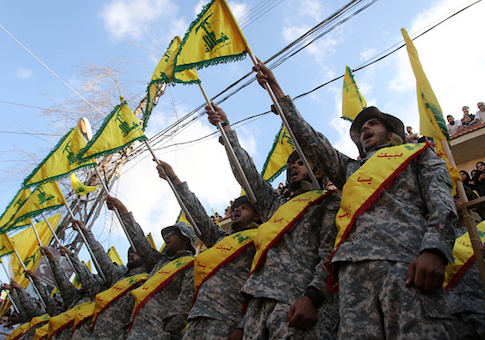
Hezbollah terrorists are flocking to Venezuela as the terror group—and Iran's most important proxy—increasingly turns to drug trafficking as a way to raise revenue in the aftermath of Israel's successful campaigns against the Islamic Republic and its "Axis of Resistance," sources familiar with Hezbollah's operations told the Washington Free Beacon.
As former assistant secretary for terrorist financing at the Treasury Department Marshall Billingslea told a Senate Caucus on International Narcotics Control hearing in October, more than 400 Hezbollah field commanders received direction "to evacuate to Latin America, and Venezuela is specifically identified." These commanders joined nearly 11,000 other Hezbollah-tied operatives who landed in Venezuela between 2010 and 2019.
While the Iran-backed terror group has long taken advantage of the Venezuelan regime's hospitality, the increased focus on drug trafficking suggests that it is scrambling to find sources of funding outside the Islamic Republic. Iran has provided upwards of $700 million to Hezbollah each year—or about 70 percent of the terror group's annual budget—but is no longer contributing enough to keep its proxy afloat, the sources familiar with Hezbollah's presence in Latin America said.
Because of the 12-day war, the Trump administration's sanctions snapback, and energy and water crises that have persisted in Iran for months, the Islamic Republic "is reportedly unable to foot the bill for Hezbollah's reconstruction efforts as it did after Hezbollah's 2006 war with Israel," according to Matthew Leavitt, a former Treasury Department terrorism finance analyst who now serves as a senior fellow at the Washington Institute for Near East Policy. Hezbollah has, in turn, leaned on the drug trade.
The terror group's main trade is in "black cocaine," which is formed into charcoal-colored bricks to avoid detection by authorities. The proceeds from these drug sales fund Hezbollah's global terror operation, while the Venezuelan regime takes a cut, helping it stay afloat. A Drug Enforcement Administration estimate from 2016 states that Hezbollah moves as much as $400 million worth of cocaine through criminal networks in Latin America each year. That number is almost certainly higher in the aftermath of Israel's campaigns, as a Foundation for the Defense of Democracies report notes.
Hezbollah's increased emergence in the drug trade comes as the United States ramps up its counter-trafficking measures in the region. The Trump administration began striking drug-smuggling boats this fall as part of its "non-international armed conflict" with cartels, which the State Department designated as "foreign terrorist organizations" earlier this year.
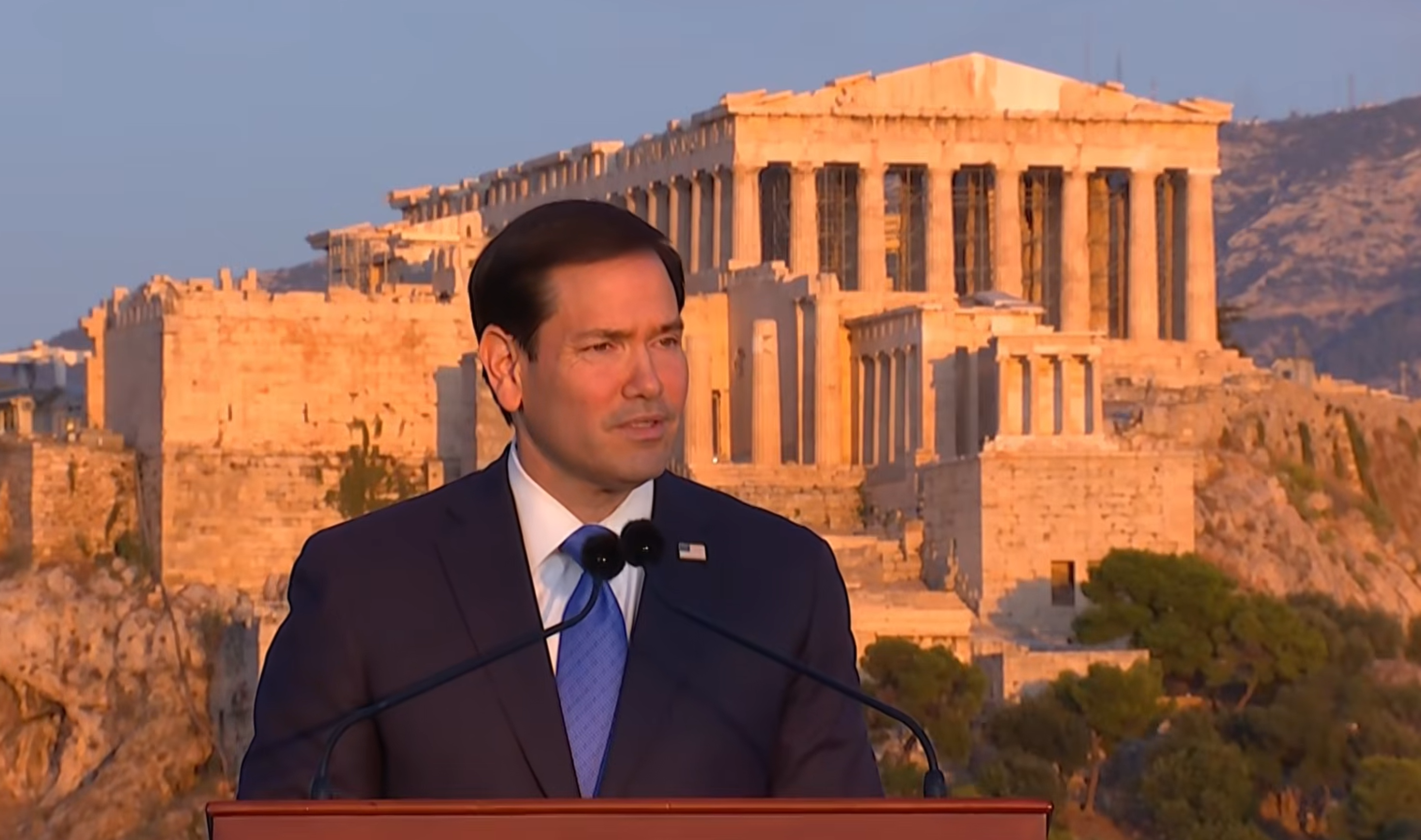
Both current and former U.S. officials have indicated that they are aware of Hezbollah's increased operations in Venezuela. Secretary of State Marco Rubio suggested as much earlier this month, when he said that Venezuela serves as the Islamic Republic's hub in the Western Hemisphere.
"Iran, its IRGC, and even Hezbollah has a presence in South America, and one of their anchor presences—especially for the Iranians—is inside of Venezuela," Rubio said. "Where they have planted their flag in our hemisphere is on Venezuelan territory, with the full and open cooperation of that regime."
Former United States attorney general Bill Barr also raised Hezbollah's role in the drug trade in a Friday podcast interview.
"Venezuela is a strategic adversary and a danger to the United States," Barr said. "They are a base for Hezbollah, they support Hezbollah, they're in all kinds of deals—money laundering and other deals—to help Hezbollah to facilitate their drug trafficking into the United States." He went on to describe Venezuela as Hezbollah's "anchor in our hemisphere."
As U.S. leaders discuss Hezbollah's involvement in Venezuelan drug trafficking, Iranian supreme leader Ali Khamenei has begun weighing in on the Trump administration's recent pressure campaign against Venezuelan president Nicolas Maduro. The Iranian leader used a speech at a religious ceremony last week to condemn President Donald Trump's seizure of an oil tanker in the Caribbean.
"Sometimes it is about expanding territory," Khamenei said about "what the Americans are doing with some Latin American countries. Western designs can also aim at extracting commodities. They apply pressure so they can take a country's underground resources—its oil, for example."
But, as American Enterprise Institute senior fellow Michael Rubin told the Free Beacon, the partnership between Venezuela and Iran—and its proxies—is ideological in addition to financial.
"Ayatolla [Ruhollah] Khomeini's 1979 Islamic Revolution in Iran was as much of a leftist revolution as an Islamist one," Rubin said. "Indeed, his whole coalition was predicated on merging those two trends. Fast forward 46 years and the Venn diagram of anti-Americanism shows major overlap when mapping out militant Shiite groups like Hezbollah and socialist states like Venezuela."
A reported December 9 phone call between Maduro and Iranian president Masoud Pezeshkian supports that idea.
"Venezuela is a true friend and ally of the Islamic Republic," Iranian media outlets quote Pezeshkian as saying. "Iran supports this country under any circumstances."