



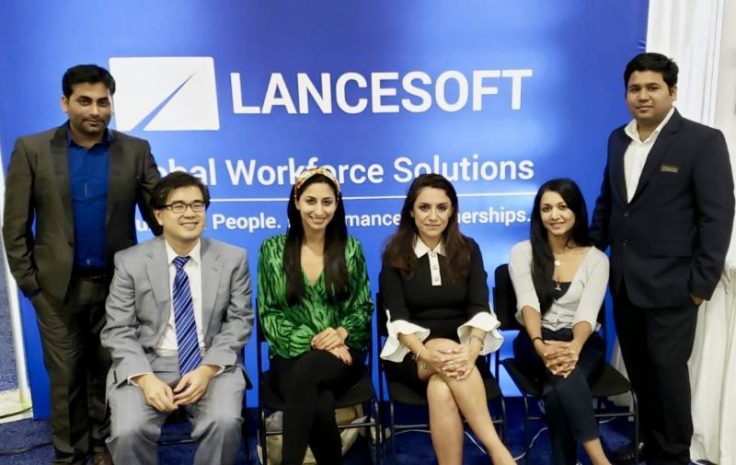
The job post for LanceSoft, an IT staffing firm committed to "diversity, equality, and inclusivity," began innocently enough.
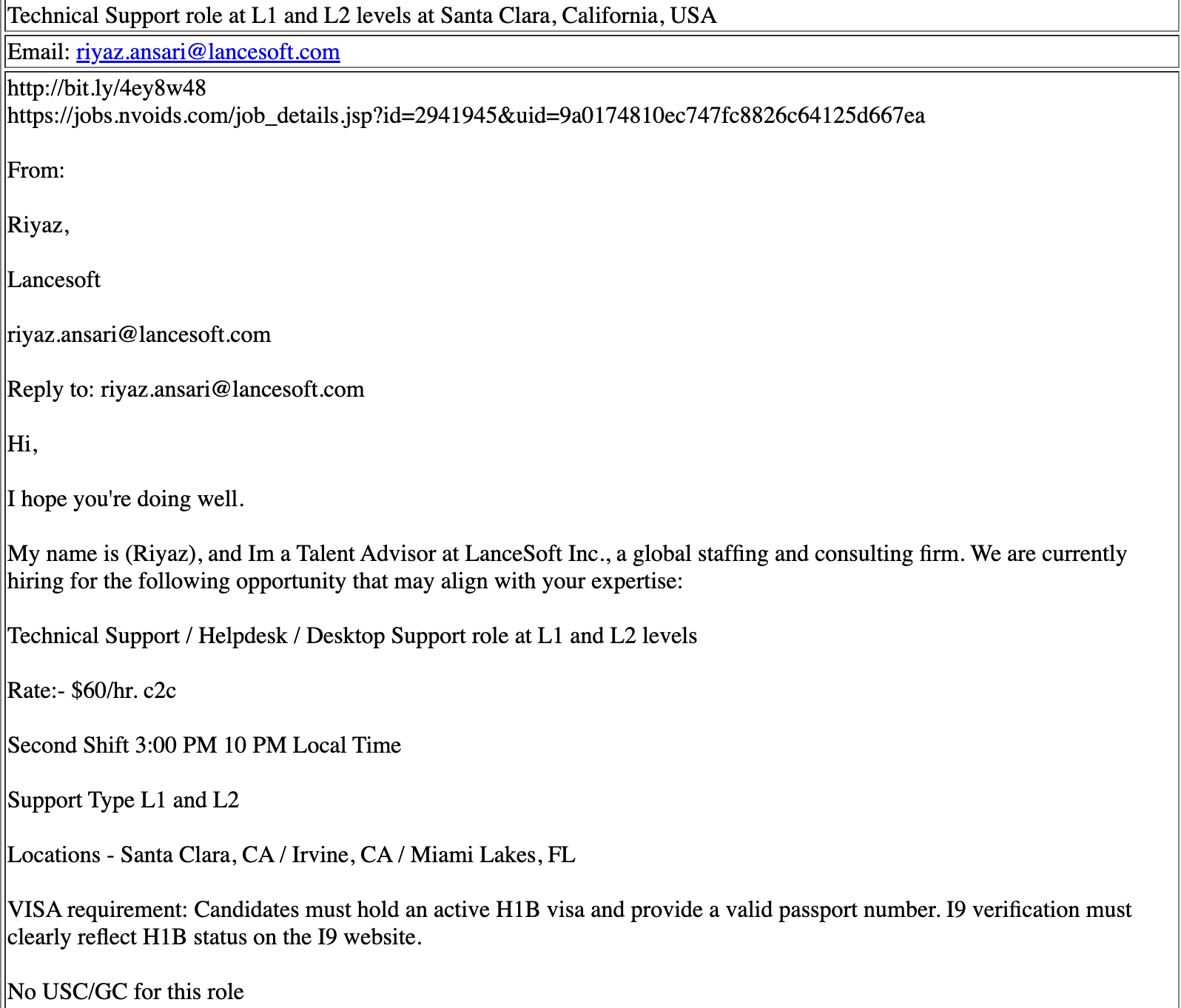
The $60-per-hour role would be based in Santa Clara, Calif., focus on "technical support," and entail a 3–10 p.m. shift. Posted on Nvoids, an IT jobs aggregator, the ad described LanceSoft as an equal opportunity employer and said that the firm, one of the largest staffing agencies in the country, strives "to be as diverse as the clients and employees we partner with."
"We embrace people of any race, ethnicity, national origin, religion, gender identity, and sexual orientation," the Nov. 25 post read.
This particular job, however, would not be open to a very large group of people: citizens of the United States.
In a section titled "Visa requirement," LanceSoft recruiter Riyaz Ansari wrote that "candidates must hold an active H1B visa"—and stated explicitly that American citizens need not apply.
"No USC/GC for this role," Ansari wrote, using the acronyms for U.S. citizens and green card holders. He added that "LanceSoft is a certified Minority Business Enterprise"—a status the firm has used to secure public contracts—and touted the company's "diversified team environment."
Federal law bars employers from discriminating based on citizenship status. But in the industries most reliant on the H-1B program, which provides visas to more than 700,000 immigrants, advertisements like LanceSoft's litter online recruiting boards.
The Washington Free Beacon identified over two dozen job postings since 2024 that appear to bar applications from U.S. citizens. The posts were made on a variety of platforms, including Glassdoor and LinkedIn, and typically indicate a preference for H-1B visas, though some allow for other visa types as well. Several of the firms are minority-owned businesses, meaning they receive preferential access to government contracts even as they exclude U.S. workers.
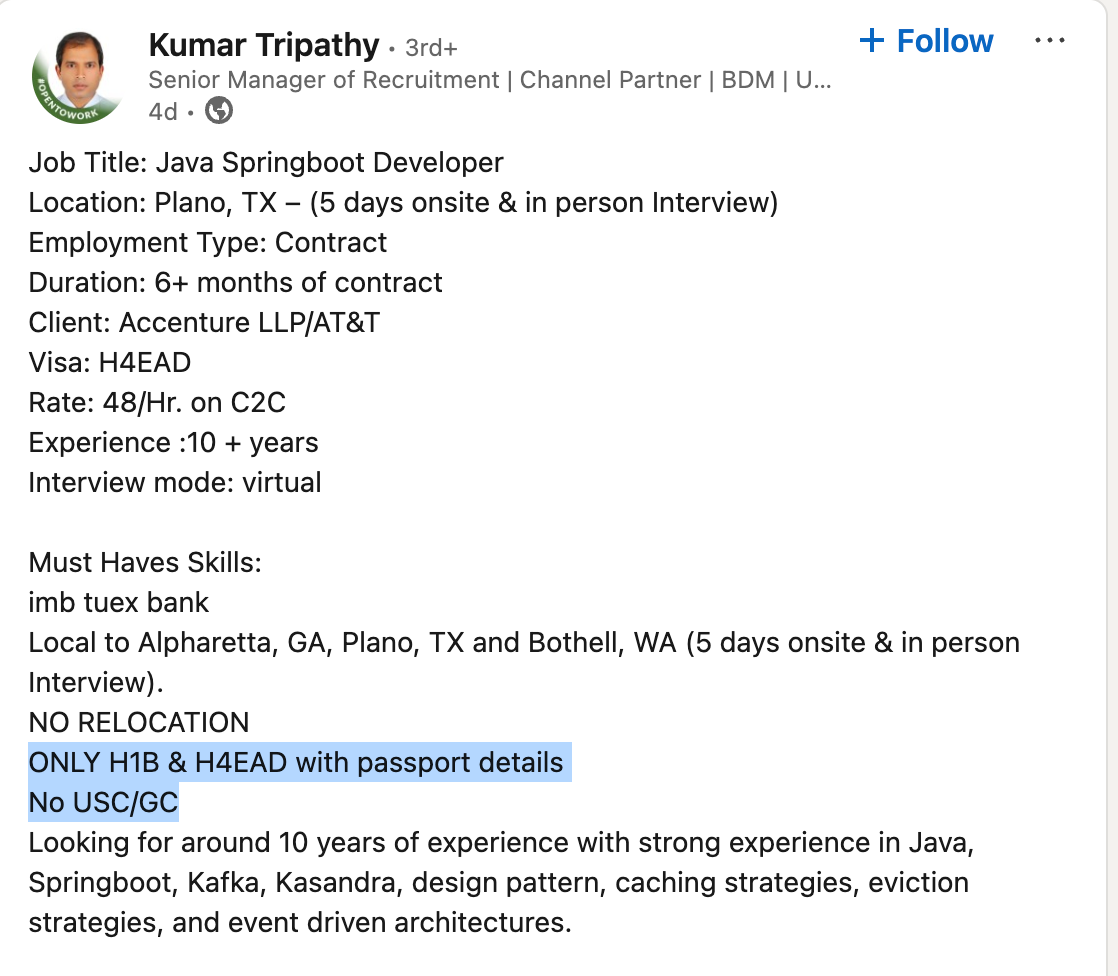
The posts illustrate what Trump administration officials say is a common form of hiring discrimination that has long been underpoliced. They come as conservatives are debating the merits of the H-1B visa program, which some argue has been abused by employers to hire foreign workers—especially Indian outsourcers—at the expense of American ones.
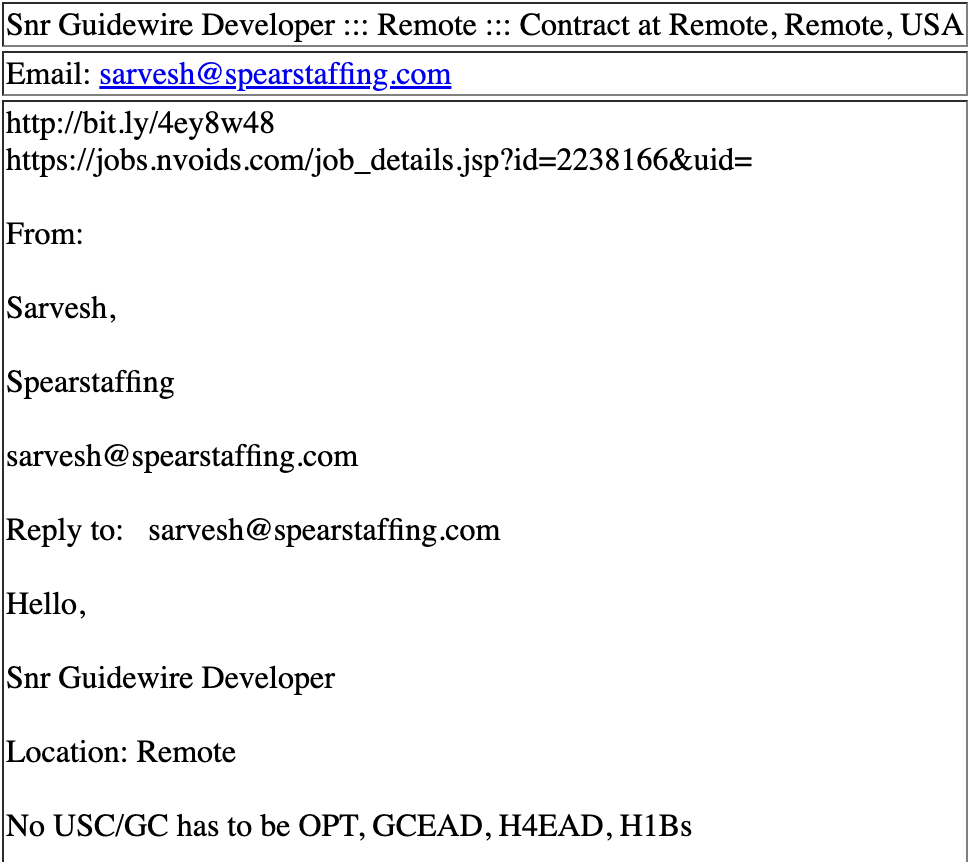
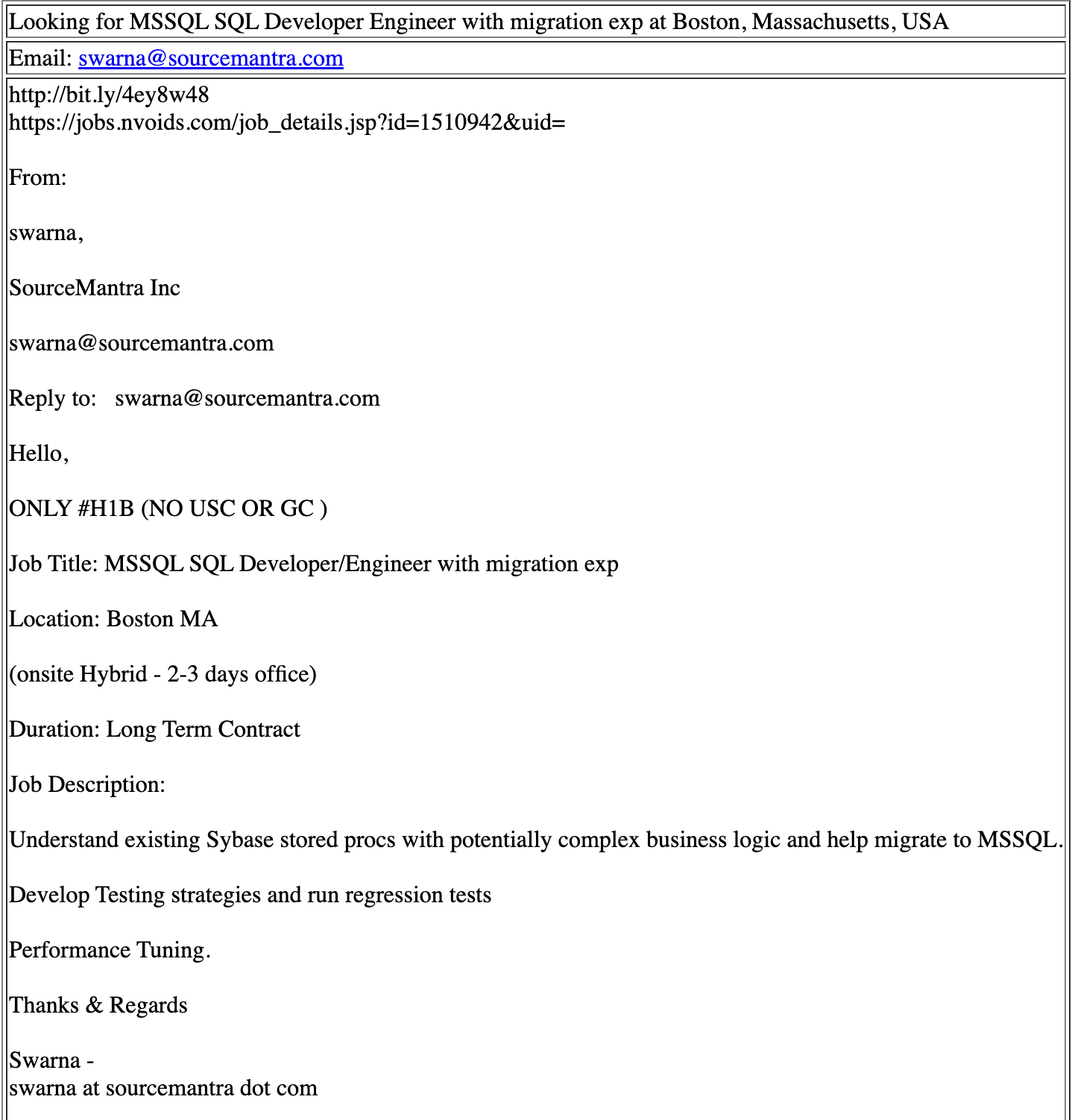
"A shocking number of covered entities, especially recruiters, continue to express explicit preferences for visa guest workers," said Andrea Lucas, the chair of the Equal Employment Opportunity Commission (EEOC). "In the shadows of under-enforcement, this type of discrimination has festered."
LanceSoft removed its post from Nvoids within 24 hours of being contacted by the Free Beacon. Ansari, the LanceSoft recruiter, did not respond to a request for comment.
In theory, the H-1B program lets employers hire high-skilled immigrants when they cannot find qualified U.S. workers. Congress created the program in 1990 to offset predicted labor shortages in tech and medicine—the assumption being that there would not be enough Americans to fill those roles.
But more than three decades later, businesses are hiring H-1B candidates without ever searching for U.S. workers. Critics say the program has become a spigot for cheap foreign labor that allows companies to pay below-market wages while minimizing turnover, since the employer-sponsored visa ties migrants to their jobs. That creates an incentive to hire H-1Bs even when there is no shortage of domestic labor.
Now, some companies are responding to that incentive by restricting certain roles to foreign nationals. And though the Justice Department has fined dozens of employers for discriminating against U.S. citizens—including under the Biden administration—many firms are still posting ads that explicitly exclude Americans.
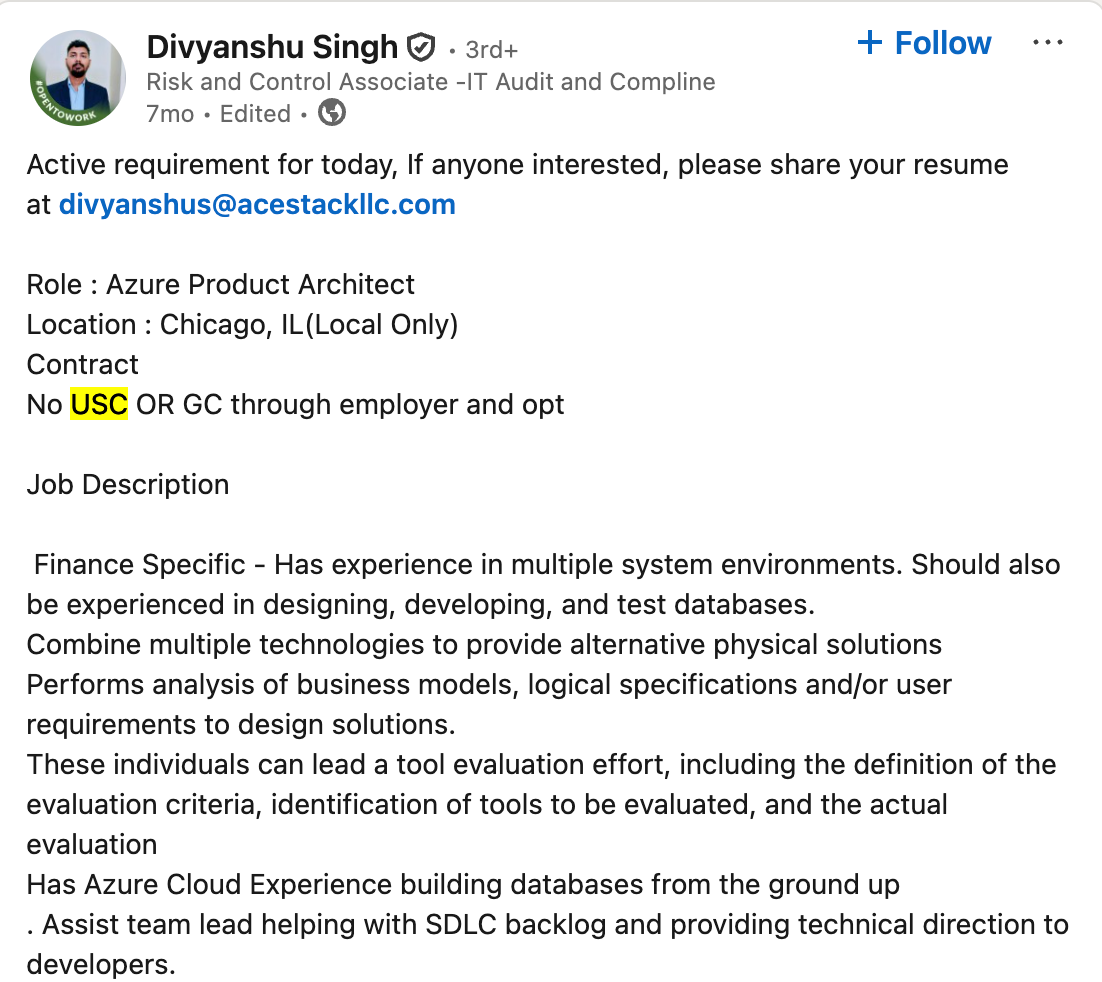
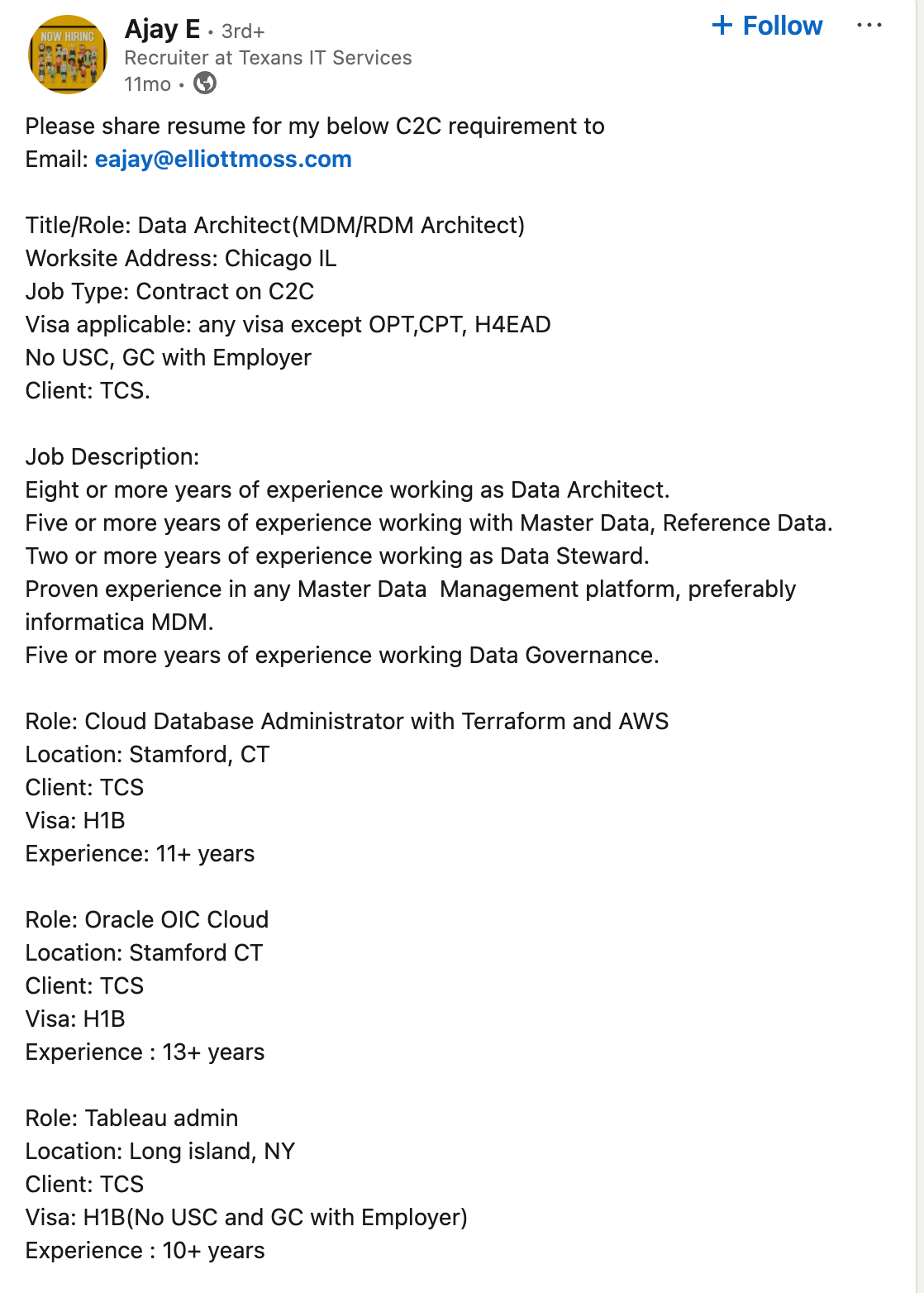
One recruiter posted on LinkedIn that an IT job in Chicago was open to almost "any visa" but "no USC," meaning U.S. citizens.
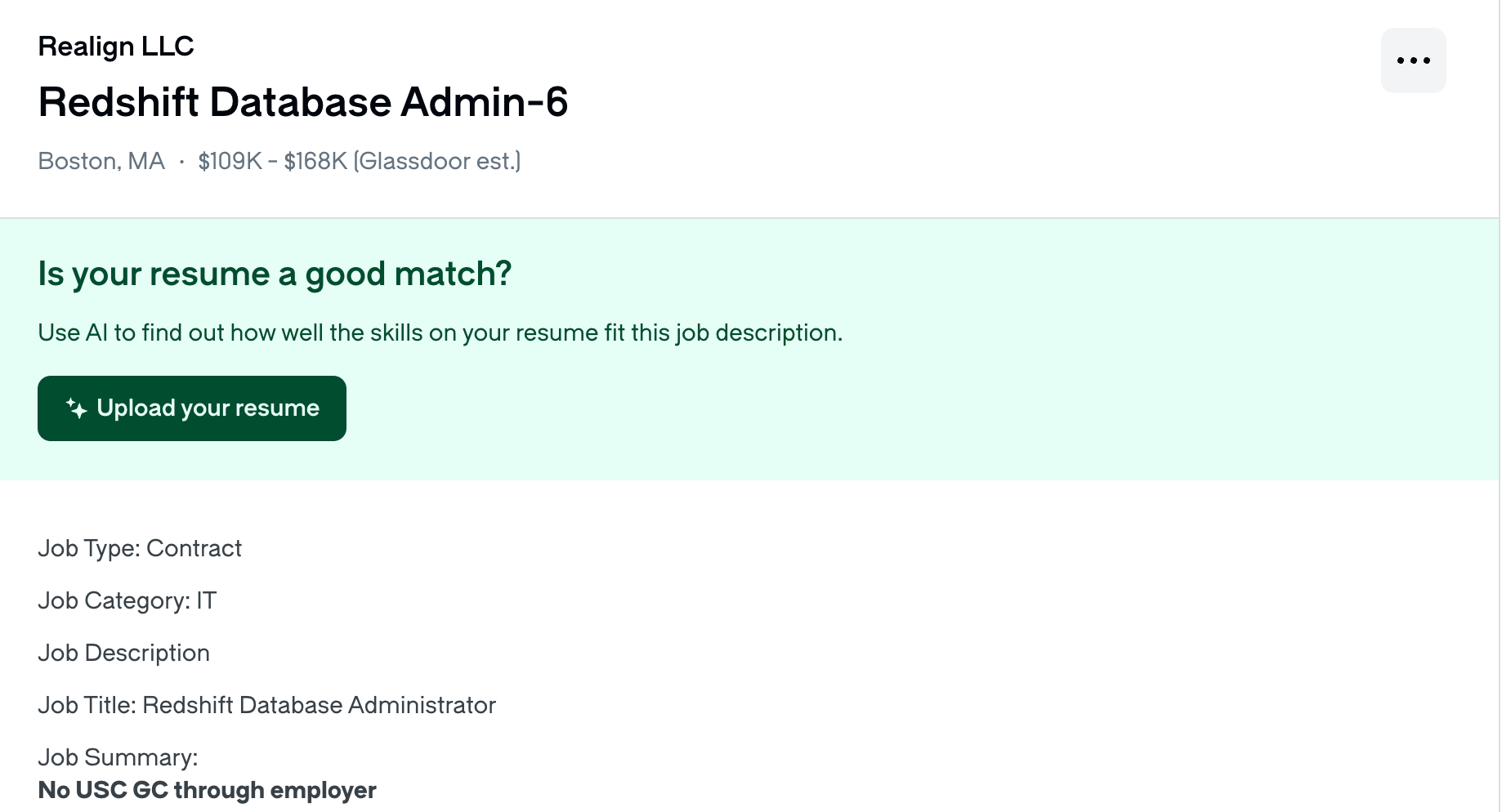
The software company Realign posted on Glassdoor that it would not accept "USC" for a six-figure role.
Kasmo, a Texas-based IT firm, didn't even bother with the acronym, writing on Glassdoor that "NO US Citizen" was eligible for a job training program.
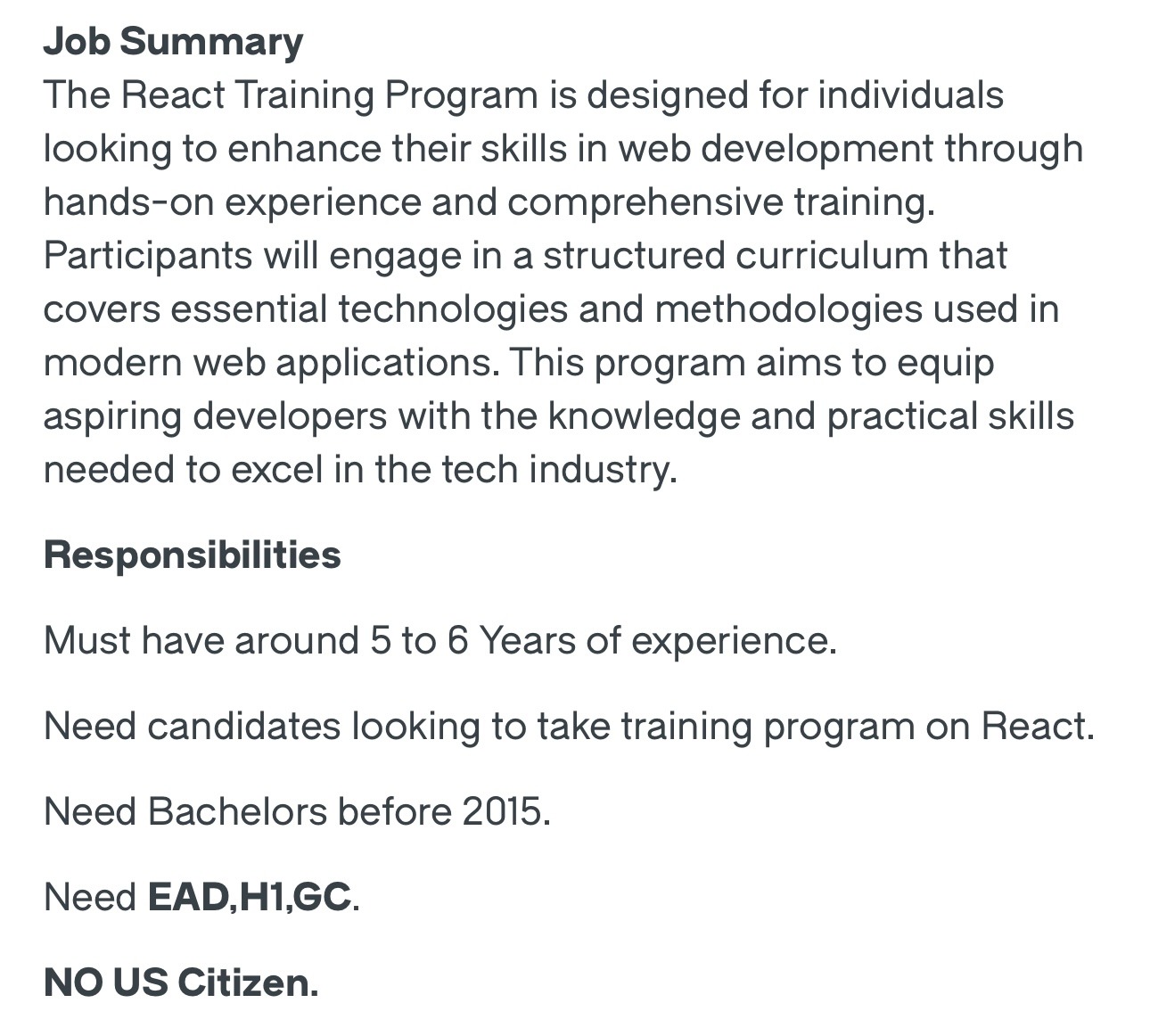
"Need … H1,GC," the posting said. Kasmo—whose top ranks appear to be composed entirely of Indian nationals—states on its website that "diversity is our strength." The firm did not respond to a request for comment.
Though Lucas could not comment on specific posts, the ads appear to violate the legal guidance of the EEOC, which warned last month that "discriminatory job ads" violate Title VII of the Civil Rights Act.
"Evidence of discriminatory job ads," the agency wrote in a fact sheet, "can include ads that say the employer prefers or requires applicants from a particular country or with a particular visa status (for example, 'H-1B preferred' or 'H-1B only')."
Dan Morenoff, the executive director of the American Civil Rights Project, said the ads on LinkedIn and Glassdoor clearly ran afoul of that guidance.
"If you were trying to write a hypothetical, paradigmatic example of the kind of national-origin discrimination the EEOC has warned against, you'd write Kasmo's posting," Morenoff told the Free Beacon. "It's jaw-dropping that it and dozens of other employers have chosen to advertise that they're doing precisely what their regulator has warned will result in liability."
Many of these companies are run by Indian nationals, who made up 70 percent of H-1B visa-holders in 2024. Those demographics have allowed some of the firms discriminating against Americans to claim Minority Business Enterprise (MBE) status, a certification that can give them a leg up when bidding for contracts in the United States.
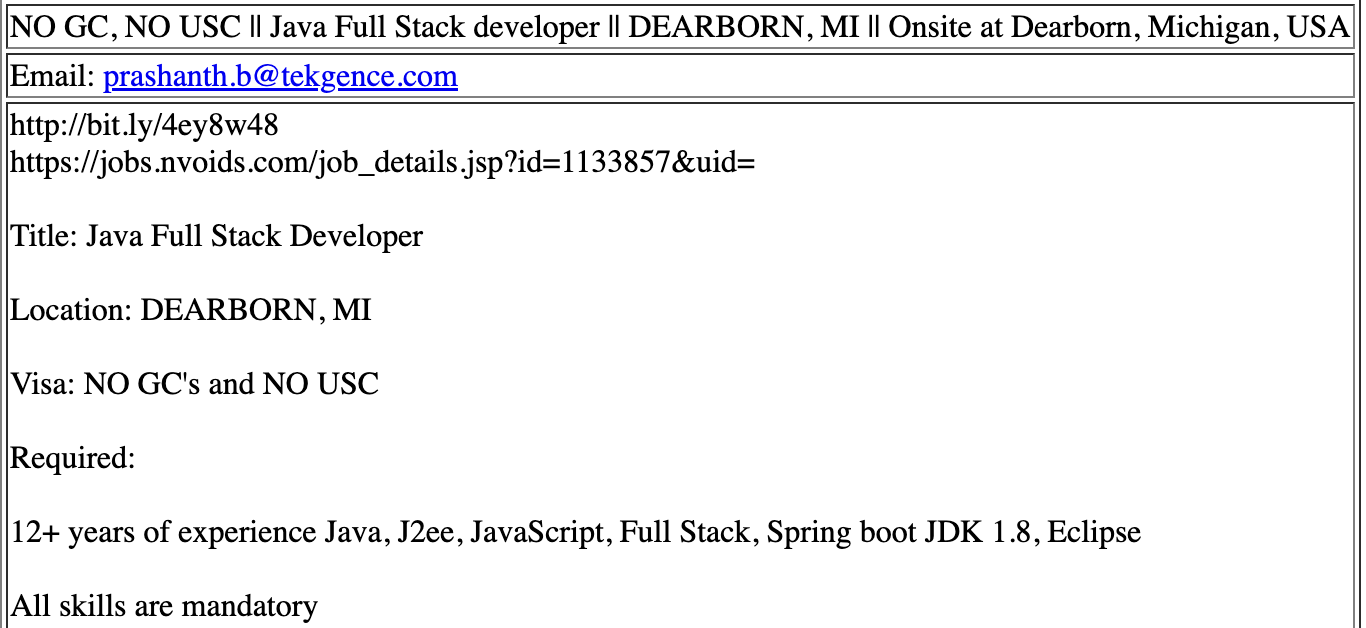
One MBE, Empower Professionals, has posted multiple advertisements since 2024 that appear to explicitly exclude American citizens. Another, Tekgence, posted an ad for a Java developer that said "No USC."
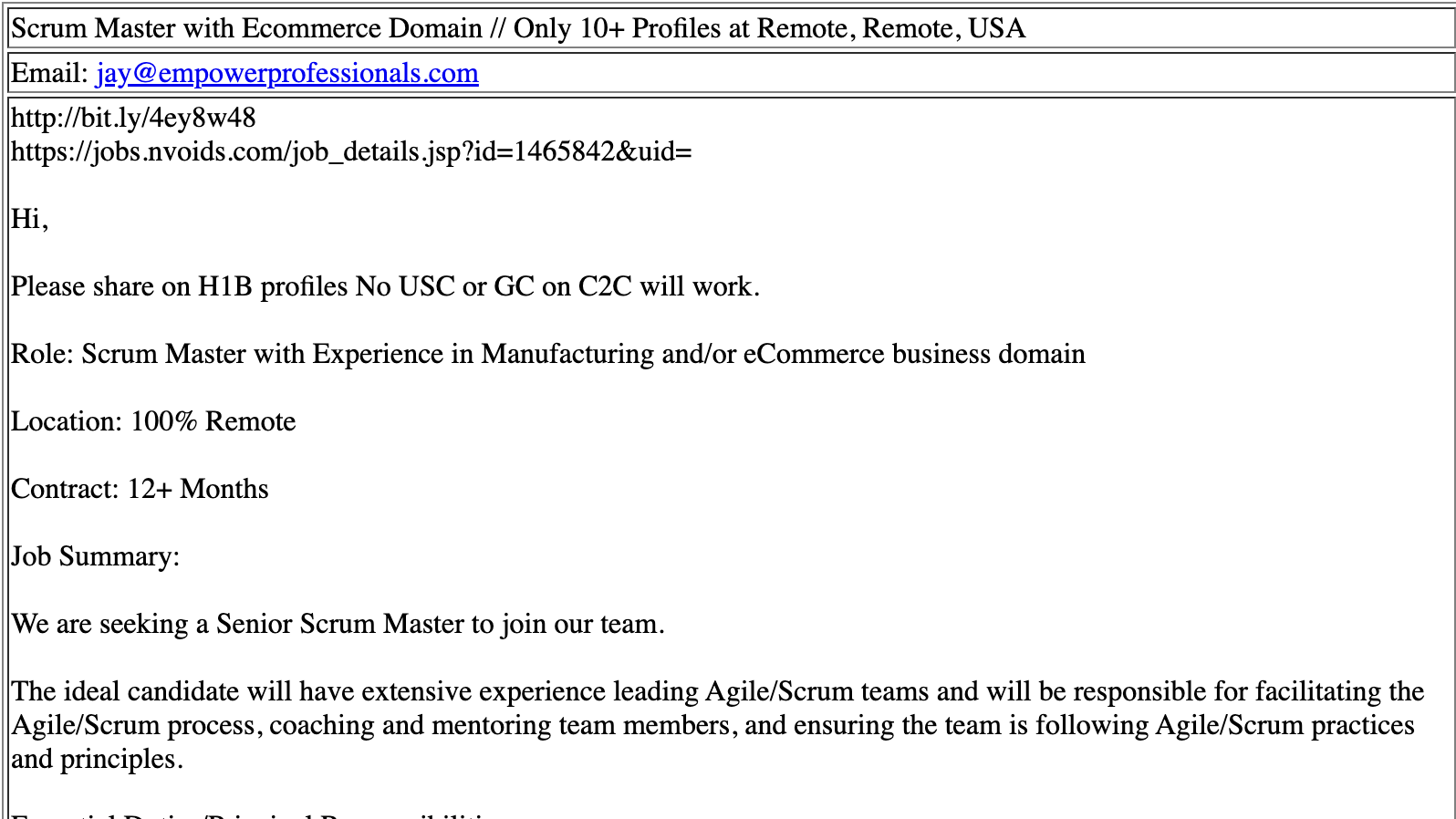
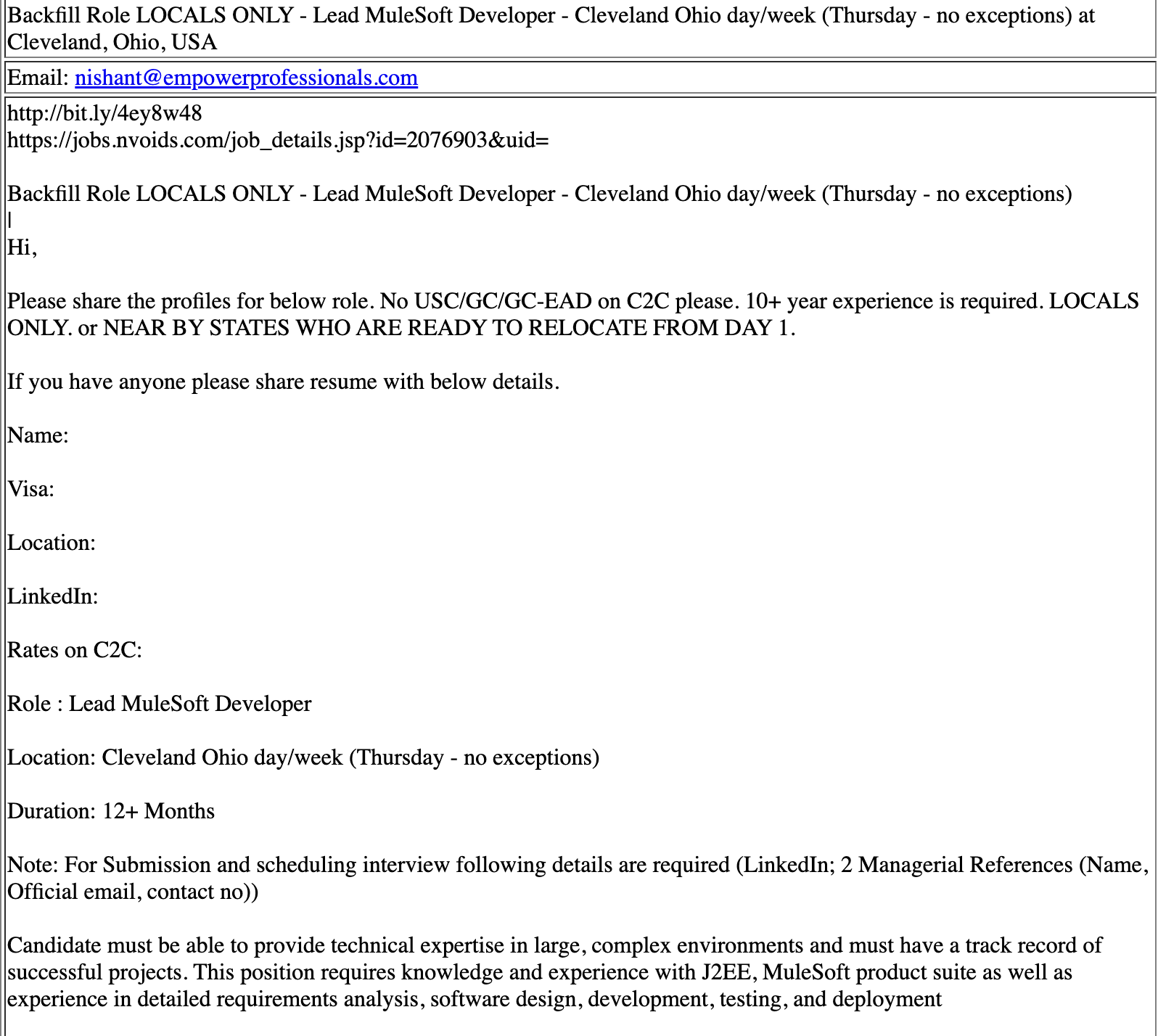
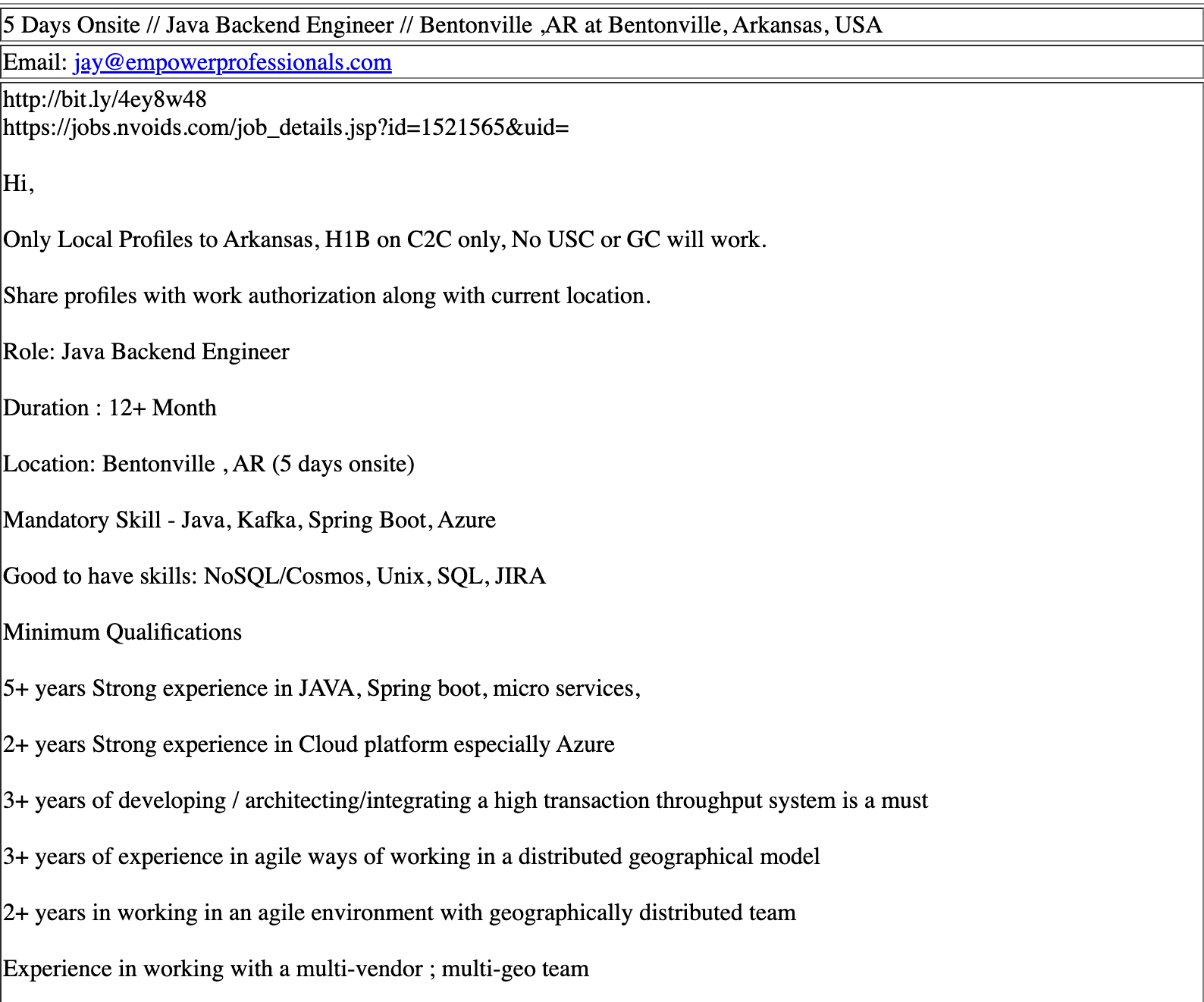
While it is unclear whether either firm has benefited from its MBE status, many state and local governments set aside a certain percentage of their contracts for minority businesses, as do many public universities. City Colleges of Chicago, for example, awarded a contract to LanceSoft—the company that excluded U.S. workers from the job in Santa Clara—after determining that it complied with the college's MBE "participation plan," according to a procurement document from the school. The college is overseen by Chicago's city council and receives both state and federal funds.
"It shows real brass to so publicly keep using government money to violate government law," Morenoff said.
Empower Professionals and Tekgence did not respond to requests for comment.
The job posts, which have not been previously reported, are likely to inflame intra-right tensions over the H-1B program. President Donald Trump has argued the program is necessary to bring talent to the United States, a position shared by some of the president's allies in the tech sector, including Elon Musk. Others, like Missouri senator Eric Schmitt (R.), say it depresses wages and diminishes job opportunities for Americans, citing cases such as a 2015 scandal in which Disney workers were laid off and replaced by H-1B holders.
Some progressives have also cast doubt on the idea that the visa is plugging labor shortages or bringing in the best and brightest: A 2015 analysis by the Economic Policy Institute, a left-leaning think tank with ties to Sen. Elizabeth Warren (D., Mass.), found that the two leading employers of H-1B holders, Infosys and Tata Consultancy Services, use the visa "primarily to cut labor costs."
While cost-cutting and outsourcing are not unlawful, Lucas, the EEOC chair, said that companies cannot discriminate against U.S. workers even when doing so would save money.
"Many businesses wrongly think that they can justify hiring preferences for H-1B workers or other guest visa workers based on cost savings," Lucas said. "But in reality, no cost considerations ever justify unlawfully favoring foreign workers over American workers. It is irrelevant whether the disparate treatment based on national origin is motivated by cost versus bias or animus—either way, it is against the law."
Visa-based discrimination can result in major fines. In 2023, Meta paid $25 million to settle allegations from the Justice Department that it had "used recruiting methods designed to deter U.S. workers from applying to certain positions." Epik Solutions, a technology recruitment company in California, reached a similar settlement this year after it stated in multiple job ads that certain roles were reserved for H-1B visa holders.
The Justice Department said the ads violated the Immigration and Nationality Act, which, like Title VII, bans discrimination based on citizenship status. Other companies that have been fined for posting similar ads include IBM, Ikon Systems, Technology Hub, and American CyberSystems.
Because job advertisements are often posted by external staffing agencies, it is not always clear which party, the employer or the recruiter, is responsible for excluding U.S. citizens. Sometimes it is not even clear who the employer is, such as when one staffing agency, ARK Solutions, posted an ad for an unnamed client in Georgia that was seeking to build a "case management system that interfaces across multiple courts."
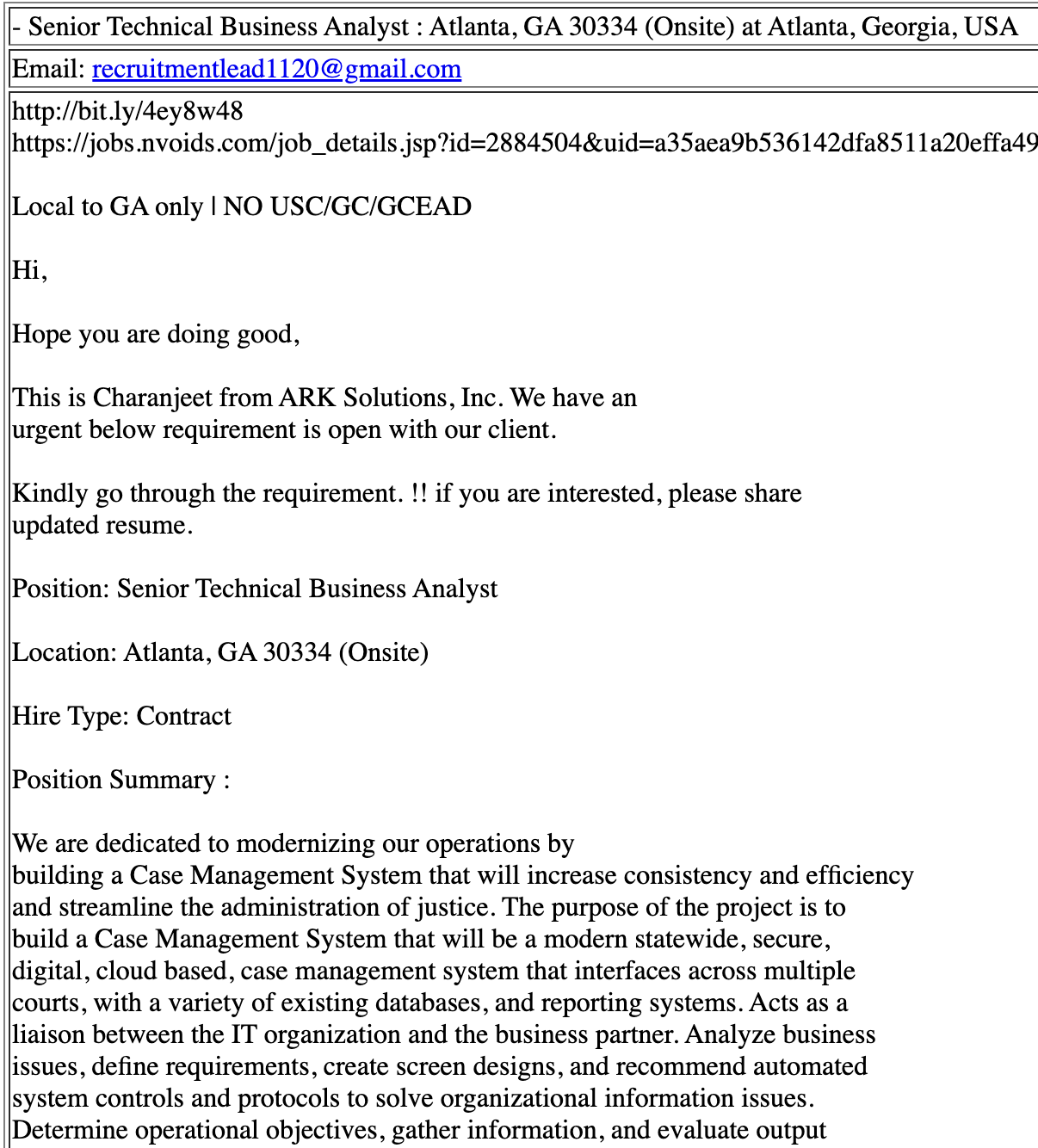
The ad didn't indicate whether the client was a private business or public agency, but said the ideal candidate would have experience "working in state or local government, specifically in roles dealing with the Georgia Criminal Justice System."
The first line of the ad: "Local to GA only | NO USC/GC."
Lucas said that staffing firms like ARK Solutions, which did not respond to a request for comment, can get in just as much trouble as their clients for discriminating against Americans.
"Employers can be liable for discrimination executed by agents like recruiters and staffing agencies," Lucas said. "And in addition to employers, depending on the facts, recruiters and other staffing entities themselves can be directly liable for national origin discrimination under Title VII's 'employment agency' liability provisions. This source of liability is a major blind spot in the industry."