

President Donald Trump on Saturday described a meticulously planned, middle-of-the-night special forces operation that ended in the capture of Venezuelan dictator Nicolás Maduro. The operation followed months of surveillance tracking Maduro's movements.
Caracas went dark in the early morning hours of January 3 as Operation Absolute Resolve began with "discreet, precise" strikes that marked "the culmination of months of planning and rehearsal," according to chairman of the Joint Chiefs of Staff Gen. Dan Caine. It was an operation "that only the United States could do" through a combination of on-the-ground assets and intelligence capabilities, according to Caine, who said more than 150 aircraft launched from positions across the Western Hemisphere. Within a short amount of time, the United States dropped "an interdiction force" in downtown Caracas to intercept Maduro and his wife at their home.
"We watched, we waited, we prepared, we remained patient and professional," Caine said. "This mission was meticulously planned, drawing lessons from decades of missions over the last many years, decades, many missions over these last many years. This was an audacious operation that only the United States could do."
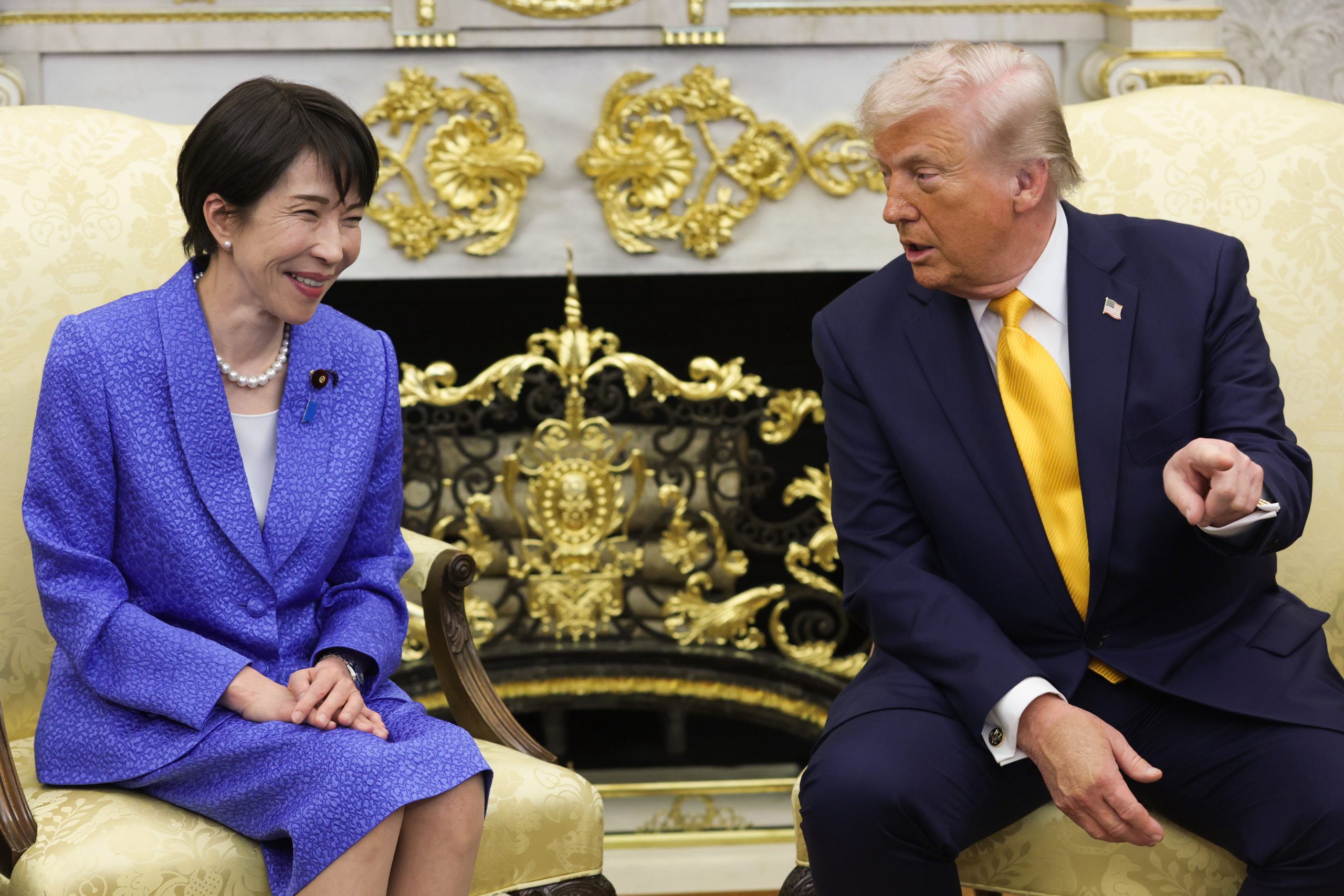
Trump compared Saturday’s successful military operation to those he had overseen in the past, including last year’s strike on Iran’s nuclear facilities, the 2020 assassination of Iranian general Qassem Soleimani, and the 2019 raid that killed ISIS founder Abu Bakr al-Baghdadi. As with these operations, not a single U.S. service member was killed during the raid on Maduro’s compound.
Maduro had a $50 million bounty on his head at the time he was captured, prompting Trump to joke, "Don't let anybody claim it. Nobody deserves it but us."
Trump said on Saturday that the United States is prepared to take control of Venezuela for the time being.
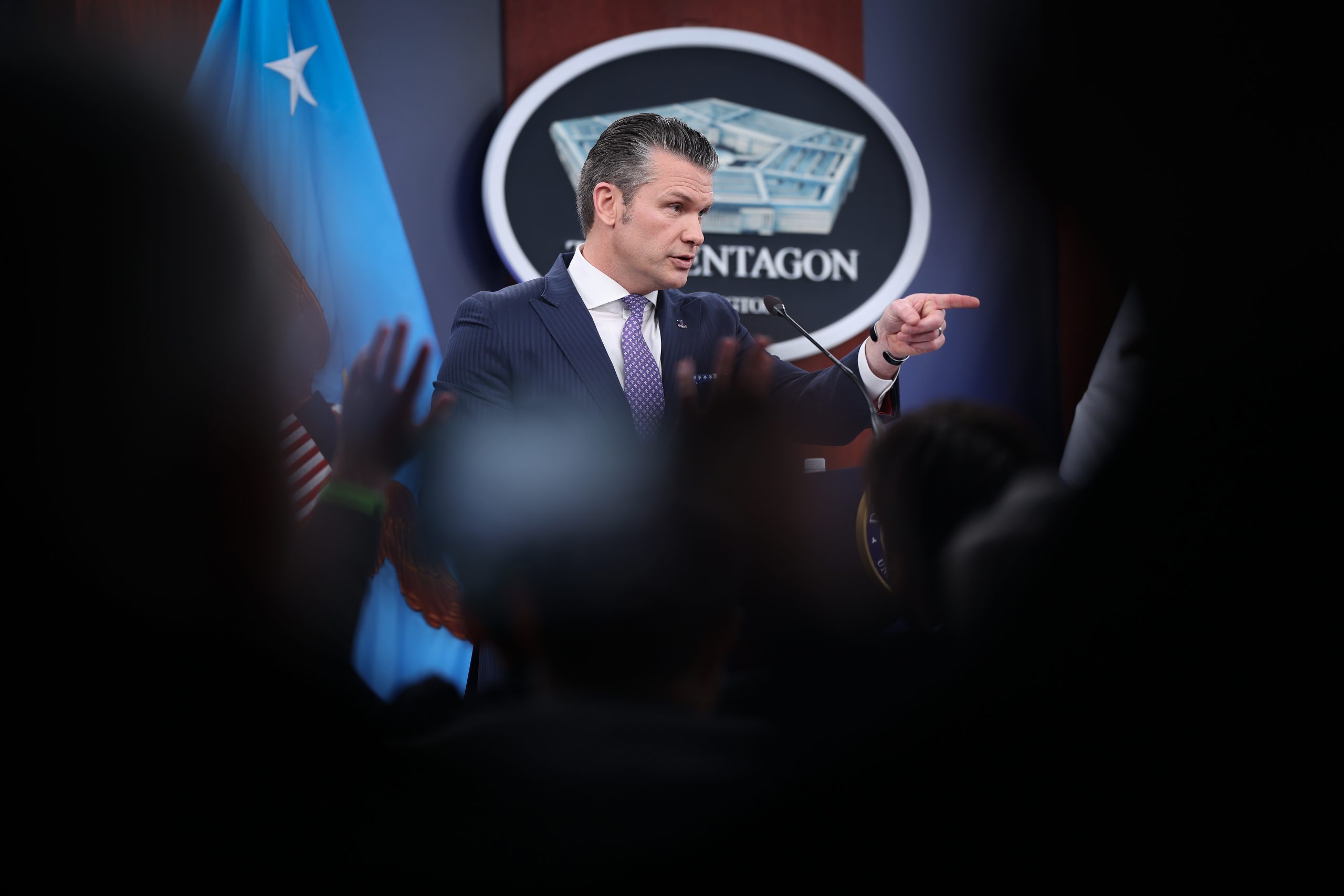
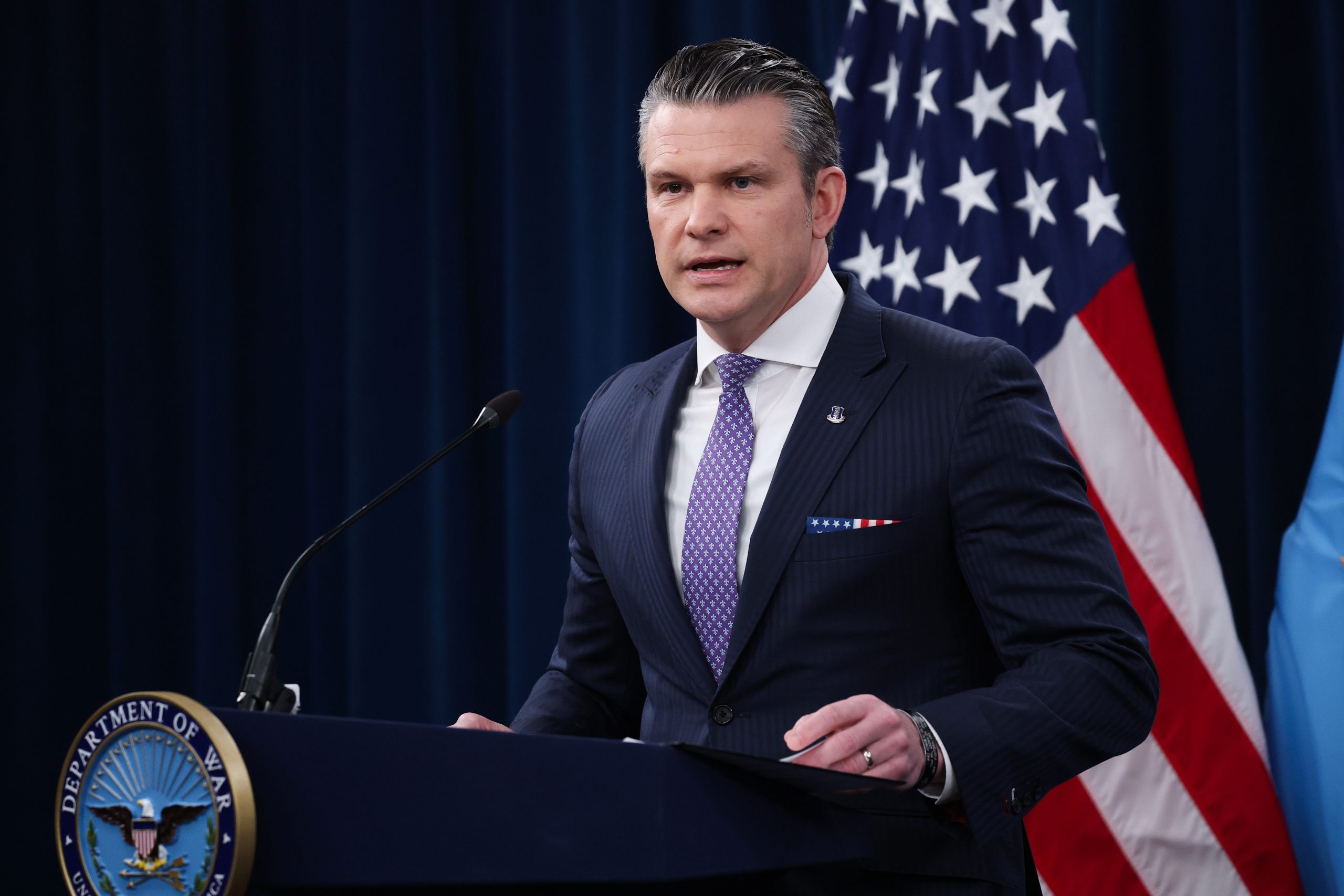
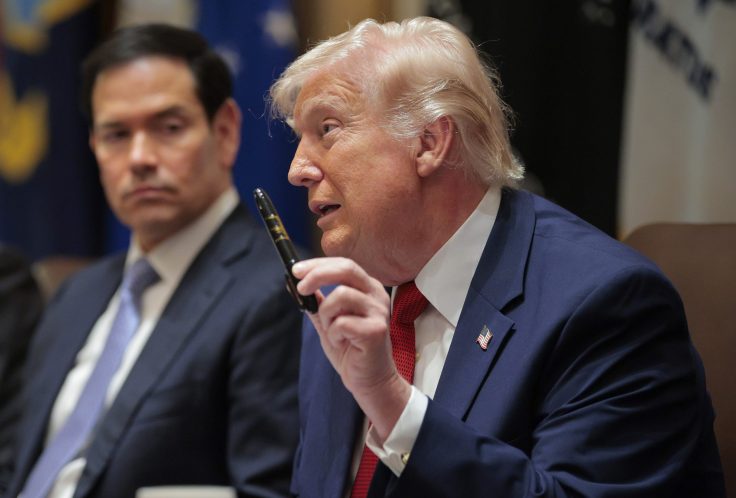
"We’re going to run the country until such time as we can do a safe, proper, and judicious transition," Trump said during a press conference at Mar-a-Lago, where he was joined by Caine, Secretary of State Marco Rubio, and Secretary of War Pete Hegseth, adding "we can’t take a chance that somebody else takes over Venezuela that doesn’t have the good of the Venezuelan people in mind."
Trump did not specify whether the United States’ plan includes exiled opposition leader and Nobel laureate María Corina Machado or Edmundo Gonzalez, whom the United States recognized as the winner of Venezuela’s 2024 presidential election, though he said American officials have not been in contact with Machado.
Machado, for her part, welcomed the U.S. operation, saying in a statement that "the U.S. government has fulfilled its promise to uphold the law."
Rear Admiral (Ret.) Mark Montgomery, former director for transnational threats at the National Security Council who now works at the Foundation for Defense of Democracies, told the Washington Free Beacon that seizing Maduro is the first step toward ending Venezuela’s autocratic regime.
"President Trump needs to stay engaged in Venezuela to make sure that Maduro’s cronies, who are equally guilty of any crime that he is, are also pushed out of power," Montgomery said. "Maduro’s cronies may want to stay and fight as they don’t have too many places to run. The key to success going forward is how the Trump team works with both the Maduro cronies—not just the vice president but also the defense and interior ministers and to get these criminals an exit strategy—and also with the opposition, the legally elected leaders of Venezuela."
While Trump said Venezuelan vice president Delcy Rodríguez is "willing to do what we think is necessary to make Venezuela great again," he did acknowledge that Rodríguez "was picked by Maduro." Trump also stated that he and his administration have not ruled out a follow-up strike on targets in Venezuela.
"The first attack was so successful, we probably don’t have to do a second, but we’re prepared to do a second wave—a much bigger wave," he said. Taking questions at the press conference, Trump told reporters that the United States is "not afraid of boots on the ground" and will "make sure that the country is run properly."
The U.S. Army’s elite Delta Force captured Maduro and his wife, Cilia Flores, in their bedroom early Saturday. Trump told Fox News on Saturday morning that the pair attempted to flee to a steel-reinforced safe house before their capture.
"He was in a house that was more like a fortress than a house," the president said. "It had steel doors, it had what they call a safety space where it's, you know, solid steel all around. He didn't get that space closed. He was trying to get into it, but he got bum rushed so fast that he didn't get into that."
Both Maduro and Flores face a litany of charges including narco-terrorism, weapons possession, and conspiracy to attack the United States, where they will "soon face the wrath of American justice on American soil in American courts," Attorney General Pam Bondi said on X.
The operation came after months of pressure on Maduro’s regime that included economic sanctions, a spate of American strikes on Venezuelan drug vessels operating in the region, and the seizure of several sanctioned oil tankers off the Venezuelan coast. Trump reportedly authorized the "large-scale strikes" several days ago, but waited until after Christmas for a ground operation due to weather conditions inside the country. American military assets—including the USS Gerald R. Ford aircraft carrier and other warships—were already stationed in the region prior to the strike.
Military action against Maduro became the only viable option to stop the flow of illicit drugs and narco-terrorists into the United States when the Venezuelan dictator would not step down on his own.
"What he did with sending hundreds of thousands of Tren de Aragua and drug dealers—they emptied out their jails into our country," Trump said. "If you think about it, they emptied out all of their mental institutions into our country. What he did there and every other thing is unforgivable."
The United States first indicted Maduro and other high-ranking regime officials in March 2020 for money laundering and drug trafficking. The sprawling indictment accused Maduro and his lieutenants of engaging in a 20-year conspiracy "to flood the United States with cocaine," U.S. attorney Geoffrey S. Berman said at the time. Additional charges are expected now that Maduro and his wife are in American custody.