
Meta was hit in October with a historic $25 billion judgment in New Mexico when a judge found that the tech giant misled users about its privacy practices. The decision was based in part on statements from Meta executives that Raúl Torrez claimed were untrue, though he could not demonstrate they harmed anybody or even that New Mexico residents had heard the statements.
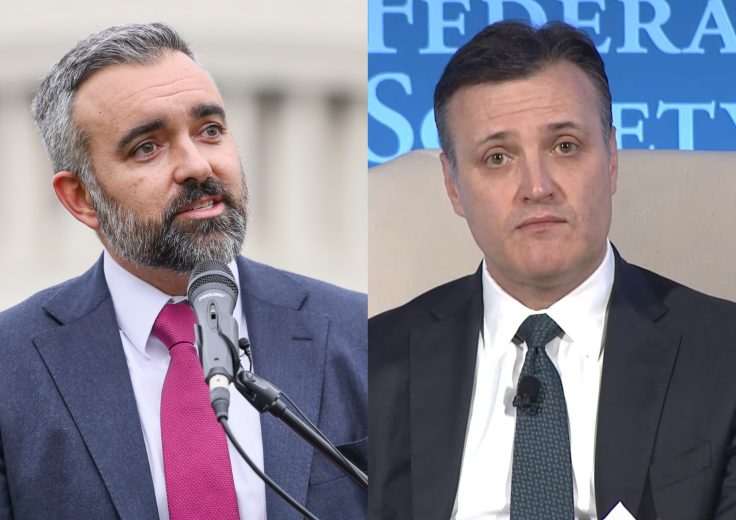
Now, Meta's top legal officer says the tactics used by the state's left-wing, Soros-backed attorney general in that case threaten companies across the country. C.J. Mahoney, Meta's chief legal officer, made the case during a Nov. 13 panel appearance at the Federalist Society's National Lawyers Convention, arguing that the lawsuit against Meta "is not just run-of-the-mill litigation" but rather "usurpation by litigation."
The case demonstrates, according to Mahoney, how a novel legal theory pursued "in the right state court" threatens to endow "any state attorney general" or "any plaintiff's lawyer" with more regulatory power "than the European Commission, the DOJ, the FTC, and the SEC combined."
"The attorney general of New Mexico has said that this is the first of many suits he intends to bring against large corporations in the country," Mahoney said. "So what's to stop other attorneys general?"
"Perhaps blue states turbocharged by the plaintiffs bar from suing Fox News over its slogan, 'Fair and Balanced,' or red states from suing the New York Times over its claim to publish 'All the News That's Fit to Print,'" he continued. "These are not just attacks on companies, they're really just attacks on the territorial sovereignty of the other 49 states."
In the lawsuit, New Mexico attorney general Raúl Torrez argued that Meta executives made false statements about the company's handling of user data and assailed the company for doing away with its fact-checking program, which was conducted by a set of tendentious news outlets.
Rather than demonstrate how many residents actually saw the statements from Meta executives, however, Torrez pointed to their potential audience—the state's entire population, including New Mexico residents "who weren’t born at the time," according to Mahoney.
A jury in deep-blue Santa Fe, which backed Kamala Harris over Donald Trump by a 49-point margin, thus found that the company had committed more than 43 million violations of New Mexico's consumer protection laws. Torrez pushed for a penalty of between $35 billion and $40 billion, and a judge landed on the $25 billion number.
Before Torrez became attorney general, he served as district attorney of Albuquerque, where he prevailed in a primary thanks to more than $100,000 from the left-wing megadonor George Soros. Torrez faced criticism for prosecuting fewer than half of the violent crimes committed in the city.
The suit is just one in a series of state-level lawsuits meant to hold large companies responsible for perceived damages. Climate groups have brought lawsuits against oil and gas companies in Louisiana, Pennsylvania, New Jersey, and Washington, accusing those companies of causing global warming or even individual deaths.
While some of those lawsuits have been tossed out, Torrez's victory indicates that state lawsuits brought in favorable jurisdictions have the ability to generate regulatory rulings that would affect the rest of the country.
"Until the Supreme Court takes action to put guardrails around this kind of litigation, I think its effect on our society and our economy will be as pernicious as it is profound," Mahoney said.
Meta is appealing the ruling in Torrez's suit. The company has a solid chance of getting the $25 billion slashed, according to Santa Clara University law professor Eric Goldman.
"It felt like there was a lot of duplicative counting in the calculations," Goldman told Reuters. "How many times can a single person be duped by the same entity?"