


For historians of human enslavement—and for black Africans more generally—the recently concluded African Nations soccer cup revealed images of an ugliness that has roots in the Muslim world's trans-Saharan slave trade. As Senegal defeated host Morocco in the final, sections of the Moroccan crowd hurled racial insults at the Senegalese—just as Algerian spectators had, earlier in the tournament, when their team was beaten by Nigeria. "Get the black slave," affronted Algerian soccer fans chanted.
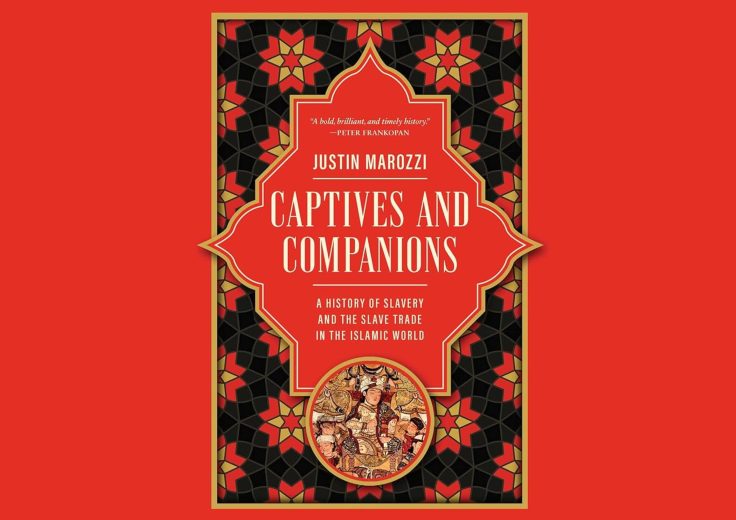
In Captives and Companions, Justin Marozzi offers an engrossing (and depressing) account of this cross-Saharan trade in slaves. It was conducted—largely unmolested—by the Arabs and the Ottoman Turks for 1,400 years, targeting eastern, central, and western Africa. The violent capture, trafficking, sale, and possession of black Africans by Muslims from the north of the continent, the lands of Arabia, and Greater Turkey endured as a practice for far longer than the transatlantic slave trade, and turned many more humans into chattel than did the white European and American slavers and slave-owners of the Western Hemisphere: 17 million, as opposed to 11 million in the New World. And this number doesn't include the white slaves, taken in the hundreds of thousands by Barbary pirates, from Ireland, Spain, and Italy, and by the Ottomans from Greece, the Caucasus, and the oft-ravaged Slavic lands, about whom Marozzi writes with as much sympathy and humanity as he does those who were abducted from black Africa. (No humanity toward blacks was shown by the many Muslim commentators who held forth on current affairs and culture in the Muslim Golden Age. Jahiz, a litterateur and commentator from the Ninth century, wrote disparagingly of black Africans, called the Zanj by Arabs: "Like the crow among mankind are the Zanj for they are the worst of men and the most vicious of creatures in character and temperament.")
No comparison between Western and Muslim slaving is intended to minimize the vileness of the Western slave trade; but it is worth noting that modern-day criticisms of slavery (including demands for reparations) are voiced at a much lower volume by the descendants of those who were at the receiving end of slavery in the Islamic world. Some would say it is voiced hardly at all, which isn't surprising, given that the heirs and offspring of slaves who live in countries like Saudi Arabia, Kuwait, Turkey, Egypt, Libya, and Morocco do not enjoy the constitutional protections—or the spirited, rights-based political discourse—that blacks in the United States and elsewhere in the West enjoy. And there appears to be limited political will in countries like Ethiopia, Sudan, Mali, Benin, and Nigeria to hit the moneybag sheikhs and emirs of the Arab world (or even President Erdogan of Turkey) with a hefty bill for slavery reparations. Will we ever see a Black Lives Matter riot on the streets of Riyadh or Ankara?
Forget criticism of Arab-on-African slavery; there is scarcely enough basic scholarship on the subject when compared with the academic outpourings on white-on-African enslavement. Marozzi quotes the late John Hunwick—a pioneering scholar of Islam in sub-Saharan Africa—who wrote that "for every gallon of ink that has been spilt on the transatlantic slave trade and its consequences, one very small drop has been spilt on the study of the forced migration of black Africans into the Mediterranean world of Islam and the broader question of slavery within Muslim societies."
Marozzi is a British Arabist—in the best sense of that last word, which means he has a deep and erudite understanding of the Arab world without any of the typical Anglo-Arabist's suspicion of Jews. His attachment to this world began in his youth, which he spent in Libya and Egypt, passing a great deal of time playing backgammon in "dirt-cheap coffee-houses"—as he informed us charmingly in Islamic Empires (2020), his last book. Slavery in the Muslim world has demonstrated, he tells us, "extraordinary longevity," continuing well into the modern era. "As late as the early 1950s, the first workers in the Qatari oil sector were enslaved men who were required to surrender as much as 90 per cent of their earnings to their owners." The last countries to formally abolish slavery are all of the Muslim world: Iran (1929), Yemen and Saudi Arabia (1962), Turkey (1964), Oman (1970), and, most notoriously, Mauritania, which abolished slavery as recently as 1981—12 years after man set foot on the moon. (The last country to outlaw slavery in the Western Hemisphere was Brazil, in 1888.)
Although slavery predates Islam—which can be dated to have begun in 610 A.D., when Muhammad had his first revelation from Allah—the practice received divine blessing from the Quran. The holy book of the Muslims states that the inequality between master and slave is divinely ordained, and, writes Marozzi, acknowledges that we are not all free. Slavery is "part of the natural order, the Quran accepts it and is not proposing to abolish it." This was, says Marozzi, a most politic position for the newly minted Quran to take: "For a society accustomed to slavery from time immemorial, ruling it out at the outset would have done nothing to make Islam an attractive new alternative to tried-and-trusted pagan polytheism for most people—apart, we might imagine, from the slaves." A prohibition of slavery, states Marozzi, would have spelled Islam's failure. The Quran also permits a male slave-owner to have sex with his female slaves, a godly green light whose terrible modern-day consequences include the "depraved enslavement and rape of Yazidi women and girls in northern Iraq by so-called Islamic state fighters."
Marozzi arranges his book thematically, dealing in successive chapters with the different categories of slaves in the Islamic world. He begins with the birth of Islam and gives us short portraits of four slaves who were among Muhammad's earliest and most faithful followers. The most lovable of these is Bilal, an Abyssinian slave blessed with a voice so heavenly that Muhammad insisted he sing the first adhan, the Muslim call to prayer. Bilal was the first muaddin (as Marozzi spells the word more commonly rendered in English as muezzin). Although born a slave, Bilal was manumitted by Abu Bakr—the prophet's closest companion—and died "one of the most noble and distinguished Muslims in history."
Uncommon was the slave whose life traced such an uplifting arc. Most slaves were enslaved forever. In chapter after chapter, we read of women abducted from Ethiopia, Greece, Armenia, Georgia, and the lands that comprise present-day Poland and Ukraine to populate the teeming harems of the Muslim world. Some of these slave-concubines rose to great prominence: Roxelana, abducted from Ukraine, became the favorite of a besotted Suleiman the Magnificent, the Ottoman sultan, who bestowed on her the name of Hürrem Sultan. But for every Roxelana, there were countless piteous women who were never any better than sex objects, sold from owner to owner.
Just as desperate in their misfortune were the many young boys who were abducted—from places as far apart as Nubia and Albania—and wrenched forever from their families, being groomed through their boyhood and teenage years to be soldiers in the Ottoman Army. Yet even their plight seems blessedly fortunate in comparison with that of the many, many thousands of little black African boys who were captured and castrated in order to serve as eunuchs in harems and at imperial courts. Marozzi quotes at length Count Raoul du Bisson, a French aristocrat and explorer who wrote an account of his travels in East Africa, titled Les Femmes, les eunuques, et le guerriers du Soudan ("The Women, the Eunuchs, and the Warriors of Sudan"). He describes in this the method of castration, which the Arab slavers had Christian monks perform for them. If this were a class at an American university, I would declare a trigger alert (although in truth, this passage really is not for the squeamish):
The little, helpless, and unfortunate prisoner or slave is stretched out on an operating table; his neck is made fast in a collar fastened to the table, and his legs spread apart and the ankles made fast to iron rings; his arms are each held by an assistant. The operator then seizes the little penis and scrotum and with one sweep of a sharp razor removes all the appendages. The resulting wound necessarily bares the pubic bones and leaves a large, gaping sore that does not heal kindly.
Science was not, then, in the ascendant. The wound was cauterized with mud, hot oil, tar, or mule dung. The age of the boys castrated typically ranged from 6 to 12. The mortality rates were horrific. The Frenchman who described the bodily vandalism reckoned that as many as 35,000 little African boys were sacrificed "to produce Sudan's average annual production of 3,800 eunuchs."
Naturally, none of those who survived ever had descendants who might scream today for reparations. But if Marozzi's book sparks a loud and robust demand for the Muslim world to account for its heinous centuries of slavery, we might at least say that these ill-starred stolen children of Africa did not all die entirely in vain.
Captives and Companions: A History of Slavery and the Slave Trade in the Islamic World
by Justin Marozzi
Pegasus Books, 560 pp., $35
Tunku Varadarajan, a fellow at the American Enterprise Institute and at New York University Law School's Classical Liberal Institute, is a writer at the Wall Street Journal's editorial page.