


A heartfelt eulogy must never be about the person giving it—as Charles Spencer has every reason to know. This aristocrat, the 9th Earl Spencer, is the author of a number of successful history books. But the best thing he has ever written is a stirring tribute to his sister, Diana, Princess of Wales, which he delivered from the pulpit of Westminster Abbey at her funeral on Sept. 6, 1997. Spontaneous applause followed his speech, starting in the cheap seats, outside the church walls, and rolling like a mighty wave up the nave. The royal family, his dead sister's former in-laws, did not join the clapping.
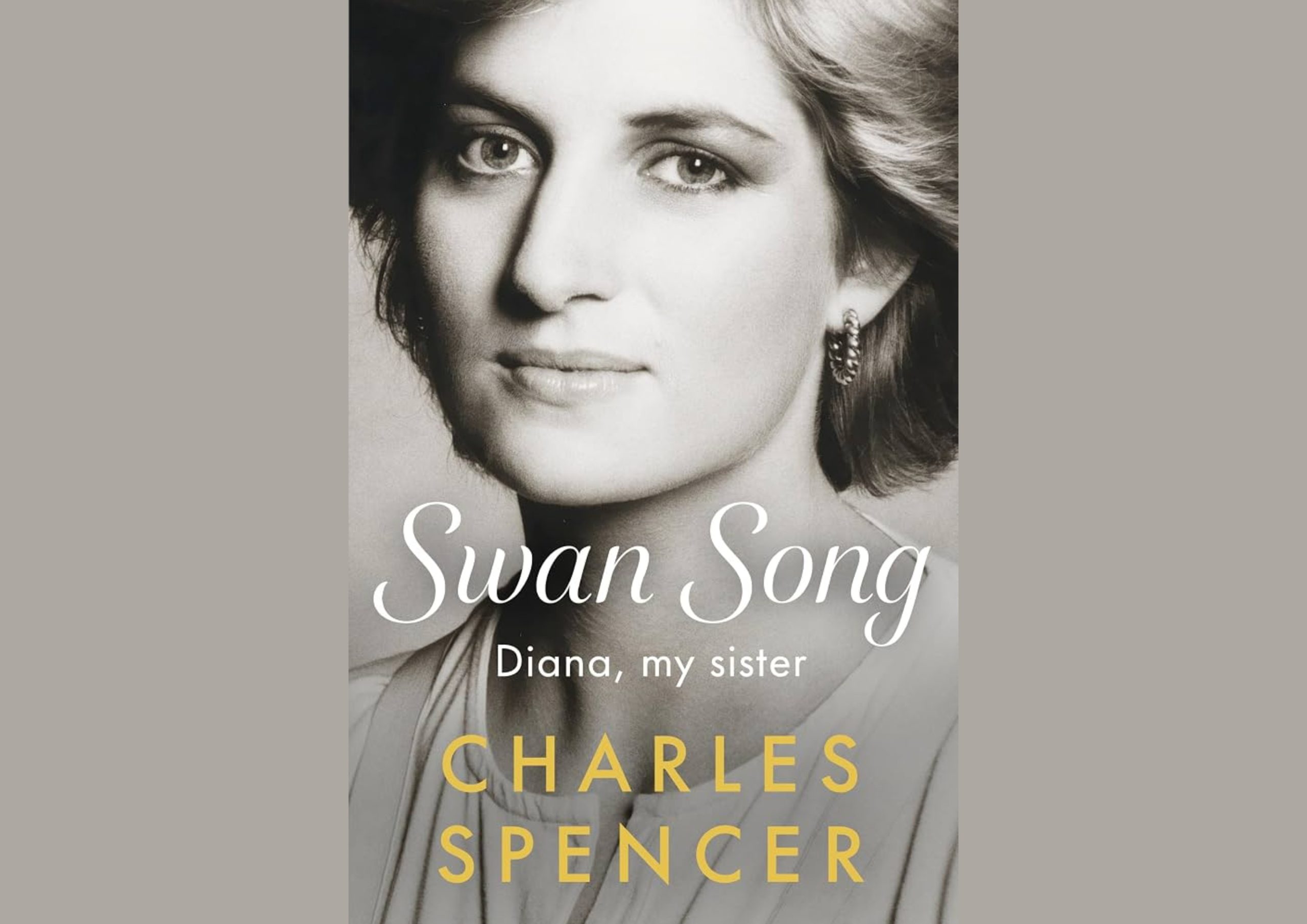
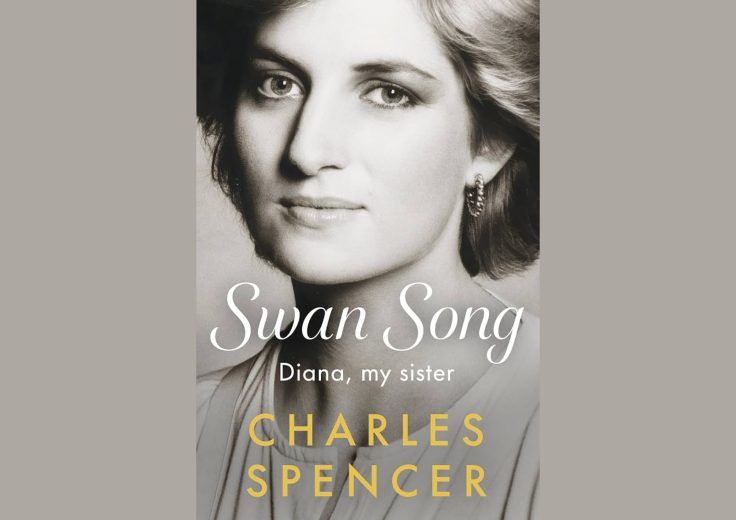
How surprising to find—or is it?—that Spencer has done the opposite with Swan Song: Diana, My Sister. Purportedly a memoir of Diana, meant to counter, in his words, "untruths accepted over time," this book is all about Spencer. He harps on about his famous eulogy and indulges in a fair bit of score-settling, most notably with Diana's ex, King Charles, while offering little that's new regarding the complex woman whom he declared, in front of a television audience of 2.5 billion, "I am so proud to be able to call my sister."
Worst of all, Swan Song is self-exculpatory. Spencer fails to account for some of his own behavior during the most difficult years of Diana's short life. Much information has emerged in the past decade concerning the shocking lies told to the princess by the BBC reporter Martin Bashir—a man Spencer introduced her to—and the disastrous fallout from the interview Diana subsequently granted Bashir. In light of those revelations, writing a memoir offered Spencer an opening to address how, when the princess was still alive, he might have better supported and counseled her. Spencer didn't grab the opportunity.
That the earl was perfectly capable of writing a more candid and reflective book is not in doubt. Two years ago, Spencer published A Very Private School, a searing memoir of his time at Maidwell Hall boarding school, where he was sent in 1972 when just eight years old. At this ghastly upper-class bastion, homesick little boys were bullied, beaten, and abused in all manner of ways by teachers and staff—after lights out, a young matron liked to climb into the prepubescent Spencer's bed. His early exposure to sex, he writes, "awakened in me basic desires that had no place in one so young." The author, now 62, has been married four times, and has seven children by three different women.
And yet Spencer's portrayal of his sister in Swan Song is both oddly flat and occasionally hostile, starting with his account of their shared upbringing. Diana recalled feeling deeply wounded by her parents' divorce, haunted by the "crunch of the gravel" she heard when her mother drove away from the family home forever. In Spencer's telling, life in their large house on the Sandringham estate in Norfolk remained very jolly even after this split, which took place when Diana was six and Charles was three. He describes their father, Johnnie, who won custody of his four children (there were two older daughters), as a most affectionate and attentive parent.
Spencer does concede that Diana's academic challenges were ignored. Young Diana was always restless in class, her teachers reported, and she struggled with spelling, math, and, later, French. Spencer theorizes that his sister suffered from learning disabilities, most likely dyslexia and ADHD, both poorly understood then, and that the constant criticism she received at school "impacted her self-worth dramatically." He recalls her "screech of pain and her violent sobbing" upon opening her O-level results to find she had not passed a single exam. Her parents, relatively unconcerned about the education of a daughter, allowed her to leave school at age 16 without any proper qualifications. She worked as a cleaner, nanny, and nursery school assistant before Prince Charles began dating her three years later.
A young, naïve girl was exactly what the Prince of Wales was looking for in 1980, when traditional expectations were out of sync with the way a new generation—in the post-Swinging '60s—lived. The prince had several previous girlfriends, roughly his age and attractive candidates to be queen in the future, who were disqualified because of their earlier relationships. One was Camilla Shand, with whom the prince fell deeply in love in 1972. She married army officer Andrew Parker Bowles, but she and Charles resumed their relationship some years later—Camilla's husband willing to turn a blind eye, seemingly, to his wife's passionate affair with the heir to the throne.
As detailed in the best of the many Diana biographies, Sarah Bradford's Diana: Finally, The Complete Story, Camilla was fully aware that her lover had to marry. When the prince, who had been introduced to Diana a few years earlier by her older sister Sarah, met her again at a house party in July 1980 and found her open and easy manner appealing, the mistress encouraged the match. "Camilla, in a spectacular misreading of Diana's true character, saw it as in her own interest that Charles should choose such a shy young girl who would pose no threat to her position in his heart and mind," Bradford writes.
Unaware of any of this at the time, Charles Spencer witnessed only his sister's elation and her "deep and sincere affection" for the important man a dozen years her senior who had chosen her. Spencer, 17 when the royal wedding took place in July 1981, quickly resented how his sister’s new celebrity meant that family friends played up to her in a sycophantic way. He resolved to remain unchanged, he explains with some petulance, ever the loving brother "who would never shirk from telling her the truth, even when she did not want to hear it."
Spencer gives no examples of constructive truth-telling during the following decade. He claims he didn't know about the problems that plagued Diana's marriage from the start, wasn't aware she suffered from eating disorders, and hadn't a clue that her husband grew to resent her popularity with the public and eventually returned to his mistress. When Diana explicitly asked for Spencer's assistance in 1991, confessing her unhappiness, and requesting that he speak to Andrew Morton, the journalist with whom she was secretly cooperating on a tell-all book, Diana: Her True Story, her brother agreed only to discuss events from their childhood. Diana ended up feeling betrayed by what he told Morton about her academic struggles as a girl. "I was equally upset that she felt wounded, in an enterprise I had never wanted any part in," he writes.
The mercurial Diana often fell out with her family—at the time of her death in August 1997, she hadn't spoken to her mother for months. She'd also cut off contact with her brother after he reneged on a promise to allow her to use a particular house on the Spencer ancestral estate of Althorp as a private getaway. Spencer explains in Swan Song that security concerns meant he had to go back on his word.
More baffling is Spencer's account of what happened earlier, after Martin Bashir approached him in August 1995, at a time when Diana and Prince Charles had separated but had no plans to divorce. Bashir, who worked at Panorama, the BBC's flagship investigative news show (equivalent to CBS News's 60 Minutes), provided Spencer evidence—a bank statement—purporting to show a former employee of his had taken bribes from the tabloid press in exchange for information about the Spencer family and Diana. At a second meeting, Bashir presented more documents, indicating that people close to Diana, including her private secretary, Patrick Jephson, were betraying her. Bashir also alleged that the Prince of Wales and the U.K. secret services both wanted to sideline his sister. Spencer was alarmed enough to arrange a private meeting between Diana, Bashir, and himself in a friend's flat.
According to Spencer, after that September meeting, at which he took extensive notes of Bashir's increasingly bizarre claims against the royal family, he told Diana the reporter was "clearly not to be trusted." He thought the matter at an end, but six weeks later Diana was interviewed by Bashir on Panorama. She castigated her husband, cast doubt on his fitness to be king, and said famously, "There were three of us in this marriage, so it was a bit crowded." The queen soon afterward wrote to both Charles and Diana, instructing them to divorce.
"The interview made the death of the marriage inescapable," Spencer writes. Like others have done, he draws a direct line between the interview and his sister riding in a car, chauffeured by a drunk employee of her boyfriend's father, Mohamed Fayed, which crashed, killing her. Diana had given up her police protection and also her personal driver because Bashir claimed the man was an informant against her.
The mystery is why Spencer did not come forward after the interview to express his doubts about Bashir's honesty. "I chose not to reveal publicly what I knew about Bashir's underhanded ways because Diana's interview was so very controversial," he writes. "If I had mentioned my severe misgivings about Bashir, Diana's critics would have stated that even her family had been against her speaking out."
Does that excuse really hold water? As explained by journalist Andy Webb in his fascinating 2025 book Dianarama: Deception, Entrapment, Cover-Up: The Betrayal of Princess Diana, after a graphic designer confessed to the Mail on Sunday that he had mocked up fake bank statements at Bashir's request, the BBC launched an internal investigation. Eager to preserve their "scoop," those in charge opted not to reach out to Spencer and ask him what he was shown and when. Nor did Spencer contact the BBC. In April 1996, Anne Sloman, the broadcaster's head of weekly programs, wrote in a memo wrapping up the investigation: "The Diana story is probably now dead, unless Spencer talks. There's no indication that he will."
Two decades passed before Spencer spoke up. Webb turned up evidence that Tony Hall, then head of the BBC's news, later BBC director, claimed to the board in spring 1996 that it was Spencer who had shown bank statements to Bashir. Informed of this, Spencer countered by detailing his interactions with the BBC reporter and passing on the handwritten notes of his and Diana's bizarre meeting with him. Bashir—his deceitful methods finally revealed—stepped down in May 2021.
In Swan Song, Spencer glides over much of this, writing simply of his "eternal regret" that his warning to Diana didn't prevent her from being ensnared by Bashir's lies, and describing the "sole consolation" of having stored his notes in the Althorp safe, so he could eventually produce them.
No doubt the glare of publicity, the distorting force of fame, and the vulnerabilities of her own character made Diana a very tricky sister to cope with. Nor does it seem impossible that, as Spencer reports, an intemperate Prince Charles said something like "we'll forget her soon enough" in their heated conversation soon after the Paris crash. But Swan Song is so lacking as a memoir one senses Spencer's guilt and anger over his sister's violent death endure, and that even after all this time he can't untangle his feelings about Diana—beloved companion of his earliest days—and describe her in a clear and insightful way.
Swan Song: Diana, My Sister
by Charles Spencer
Penguin Press, 384 pp., $35
Clare McHugh is the author of the novel The Romanov Brides.