



In November 2007, I walked out of a pitch meeting at NBC and into the Burbank sunshine. The meeting had gone the way every meeting all over town went that week: everyone nodding, nobody committing, all of us sneaking looks at our phones. The Writers Guild and the studios were down to their last hours of bargaining, and if the talks collapsed, as everyone expected they would, the show we had just pitched would stop—along with every other scripted project in the entertainment business—and we would go home, sleep badly, and come back the next morning to picket the network that had just bought our show.
On my way out of the building I passed a producer friend heading the other way. He was carrying a cardboard box with a snake inside it.
"Contingency plan," he said. If the writers walked, he told me, the networks were going to need something to put on. Something unscripted, something with real people. So he was pitching a reality contest show that entailed, I guessed, some kind of snake participation. I assume there was more to it than that, but he was running late and couldn’t explain the rules of the game, and then my phone buzzed with the news that the Guild had called a strike. So I walked out of the building, and he walked in, and that has been the broadcast television business ever since.
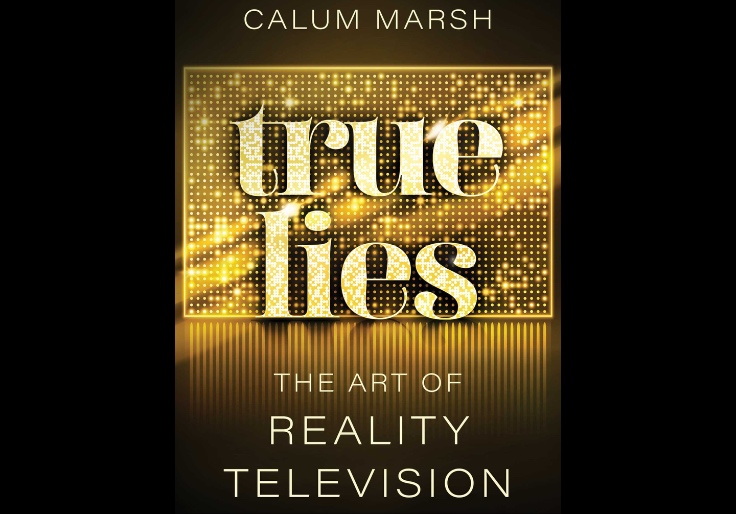
Calum Marsh’s True Lies: The Art of Reality Television is, for the most part, a book about my friend’s side of the business, the one with the snake in the box. Marsh, an arts and culture reporter for, among other places, the New York Times, has compiled an exhaustive chronology of the rise of the reality TV contest show—you know, the ones where cutthroat and meretricious people compete over a season in an organized contest with a pot of money at the end. He’s been backstage at the Big Brother Canada finale and sat down with Jeff Probst, Julie Chen, and Gordon Ramsay. He traces the genre’s family tree from the quiz-show scandals of the 1950s to ABC’s Who Wants to Be a Millionaire, which was such a hit that CBS answered it by buying Survivor and Big Brother. He’s good, and admirably sober, on what happens to the people on camera once the production wraps: the suicides tied to Love Island, the lawsuits over Love Is Blind, the cold and hungry contestants of Squid Game: The Challenge and Beast Games. Anyone who wants to know how this particular sausage gets stuffed will learn a lot. Spoiler alert: Someone always gets bitten by the snake.
But reality television is a slippery term. On the one hand, it can mean contest shows like Top Chef and Big Brother and Marsh’s book devotes about three-quarters of its pages to this kind of entertainment. The other kind of reality television—the kind where ambulatory psychotics throw glasses of wine at each other and have screaming matches on reunion shows—gets a pretty cursory examination. His one long look at this reality genre is a British show, Made in Chelsea, that most Americans have never heard of. The Real Housewives franchise, which has been on the air for 20 years and in some ways captures the Kardashianic culture we live in, gets three passing mentions. Marsh explains this imbalance by asserting, unconvincingly, that the competition show is "destined to be the defining genre," but I’d argue that it’s The Real Housewives—and their close cousins, Shahs of Sunset, Vanderpump Rules, and a bunch of others I’m sure you’re pretending right now that you don’t know and have never watched—that have had a more lasting and indelible impact on the country we live in. Put it this way: Without the grasping, money-obsessed plastic-surgery victims of the Real Housewives franchise to set the scene, is a creature like (now former) ambassador to Greece Kimberly Guilfoyle even conceivable?
A show like Survivor, for all the betrayals on the beach, is just a gamified sleep-away camp. The network invites you in. It explains the rules. It feeds you and houses you and flies you to Fiji. Somebody wins, somebody gets a check, and at the end everybody goes home. Probst tells Marsh that the game is really just a way to make a show about human nature, but the game is still a structure. It gives the thing a shape and an ending.
The Housewives are a different animal. There are no rules beyond being watchable, no prize except next season, and no ending, because the only way to win is to keep the show going. The women are paid, some of them generously, but by most accounts they cover their own hair and makeup and wardrobe and parties, which means the network gets to broadcast a lifestyle it doesn’t have to fund. The contestant on Survivor is a guest—he or she gets three hots and a cot from the producers. But the Housewife is closer to a franchisee. She covers the overhead and hopes the exposure, the tequila brand or the handbag line or the fashion launch that never quite launches, pays off before the humiliation runs out. Spoiler alert: It almost never does.
Which brings us to casting. Marsh reports that the competition shows put applicants through psychological evaluations, to weed out anyone likely to "crack under pressure." That makes sense for a show that’s going to starve you on a beach for a month. But nobody who has sat through a Housewives reunion believes any of those people could pass a psych eval. The key ingredient isn’t wealth—plenty of these women are merely comfortable—and it certainly isn’t being a housewife—many of them are single. The question is whether you can be counted on to come unglued over dinner, cameras rolling. On the game shows, cracking up gets you sent home. On the Housewives shows, cracking up is the definition of the gig.
Marsh thinks the genre’s future is bright, and for the competition shows he’s probably right. Contest formats travel, they can be reshot in any country with any host, and they are cheap insurance against the next strike. There have been game shows, in some form or another, on television since the beginning. Arthur Godfrey’s Talent Scouts becomes The X Factor. Queen for a Day becomes Queer Eye.
It’s the other strand that may be in trouble. In 2014, the season premiere of The Real Housewives of Atlanta drew 2.2 million viewers in the 18-to-49 demographic. Last year, episodes of the same show were struggling to reach half a million in that bracket. The Real Housewives of Beverly Hills opened a new season last December to the smallest live audience in its history. Bravo will tell you the viewers have moved to streaming, and some of them probably have. But nobody talks about these shows the way they used to.
And why should they? For 20 years the Housewives sold a very specific product: mentally and emotionally unstable, overdressed people, cast for their volatility, screaming at each other across a restaurant table and announcing business ventures that never materialize. It was fun because it was contained. It was on Bravo, on Sunday night, and then it was over and you pretended you never saw it.
But it isn’t contained anymore. The same people now turn up in Congress and the cabinet, at our embassies abroad, on the campaign trail. The cast hasn’t gone anywhere, it just now appears on CNN and Fox and whatever MSNBC is called now. They shoot the equivalent of a Real Housewives episode every night at Mar-a-Lago. Same outfits, same lip filler, same backstabbing. Just this time with real Russian oligarchs and real nuclear launch codes.
My friend with the snake understood something in 2007. When the writers go home, somebody still has to put something on. Game shows are fun and exciting and just another iteration of televised team sports—you root for your favorites, you boo the other side—and they’ll last forever. But when the folks on that other strand of reality television break out of their cages and run around loose, everything changes. Reality television worked because we all knew, deep down, that it wasn’t real. Now it is, and it’s a lot less fun to watch.
True Lies: The Art of Reality Television
by Calum Marsh
ECW Press, 200 pp., $22.95
Rob Long is an author, screenwriter, and executive producer.