

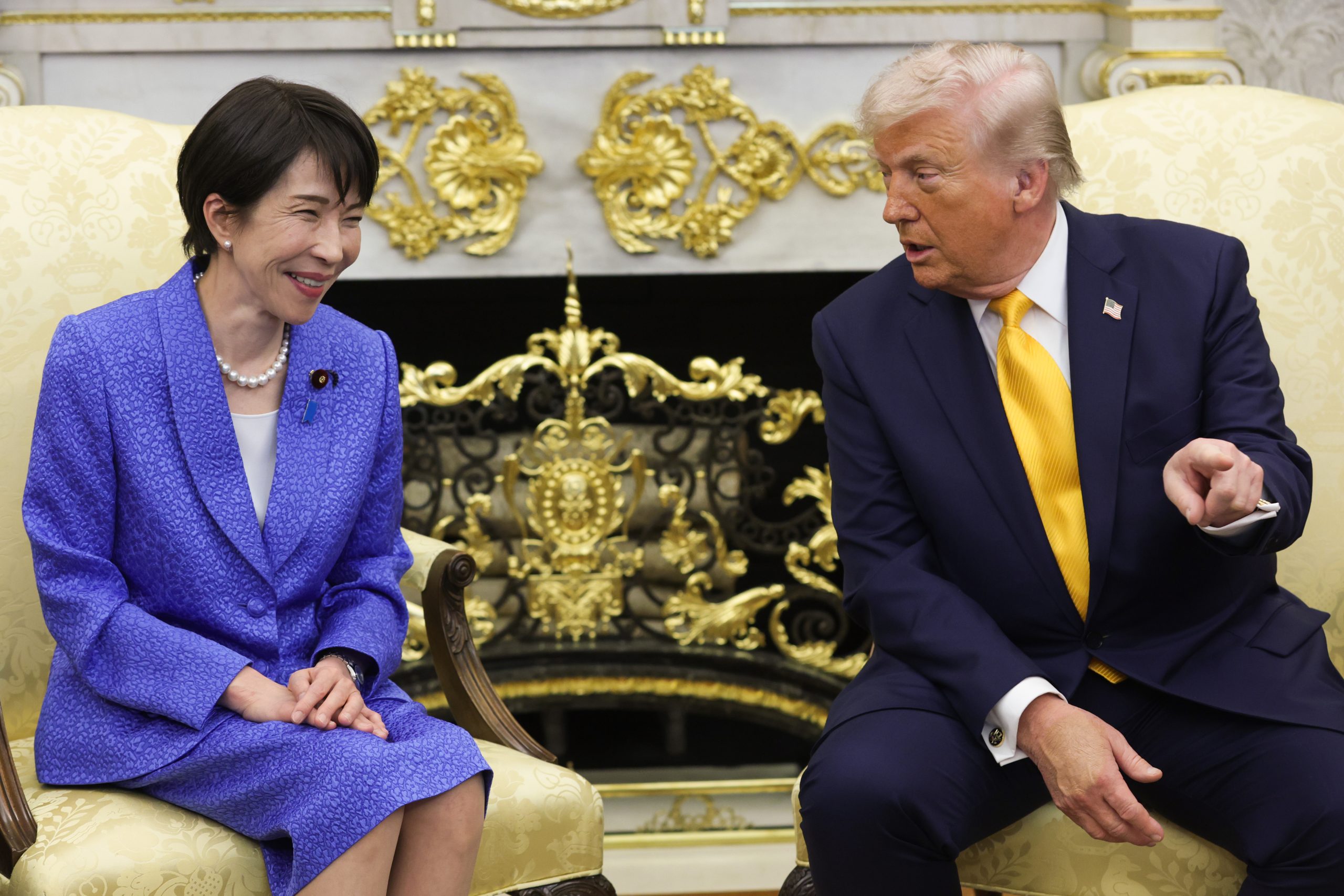
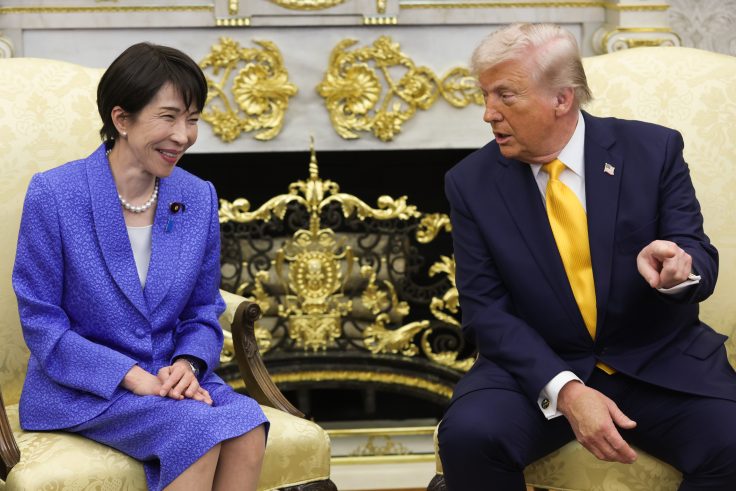
The world’s attention is fixed on the Strait of Hormuz, Iran’s determination to cripple the global economy, and Donald Trump’s attempts to break the energy blockade. But, as Japanese prime minister Sanae Takaichi’s White House visit this week demonstrates, the wheel of history continues its relentless turn in other strategically vital parts of the world too.
Xi Jinping is still determined to overthrow the U.S.-led international order, and he is watching closely for disruptions in our alliance system. Trump needs to not only defeat Iran, but also to steer this international order through the crisis.
Trump’s decision to maximize tactical surprise certainly contributed to the bombing campaign’s amazing success. The opening decapitation strikes stunned the regime, which struggled to respond as the allies bombed its air defense and long-range missile launchers. American deaths are tragic, but, thankfully, they are much rarer than many expected from a battle of this scale.
Of course there are costs that accompany these tactical benefits. Our military buildup in the Middle East was impossible to hide, but the decision to attack and the timing were closely held secrets. Few countries received much advance notice. This prevented leaks that would have blunted the effects of the first strikes, yet it also left many allies flat-footed.
At the same time, Iran is inflicting great pain: The blockade in the Persian Gulf creates a domestic political problem for Trump, whose voters feel the sting from high gas prices even though the United States is a net energy exporter. But for our allies in Europe and Asia that depend on Gulf energy, it’s an existential threat.
Subsequent moves to mitigate the damage further affected their interests. Venezuela’s oil is back on the market, but there is not enough to offset the Gulf’s production, so the administration paused some restrictions on Russian oil and gas. This helped stabilize prices temporarily, but the Europeans and Japanese do not want to see Vladimir Putin enriched. German chancellor Friedrich Merz lamented the decision and the lack of communication around it.
These factors contributed to the latest dustup in the alliance, over unblocking the Strait. Trump needs bold gestures to reassure oil markets, so he publicly called on "China, France, Japan, South Korea, the U.K., and others, that are affected" by the Strait’s closure to send escort ships. So far, he has no takers. French president Emmanuel Macron offered to pitch in "once the situation is calmer," or when assistance is no longer needed.
This is a minor setback in the Strait, but a serious strategic problem. Many American allies have little to send to the Persian Gulf, and others, like South Korea, built their militaries to defend their territory rather than to project power to other parts of the world. Few can fight their way up the Gulf through a hail of missiles and drone attacks. Their real contribution would be political and diplomatic.
The Chinese Communists are giddy about this disarray, as shown by the People’s Daily’s gleeful commentary about American allies not answering Trump’s call. But the Chinese Communist Party is interested in far more than embarrassing Trump: It fears and loathes NATO almost as much as American isolationists do because it sees the benefits the United States gains from the international order it leads. Trump uses a lot of tough love, but he ultimately wants to strengthen our alliances; Xi wants to break them.
America’s frontline partners and allies are responding quickly and effectively to the common threat from adversaries. Since Oct. 7, Israel has largely reversed Iran’s march toward regional hegemony at minimal cost to the United States. Russia is now reportedly providing Iran with intelligence and technological assistance for targeting Americans. In turn, Ukraine has dispatched over 200 military advisers to help Middle Eastern countries defend themselves from attacks from the Iranian drones, which the Russians use too, even as it reverses a Russian offensive in Eastern Ukraine.
Unsurprisingly, the allies that are furthest from the fight are the slowest to respond. Xi is counting on that same dynamic to keep the Europeans on the sidelines in a Taiwan crisis and reduce the risk to the Chinese economy. He wants Trump isolated, not chumming it up in the Oval Office with allied leaders like Takaichi.
Unity over the Strait of Hormuz would give China fits, but it will be tricky to achieve. Diplomacy is often done best behind closed doors, but markets react fastest to strong public messages. The joint Japanese-European statement "to express our readiness to contribute to appropriate efforts to ensure safe passage through the Strait" is a welcome first step, but more is needed.
Trump thrives amid uncertainty and at juggling a bewildering variety of conflicting demands. Reminding Xi that the president is at his best in a crisis would give another powerful reason to maintain the peace in Asia.