


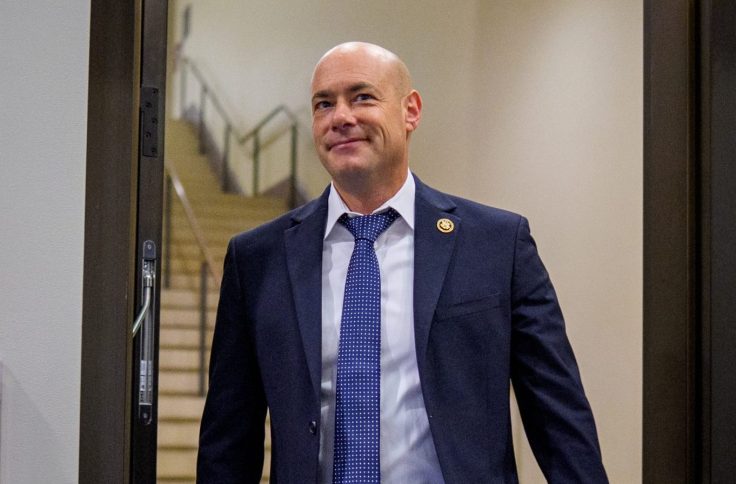
When Rep. Greg Landsman (D., Ohio) first ran for Ohio's competitive First Congressional District in 2022, he reported just six stock holdings worth between $90,000 and $300,000. It turns out he'd omitted dozens of positions worth hundreds of thousands of dollars—and failed to disclose them for years.
Landsman amended his 2022 financial disclosure form almost three years after the original filing. The updated report shows he actually owned 54 stock holdings worth between $377,000 and nearly $1.5 million and earned between $12,000 and $33,000 in related income, at least 18 times more than the stock income listed on his original filing.
Had Landsman properly filed his financial disclosure at the time, some of his holdings could have prompted criticism on the campaign trail. Landsman's amended disclosure, for example, shows stakes in Exxon Mobil, fellow oil and natural gas company Diamondback Energy, and Horizon Therapeutics, formerly Horizon Pharma. Landsman accused his 2022 opponent, then-Rep. Steven Chabot (R.), of being beholden to the oil and pharmaceutical industries and spent his campaign criticizing gas companies, calling them "out of control."
"Oil and gas corporations are making record profits right now," he posted to X. "They're price gouging. It's outrageous, totally unfair to our working families, and a disaster for our economy."
Landsman, who faces a difficult battle to hold onto Ohio's toss-up First Congressional District, has since billed himself as a government ethics and financial transparency warrior, repeatedly supporting efforts to ban members from trading stock. At the same time, he has generated income from trading stocks while serving in Congress.
Landsman cosponsored the TRUST in Congress Act, a measure that would have required members of Congress, their spouses, and their dependent children to put investments like stocks into a qualified blind trust, and introduced two other bills, the Drain the Swamp Act and the Restore Trust in Government Act, that carried even tighter restrictions. He announced in May 2025 that he and his wife had sold all their individual stocks and reinvested in mutual funds and exchange-traded funds to comply with the TRUST in Congress Act even though it hadn't passed. He said he was "determined to be part of the generation" that fixes a broken system and that he didn't "want a single constituent to think that I'm doing anything in DC but thinking about them."
Before then, Landsman had made 169 stock trades valued at $2.74 million during his time in Congress, according to his financial disclosures, helping drive his net worth to as much as $3.5 million.
Landsman's long-delayed amended filing marked his latest snafu surrounding his financial holdings.
In September 2024, Landsman failed to report more than 87 financial transactions within the legally required timeframe, the Washington Free Beacon reported. A campaign finance expert said that amounted to a violation of the STOCK Act, a 2012 law intended to combat insider trading through financial transparency. (Landsman's failure to report his holdings in 2022 does not apply to the law, which only pertains to members of Congress, not candidates.) On the same day he boasted about selling off his individual stocks, in fact, Landsman disclosed a nearly 11-month-old trade—months longer than allowed under the STOCK Act.
Landsman did not respond to a request for comment.