



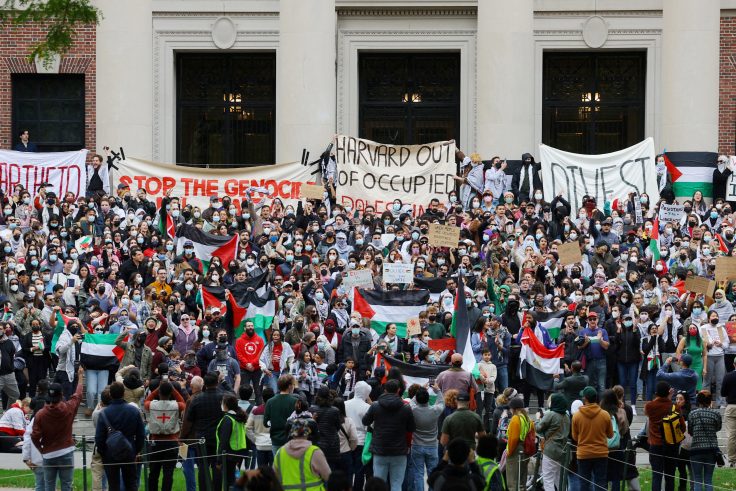
Judge Richard Stearns, who in August of 2024 found that "Harvard failed its Jewish students," has dismissed a different antisemitism lawsuit filed in March 2026 by the federal government against Harvard.
In explaining his decision, Stearns, a Harvard Law School graduate nominated to the bench by President Clinton, said the government focused "almost entirely on incidents that took place during the 2023-2024 school year." Stearns said that "Only three incidents are alleged to have occurred after this period, all of which took place nearly a full year later (and more than one full academic year before this case was filed) in March of 2025. Without diminishing any concern arising from these occurrences, the court finds them, singly and collectively, to be too isolated and episodic to support a plausible inference that any institutionalized noncompliance with Title VI persists at Harvard to this day."
The decision is a legal win for Harvard, but it does not mean the university is in the clear in respect to antisemitism or broader pressure from the federal government or from public opinion, which has turned sharply against "elite" higher education.
A federal appeal of a dismissal in a similar case is under way in the U.S. Court of Appeals for the First Circuit, with Harvard represented by a team of lawyers that does not include the one who won the favorable ruling from Judge Stearns. The Department of Education’s Office of Civil Rights announced in March that it had opened two new investigations into Harvard, and the Justice Department’s Civil Rights Division announced its own separate investigation in July 2026. Minutes after Judge Stearns’s order, the U.S. House Select Committee on China and the House Education and Workforce Committee released a 53-page report on Chinese Communist Party influence at Harvard, including the news that Harvard had created a separate entity, "Harvard Global," for the express purpose of serving as a conduit when Harvard University was unable to accept the sponsor’s terms due to legal or financial reasons.
In addition to legal proceedings, there are financial pressures. The legal fees that Harvard is amassing, a reported $126 million a year, exceed the amounts that some other universities have paid to settle. Brown, for example, settled for $50 million. Harvard also is facing an annual hit, which the university alumni magazine has estimated at $300 million or more, from an endowment tax increased by President Trump and Congress.
While Stearns had refused Harvard’s motion to dismiss in the 2024 case brought by Alexander "Shabbos" Kestenbaum and other Jewish students, he had ruled in other cases against Jewish students at MIT and against a Jewish student at Harvard Business School, Yoav Segev. He has a reputation in the plaintiff’s bar for being unpredictable and for dismissing suits.
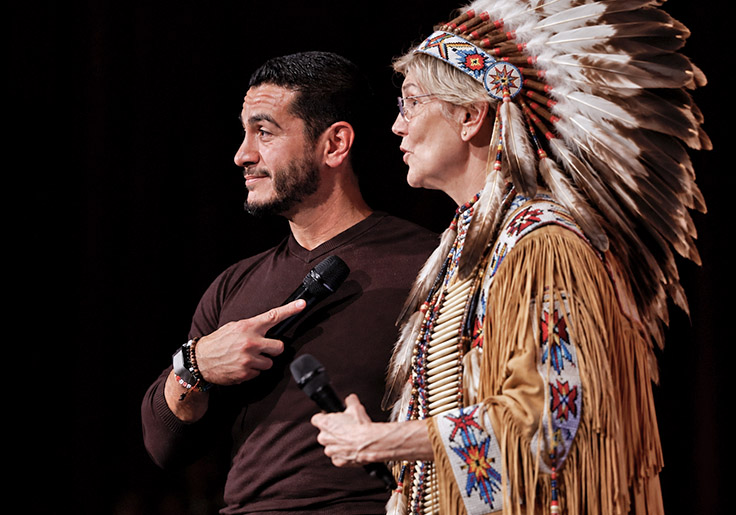
His decision was mocked Thursday. "Opinion summarized: ‘Your honor, my client may have killed the victim, but he hasn't killed anyone SINCE!’" Kestenbaum said.
The CEO and director of the National Jewish Advocacy Center, Mark Goldfeder, called the opinion "terrible."
"The court treated post-notice quiet as proof there was no continuing noncompliance, and therefore no case," Goldfeder said. "Harvard appeared quieter after notice, so the prior violations became legally inconsequential. The court took silence under maximum scrutiny for proof of compliance. Quiet does not mean cured. In July 2026, just six weeks ago, 170 Harvard faculty and staff reported that antisemitism had gone underground: kippot covered, Stars of David hidden, Jewish activities scrubbed from resumes, and students afraid to speak under their own names."
"The government should appeal, investigate new evidence, and preserve the administrative route. In 2024, this judge said Harvard failed its Jewish students. In 2026, he ruled the United States arrived too late to impose consequences. Congress set no such deadline," Goldfeder said.
Beyond the government and financial pressures, Harvard is facing intense competition for student and faculty talent. Some people are fleeing. James Hankins left for the University of Florida. Terrence Johnson left for Emory. Tomiko Brown-Nagin left for Stanford. Michael Kremer left for the University of Chicago. Michael Mina left for a publicly traded biopharmaceutical company. Applications to competing colleges, such as Vanderbilt, have been soaring, while Harvard has started delaying releasing its own application statistics publicly until it is required to by the federal government.
And Harvard’s own public-facing statements have seemed increasingly cynical. In recent weeks, for example, both Harvard president Alan Garber and the senior fellow of Harvard’s governing board, Penny Pritzker, have raised alarms that the Trump administration’s actions against Harvard's research funding will hurt the U.S. in competition with China. "For the first time we're no longer in number one," Garber said. "Today, of the top 10 universities in the world, 1 is in the United States and 9 are in China," Pritzker said, according to the Harvard Crimson. Yet the Alfred and Rebecca Lin Professor of Computer Science at Harvard, Ariel Procaccia, wrote a February 2026 article in the New York Times, "Don’t Trust the Rankings That Put China’s Universities on Top." Procaccia pointed out that "many Chinese universities are paper tigers: They churn out papers at a ferocious pace, but the quality of these publications is too often in question." The rankings are computed with a lag time, so they measure the outcome of Biden administration policy, anyway. Garber and Pritzker almost certainly know this, but they’re out making this argument anyway. So much for Veritas.
A more subtle dynamic is that as Harvard’s hostile climate for Jews and Israelis has attracted more publicity, pro-Israel students have increasingly chosen other institutions, diminishing the pool of Harvard students confident enough to file complaints. True, the situation has somewhat improved from the cesspool of the 2023-2024 year, but Harvard has notably avoided conducting or at least publishing institutional survey data that would measure the problem. A Harvard professor, Mark Poznansky, wrote in the Free Press in July that "Some students and faculty … are afraid to express their full identities; reveal details of, or even mention, connectivity to and work in Israel; include experiences on their CVs that indicate that they are Jewish; wear their kippah; or uncover their Star of David. A number of these students say it is a matter of self-protection and the only way to get through their educational experience at Harvard."
Harvard in general is a place where there’s a lot of conformity and approval-seeking; when the university central administration and many professors and deans are claiming that antisemitism enforcement is a pretense by the authoritarian Trump administration, individual students are reluctant to be skunks at the picnic and expose themselves to further ostracism by pointing out in specific detail how the bigotry and discrimination persists. If their baseline for comparison is the 2023-2024 year, they may focus on being happy with the improvements rather than being upset about the ongoing problems.
The federal government retains the option of directing new research funding to other institutions. And the affirmative action in college admissions case, which took nearly a decade and in some ways remains ongoing, is a reminder that Harvard’s critics can lose at the district court level and at the appellate court level and then emerge nonetheless with a resounding legal victory at the Supreme Court.
The law is a powerful lever, but it’s not the only one. Competition and choice and the market for talent and reputation have a lot of clout, too. While the legal gears are grinding, individuals are making choices, too.