

It cannot be said that Theodore Roosevelt has suffered from historical neglect. Harvard's collection of Rooseveltiana boasts 14,000 works by or about the man. A casual perusal of Amazon's Top 100 Audiobooks on Presidents and Heads of State turns up no fewer than 10 dealing with TR, more than any of the executive fraternity with whom he shares Mount Rushmore. A celebratory Roosevelt biography by Fox News anchor Bret Baier is currently ensconced on the New York Times bestseller list.
And the assembly line shows no sign of slowing. The last 12 months alone have generated volumes on Roosevelt's foreign policy, the women in his life, his complex relations with Jews at home and abroad, a coffee table album of TR's presidential train trips, and new accounts of his near-fatal exploration of Brazil's River of Doubt and a Smithsonian-sponsored expedition through East Africa. Far more than his contemporaries, Roosevelt feels astonishingly present, as befitting one whose lip-smacking endorsement ("good to the last drop") promotes the virtues of Maxwell House coffee over a century after he put down his last cup.
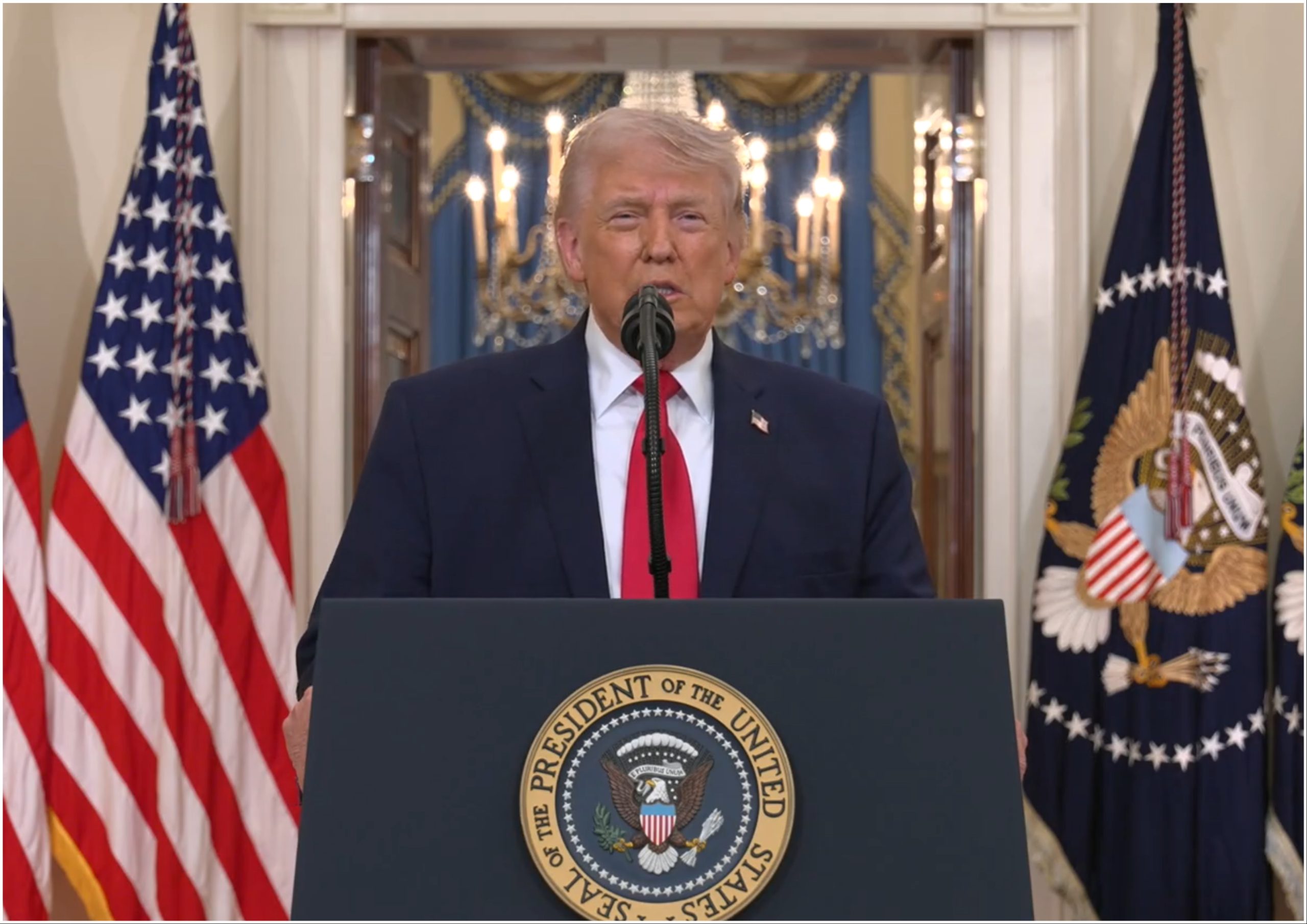
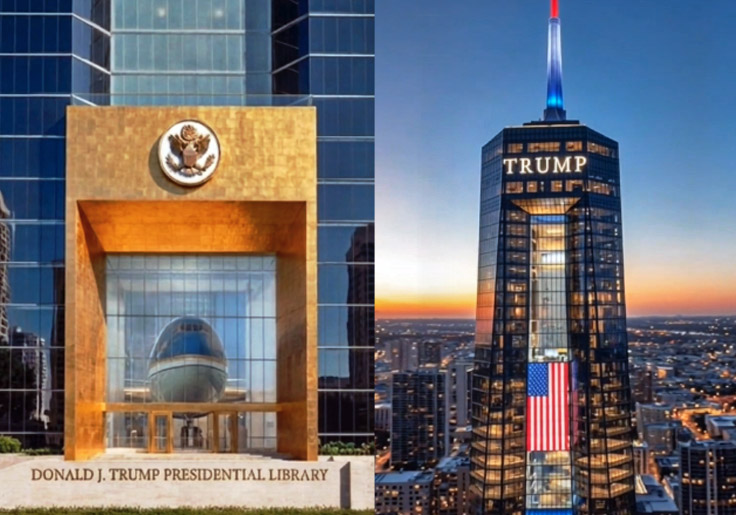
Fans of the Rough Rider draw inspiration from his trustbusting exploits and farsighted conservation policies, while small government champions portray our 26th president as the original RINO, instigator of the Nanny State more fully realized by his distant cousin Franklin. His Nobel Peace Prize for settling the 1904 Russo-Japanese War might rouse envy in the Trump White House, where TR's Big Stick takes precedence over his companion advice to speak softly. Yet Trump's overnight demolition of the East Wing recalls nothing so much as his predecessor's 1902 directive to "smash the glass houses," conservatories dating to the time of Franklin Pierce, in order to make way for today's West Wing.
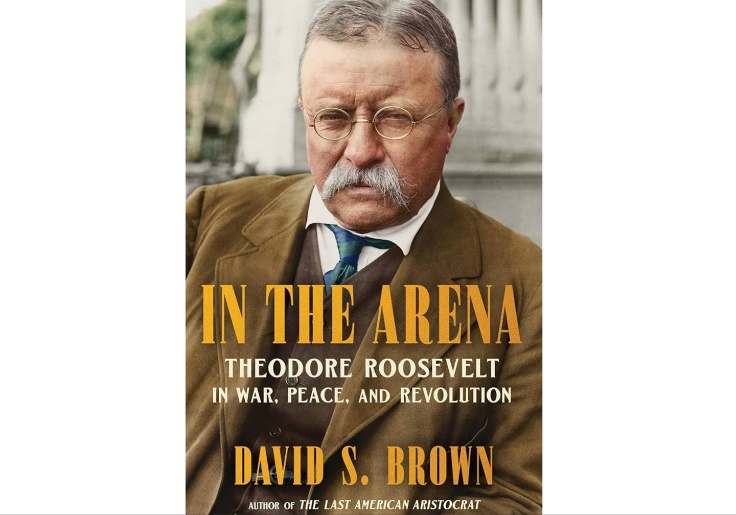
Under the circumstances we might all benefit from a solidly grounded, agenda-free life freshly interpreted even if somewhat familiar in its facts. And that, by and large, is exactly what David S. Brown gives us in In the Arena (a surprisingly pallid title for a book that is anything but). In many respects this is a sequel to Brown's The First Populist (2022), his admirably balanced life of Andrew Jackson, like TR an improbable friend of the working man whose clashes with the forces of economic privilege cannot blind us to his authoritarian leanings or retrograde views on race.
From the cartoons of Rollin Kirby to Arsenic and Old Lace, Theodore Roosevelt has always invited caricature. Brown depicts a more nuanced "conservative drawn to progressive ends," with political instincts bordering on genius. He grounds Roosevelt's complex character in his namesake father, a lifelong role model. Only one flaw marred this Knickerbocker personification of noblesse oblige—his 1863 hiring of a substitute to fill his place in the Union Army. The senior Roosevelt's uncharacteristic shirking of duty was likely in deference to his neurasthenic wife Mittie, a cosseted Georgia belle (it was "good policy," she acknowledged, "to keep up the appearance of a cold"), whose family had been forced to sell four slaves to pay for their daughter’s wedding.
Reading between the lines so we don't have to, the author draws inferences between TR's martial compulsions and the redemption of his father's good name. Here as elsewhere Brown isn't out to undermine the Roosevelt legend so much as to put it in perspective. Acknowledging young Teedie's determined efforts to build his asthma-wracked body through strenuous exercise, Brown describes "a lean, consumptive" Harvard freshman weighing in at 124 pounds, and plagued by asthma well into adulthood. Service was in the Roosevelt blood, but so was snobbery. At Harvard the budding naturalist and "intellectual magpie" qualified his 21st-in-class ranking with a boast that "only one gentleman stands ahead of me."
History would repeat itself in TR's first marriage to a Dickensian child-bride he met while a Harvard undergrad, and to whom he addressed "Sweetest little wife" missives in the short years before her death in childbirth in February 1884. Typically self-absorbed, Roosevelt missed the birth of his daughter Alice by remaining in Albany, where his rich man's wardrobe and flagrant headline hunting amused the raffish fraternity of New York state legislators.
His grief-driven sabbatical as a North Dakota cattle rancher is widely seen as the transformative experience of Roosevelt's life, much as FDR's humbling by polio is cited to explain the Hudson Valley aristocrat turned scourge of Wall Street's economic royalists. The Badlands purged TR of his Eastern affectations, instilling a newfound respect for what Brown calls "the truest Americans—ethnically mixed, spiritually varied, and Manifest Destiny's inevitable offspring." The truth, he concedes, is a bit more complicated. TR made his first visit in the autumn of 1883, leaving a four-months-pregnant spouse because "the hunting will do me good."
Being photographed in buckskin and moccasins contributed to Roosevelt's Everyman image, but the apprentice cowboy expected ranch hands to address him as "Mr. Roosevelt." After remarriage to childhood sweetheart Edith Carow refocused his energies on New York politics, and a disastrous winter wiped out most of his substantial investment, Roosevelt limited his Western forays to infrequent hunting trips. Elkhorn Ranch was sold in 1898, the year "Teethadore" achieved national celebrity through his Spanish-American War exploits.
TR went to war stylishly outfitted by Brooks Brothers, with handmade boots and 11 pairs of glasses sewn into his wide-brimmed slouch hats. Following 137 days of active service the newly promoted Colonel Roosevelt burnished his heroic credentials in The Rough Riders, one of three dozen books that bear his name. "Colorfully plotted and briskly paced," Brown calls it. The same might be said of his 61 bite-sized chapters written in a voice at once authoritative and wryly detached. At his best Brown achieves a kind of You Are There immediacy that makes for gripping narrative.
Less compelling is his account of the Roosevelt presidency, which occupies roughly a third of his text. Brown is not the first TR biographer to struggle with the institutional constraints imposed on his hyperactive protagonist by the highest office in the land. Settling a coal strike is less dramatic than the Boys Life adventurism of Roosevelt's Cuban exploits or the disappointments that darkened his later years. It should come as no surprise that Alice Roosevelt's 1906 White House wedding gets more space than the landmark Pure Food and Drug Act passed the same year.
Yet chafe as he might against executive protocol, Roosevelt had no trouble imagining himself as national agenda setter. Under his stewardship theory of the executive, Roosevelt believed he could take any action not explicitly prohibited by the Constitution. This included a whimsical campaign to preach the virtues of phonetic spelling. It also produced 51 federal bird sanctuaries, 5 new national parks, the Bureau of Corporations, and the Panama Canal.
Even as the public welcomed his pragmatic reforms, Rooseveltian activism exhausted his own party's Old Guard on Capitol Hill. Among the few resistant to his charms, Mark Twain labeled TR "the Tom Sawyer of the political world … he would go to Halifax for half a chance to show off; and he would go to Hell for a whole one." Still he was not immune to the second-term jinx bedeviling presidents since George Washington. Roosevelt thought it "a wicked absurdity" when San Francisco's Board of Education segregated students of Asian heritage from their white counterparts. This did not prevent him and Secretary of State Elihu Root from orchestrating strict quotas on Japanese immigration in return for the school board's symbolic repeal of its offending ban.
Roosevelt displayed considerably less finesse in the aftermath of a shooting spree one summer night in Brownsville, Texas. Rushing to judgment on flimsy evidence, he condemned as "bloody butchers" the black soldiers of the 25th U.S. Infantry Regiment. The president made things worse by publicly losing his temper at Washington's Gridiron Dinner. Insisting the fate of the accused men "is my business and the business of nobody else," he had them summarily dismissed (only to have their dishonorable discharges reversed following a 1970s investigation).
Increasingly arbitrary, Roosevelt sometimes behaved as if he was the only branch of government. The proverbial big Navy man, his decision to send the Great White Fleet (18 vessels and 13,000 sailors) around the world was vintage TR. Having sufficient funds to move the armada to the Pacific, he left it to Congress to get them home again. Markets proved less pliant to his will. A Wall Street panic in 1907 required the personal intervention of J.P. Morgan, his old sparring partner from the Northern Securities and other trustbusting cases.
In no way humbled, Roosevelt retained sufficient clout to install William Howard Taft as his successor. It was only a matter of time before Taft received the treatment accorded 500 elephants, lions, giraffes, and other African creatures Roosevelt and son Kermit slaughtered on the inevitable post-White House safari. After 1913 TR transferred his animus from Taft to his Democratic successor Woodrow Wilson ("the most wretched creature we have had in the Presidential chair"). His thirst for combat unappeased, the aging colonel tried and failed to get White House permission to raise a latter-day Rough Rider division of volunteers to fight in the Great War.
He took solace in the service rendered by his four sons. "I'd rather none came back than one, able to go, stayed at home," he confided. But when his youngest boy Quentin was shot down over France in October 1918, it broke his heart. His own body punished him for six decades of strenuous living. "In the nature of things we must die soon anyhow," Roosevelt observed. "And we have warmed both hands before the fire of life." When death took him in the first week of January 1919, it came as a release.
In a brief, sobering coda, Brown assesses the costs of being Theodore Roosevelt's children. Of his three surviving sons, Ted Junior died of a heart attack days after storming the Normandy beaches on D-Day; Kermit surrendered to alcoholism and killed himself in June 1943; and Archie joined the John Birch Society from which platform he advertised his father's least repeatable racial slurs.
One can marvel at TR's energy and range of interests, admire his intellect, and concede his lofty standing in the presidential pantheon—and simultaneously shudder at his noisy vehemence and substitution of one man's will for constitutional restraint. His relevance, however, is beyond question. In his "inexhaustible self-regard" and implicit challenge to democratic norms, Brown concludes provocatively, Theodore Roosevelt is very much with us, and not just on coffee cans.
In the Arena: Theodore Roosevelt in War, Peace, and Revolution
by David S. Brown
Scribner, 496 pp., $31
Richard Norton Smith is a Pulitzer Prize finalist and author, most recently, of Ordinary Man: The Surprising Life and Historic Presidency of Gerald R. Ford (Harper).