

The Trump administration has once again horrified European public opinion. The National Security Strategy was released with little fanfare in the United States but landed like a bomb across the Atlantic. Lines like, "Our broad policy for Europe should prioritize … cultivating resistance to Europe’s current trajectory within European nations," reveal both the impatience a faction in the Trump administration feels toward Europe and its inability to win the internal debate.
But over the weekend, Secretary of War Pete Hegseth reminded America’s allies how to win over President Trump. "Model allies that step up, like Israel, South Korea, Poland, and increasingly Germany, the Baltics, and others, will receive our special favor," he said at the Reagan National Defense Forum. He praised South Korea’s pledge to increase its defense spending and noted, "We are optimistic that ... other Indo-Pacific allies will follow suit in a few years." Indeed, many of those allies are poised to do so, which will strengthen Trump’s efforts to deter China.
South Korea is the most surprising recipient of American praise. The ruling South Korean left is typically skeptical of the United States and dovish on North Korea and China. South Korean progressives adored Trump’s first-term attempt to make a deal with Kim Jong Un, but their foreign policy inclinations are at odds with Trump’s demand that U.S. allies take more responsibility for their defense.
South Korean president Lee Jae Myung has handled that part of his portfolio well. Last month he agreed to raise the defense budget from 2.3 percent of South Korean GDP to 3.5 percent "as soon as possible," and aims to hit that target by 2035. Trump authorized South Korea to build nuclear-propelled submarines in Philadelphia. Last week the South Korean parliament approved more defense spending for the upcoming year, making good on President Lee’s pledge.
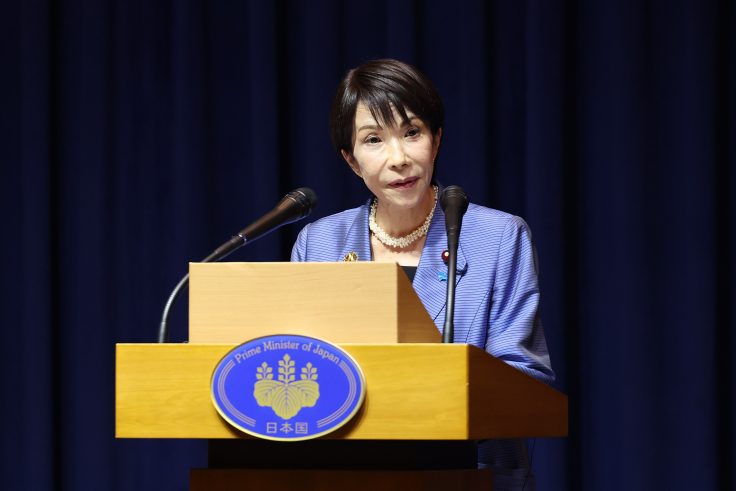
Under new prime minister Sanae Takaichi, Japan is also moving in a good direction. The Japanese government had kept its defense spending around 1 percent of GDP until 2022, when Russia’s invasion of Ukraine convinced Tokyo to reach 2 percent by 2027. Domestic concerns about militarism had led the Japanese government to downplay its defense expenditures, which would be higher if Tokyo used NATO accounting standards.
Takaichi has accelerated Japan’s efforts to deter China throughout her first two months in office. Japan’s military is surging forces to the Ryukyus, an island chain that reaches toward Taiwan. She is maneuvering through parliament a supplemental budget that will reach Japan’s defense spending target two years ahead of schedule. She has not yet pledged to hit the Trump administration’s standard of 3.5 percent, but Japan has made enormous strides in the past three years.
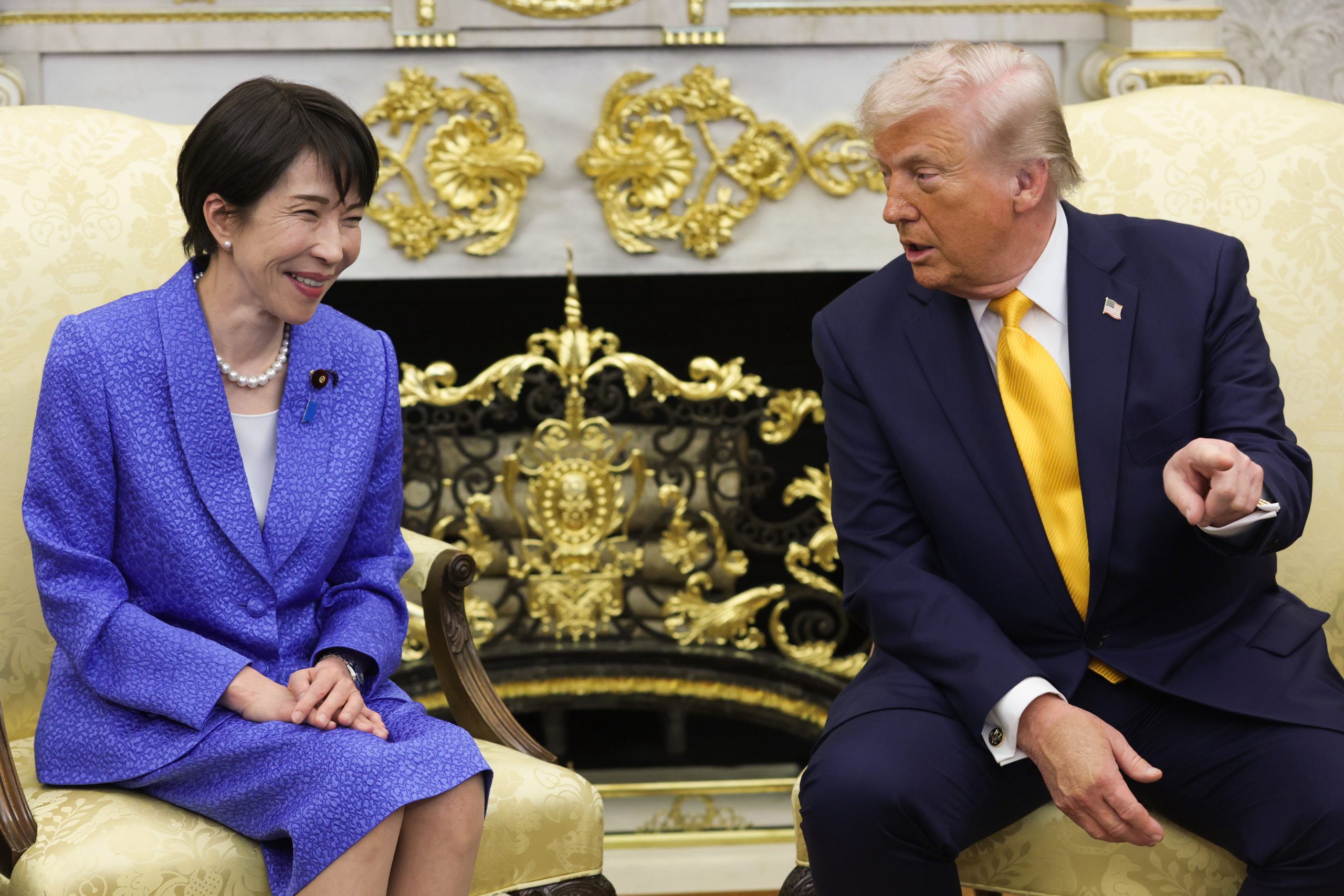
In some respects, Takaichi is moving too fast for Trump. Last month she remarked that a conflict around Taiwan "could constitute a survival-threatening situation." Japanese law authorizes her to send the troops into such a situation, and China’s reaction was incandescent. Trump, who has lavished praise on Takaichi, reportedly asked her privately to hold back for now. His administration has since publicly supported Japan against Chinese military pressure.
Australia is closer to the Trump standard than some let on. As Defence Minister Richard Marles pointed out this fall, "If you look at the way in which NATO accounts for its own spending in terms of percentage of GDP, based on that metric, our spending on GDP today in terms of defence is around 2.8 percent." The Pentagon recently concluded its review of the submarine-sharing pillar of the AUKUS defense tech agreement, which cleared the way for Australia to get its submarines. Australian companies have also collaborated with Japan to build a rare earths supply chain free of Chinese involvement, which would be vital in a conflict.
Taiwan is also stepping up. Its defense budget has doubled in recent years and, according to former Pentagon officials Ely Ratner and Randall Schriver, has already surpassed 5 percent of GDP according to NATO standards. Since few countries are willing to sell arms to Taiwan for fear of offending China, Taipei needs the United States to continue chipping away at the $22 billion backlog of weapons orders.
These are welcome developments, since the region is getting more unstable. Chinese and Russian ships and planes routinely menace Japan and South Korea, and China’s "gray zone" pressure campaign against Taiwan is demoralizing the Taiwanese.
Defense budget increases are necessary for deterrence, but insufficient on their own. Xi Jinping will not care about Asian democracies meeting NATO accounting standards if he thinks his forces can nonetheless defeat them.
Many dictators have committed acts of aggression because they believed, often mistakenly, that free people are too soft and decadent to defend themselves. America’s allies are helping the United States to maintain its military advantages. But ultimately, Trump must convince Chairman Xi to give peace a chance.