





A disabled woman is suing the homeless services department in Multnomah County, Oregon, after she was denied rent relief due to her low score on the county's race-based prioritization rubric, which awards more points for requesting "culturally specific services"—including "BIPOC"-focused housing—than for having a disability.
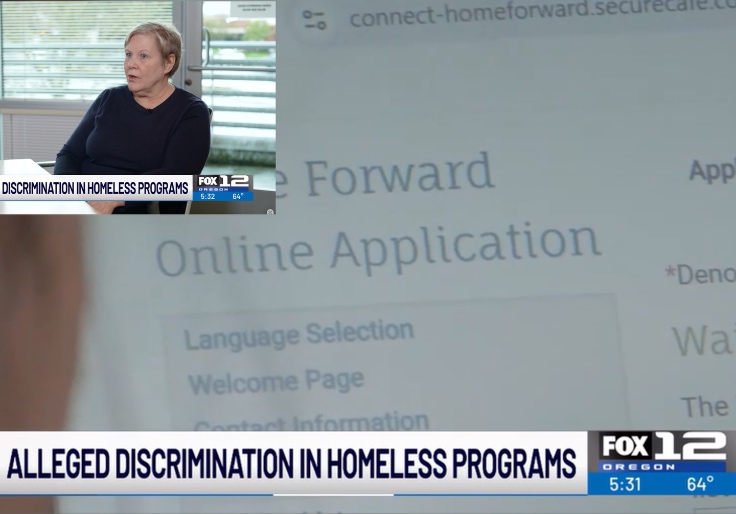
Michele Mei, a white woman with cerebrovascular disease, filed the lawsuit after she was told that she did not meet the cutoff for housing assistance, Fox 12 Oregon reported last month. The complaint came in the wake of an investigation by Oregon's Bureau of Labor and Industries, which found "substantial evidence of an unlawful housing practice on the basis of disability." Home Forward, Portland's public housing corporation, is also a defendant in the lawsuit.
Multnomah County uses a points-based rubric to prioritize applicants for housing assistance. Under the rubric, obtained exclusively by the Washington Free Beacon, having a disability only counts for 1 point, whereas "interest in culturally specific services" counts for 2.
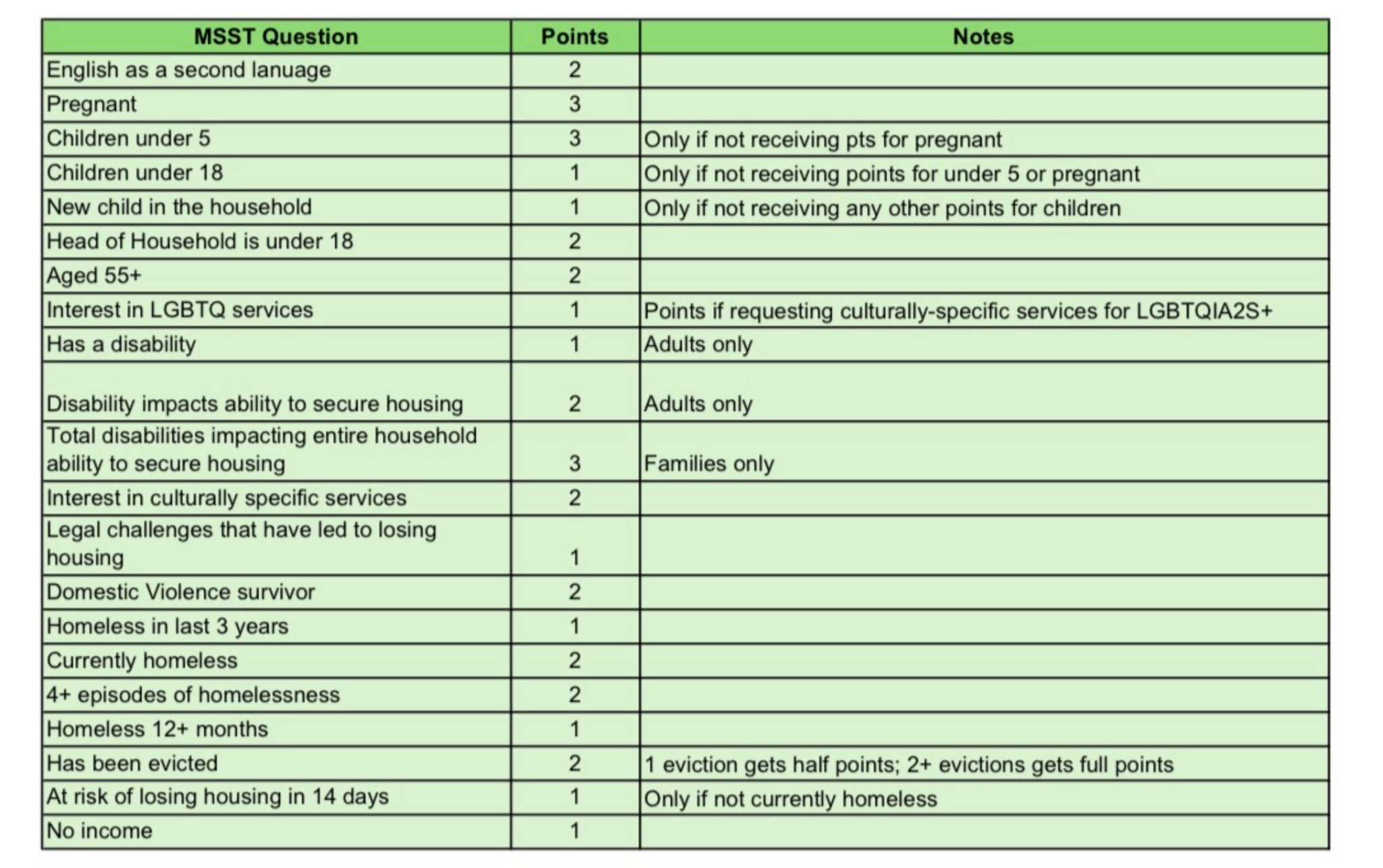
Though the rubric awards extra points when the disability impacts access to housing, it awards even more to gay, lesbian, bisexual, or transgender people who speak English as a second language, meaning that identity factors can outweigh disability status.
Mei, who is suing under the Americans with Disabilities Act, is a striking example of the costs of that system. Though her lawsuit does not allege racial discrimination, she would have had better odds of obtaining rent relief had she been black, transgender, or a non-native English speaker. The case illustrates how, in a zero-sum competition for resources, prioritizing one group necessarily comes at the expense of others, pitting protected classes against one another.
"Adding points for race may seem politically savvy, but it harms people—labeling them by immutable characteristics instead of assessing individual need," said Caitlyn Kinard, an attorney at the Pacific Legal Foundation, which has challenged racial preferences in the public sector. "The result: people with disabilities in Multnomah County are now finding it harder to access resources."
Mei and Home Forward did not respond to requests for comment. A spokeswoman for Multnomah County, Denise Theriault, said that the county "complies with all Fair Housing Act and anti-discrimination laws."
"All services funded by the Multnomah County Homeless Services Department are open to everyone regardless of their protected class," Theriault wrote in an email. "The County has no further comment on this matter because of ongoing litigation."
Multnomah's rubric is one of the dozens of programs throughout the country that dole out housing assistance using race, often by earmarking grants for minority-serving nonprofits. Some states also factor in a region's racial composition when allocating homeless funds, and cities have been known to incorporate racial quotas into their federally funded shelter systems.
In a post on X last week, Harmeet Dhillon, the assistant attorney general for the Justice Department's civil rights division, called such schemes "disturbing" and vowed to investigate. Her remarks came in response to a Free Beacon report on these systems, including the one in Multnomah County, which runs a suite of "culturally specific housing" projects for the "BIPOC community."
The projects include Meridian Gardens, which provides apartments to "BIPOC individuals and couples experiencing … homelessness," and the soon-to-be-completed Barbur apartments, which will "focus on … immigrant and refugee communities, specifically Muslim and East and North African households." Placements in those buildings are determined by Multnomah's coordinated access process, the system Mei says denied her request for long-term rental support.
Redesigned in 2024 in order to "promote equity," the process prioritizes "BIPOC households, LGBTQIA2S+, [and] people with disabilities." But Mei says the housing department refused to meet with her for an in-person assessment, making it difficult for her to navigate the process.
"I had spoken to as high as you can go at the homeless service department, trying to understand this process, and asking for years for a reasonable accommodation to their policy and procedure," Mei told local news. "I'm not asking for something I'm not eligible for."
Mei, who says she has been on the brink of homelessness since she fled an abusive marriage in 2018, added that rent relief would have spared her years of instability.
"I wouldn't have had to move a whole bunch of times," she said. "I wouldn't feel the threat of eviction."