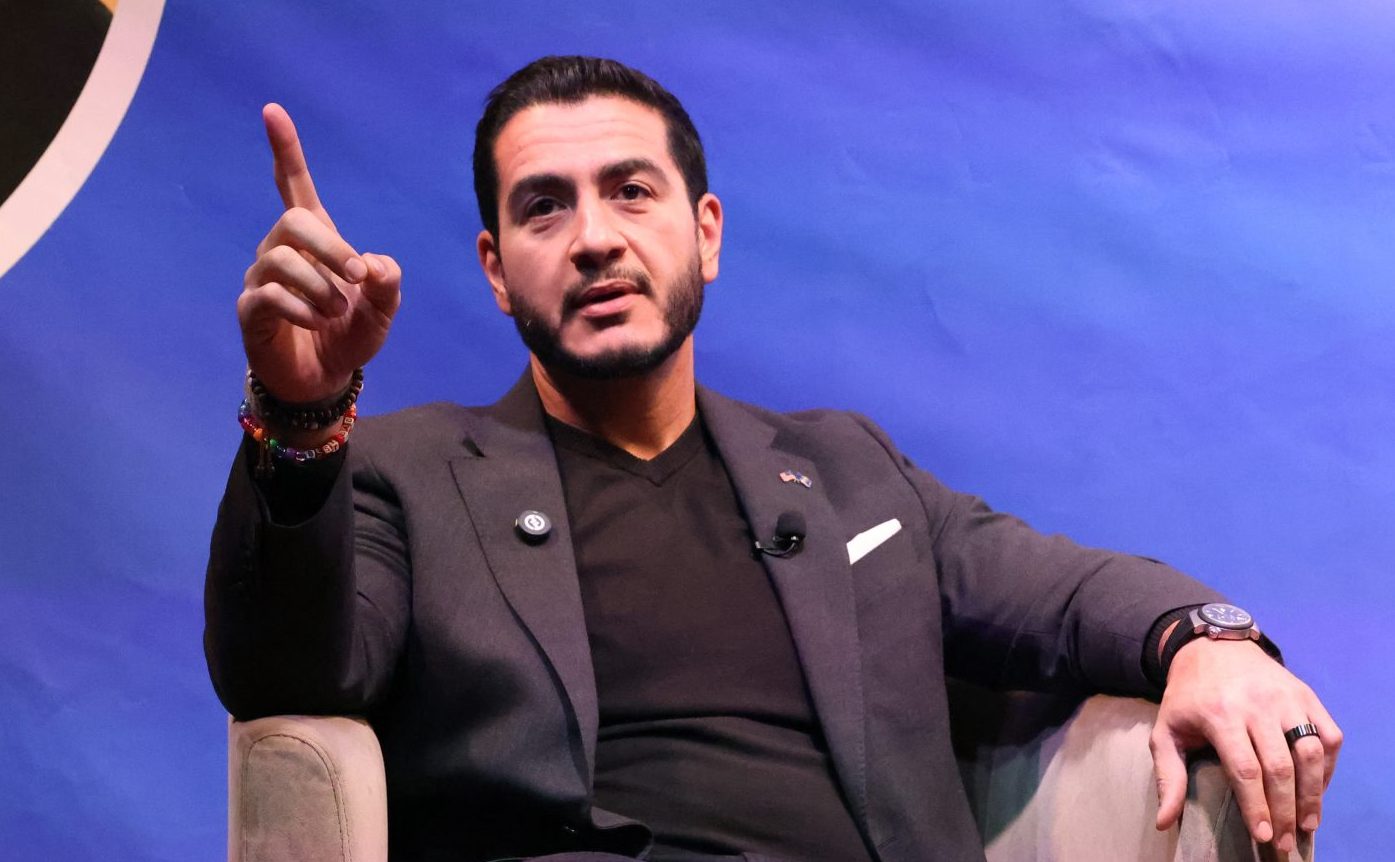

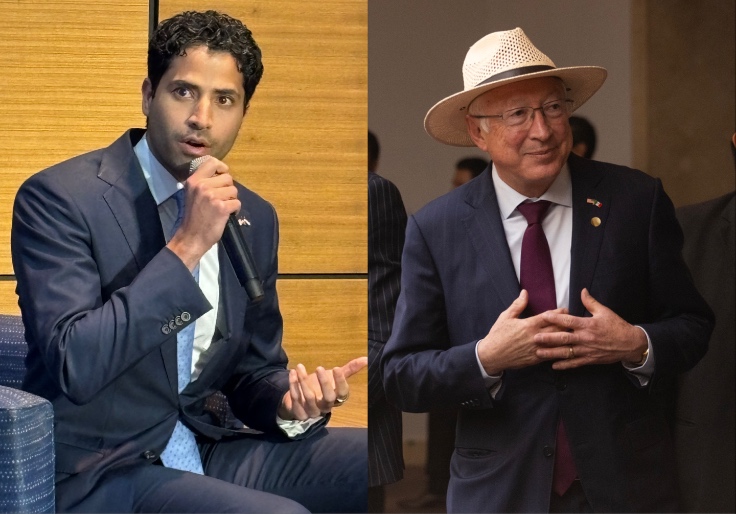
GREELEY, Colo.—Democrat Manny Rutinel, the former climate activist running in the Centennial State's competitive Eighth Congressional District as a supporter of the oil and gas industry, identified the man he hopes tops the Democratic ticket in 2028: Obama administration interior secretary Ken Salazar, who significantly tightened regulations on the oil and gas industry during his tenure, prompting drilling permits to plummet.
After Rutinel refused to participate in a debate with his Republican opponent, Rep. Gabe Evans, the Colorado Sun hosted a forum at a University of Northern Colorado auditorium, where each opponent separately appeared on stage and was asked the same questions. Rutinel paused for nearly 10 seconds when asked whom he wanted to become the Democratic nominee for president in 2028, then said, "Am I allowed to say Ken Salazar?"
"Ken Salazar has been an incredible, just mentor, someone I admire deeply," Rutinel continued. "I think he is someone who is deeply admired by folks across the country, not just here in Colorado. He's been a great ally of mine."
Salazar, a 71-year-old former Colorado senator, faced steep criticism for his tight restrictions on the oil and gas industry while serving in the Obama administration, with some House Republicans at the time calling him one of the worst interior secretaries in history, the Denver Post reported.
As one of his first actions following his confirmation, Salazar withdrew more than 100,000 acres in Utah from an impending federal oil and gas lease sale that the Bush administration had planned. In 2010, he instituted stricter environmental review requirements on gas leasing and drilling. Approvals plummeted.
From 2008 to 2011, oil and gas leases in effect on federal land decreased by 11 percent, the Washington Examiner reported. The acreage under lease fell by 19 percent, and the number of approved permits dropped by 36 percent over the same period.
Oil and gas production declined as well. From 2010 to 2011, the number of oil barrels produced decreased by 14 percent, and cubic feet of natural gas by 11 percent, according to Energy Information Administration data reported by the Examiner.
Salazar also placed a six-month moratorium on new deepwater drilling following the April 2010 BP Deepwater Horizon oil spill. That June, a federal judge blocked the move, finding that the Obama administration misleadingly claimed that experts supported the suspension. In reality, engineers who reviewed the proposed safety plan opposed the blanket ban.
Rutinel—who served as an attorney with the far-left environmental group Earthjustice and was arrested for storming the field during a November 2019 Yale-Harvard football game to demand the schools divest from oil and gas—has made significant efforts to recast himself as a moderate who backs the eighth district's sizable oil and gas industry.
After beginning his congressional campaign, he stripped references to his Earthjustice gig off his website and excluded it from his biography at an untelevised October 7 debate. Evans reminded the audience of his opponent's résumé and noted that Earthjustice threw its support behind the County of Boulder, which neighbors the eighth district, in its lawsuit accusing multinational oil companies of deceiving the public about the climate-related harms of the fossil fuel products.
Rutinel said as recently as last year that he wanted to ban fracking, but he now says he favors an "all of the above energy solution." During Tuesday night's forum, he refused to say if the United States should ever stop using oil and gas.
Salazar, meanwhile, stayed involved with Democrats after leaving the Obama administration. Hillary Clinton tapped him to lead her presidential transition team if she won the presidency in 2016, and he served as ambassador to Mexico under former president Joe Biden.
Salazar's moves against oil and gas began before he joined the Department of the Interior. As a Colorado senator, he opposed drilling in Alaska's Arctic National Wildlife Refuge.