

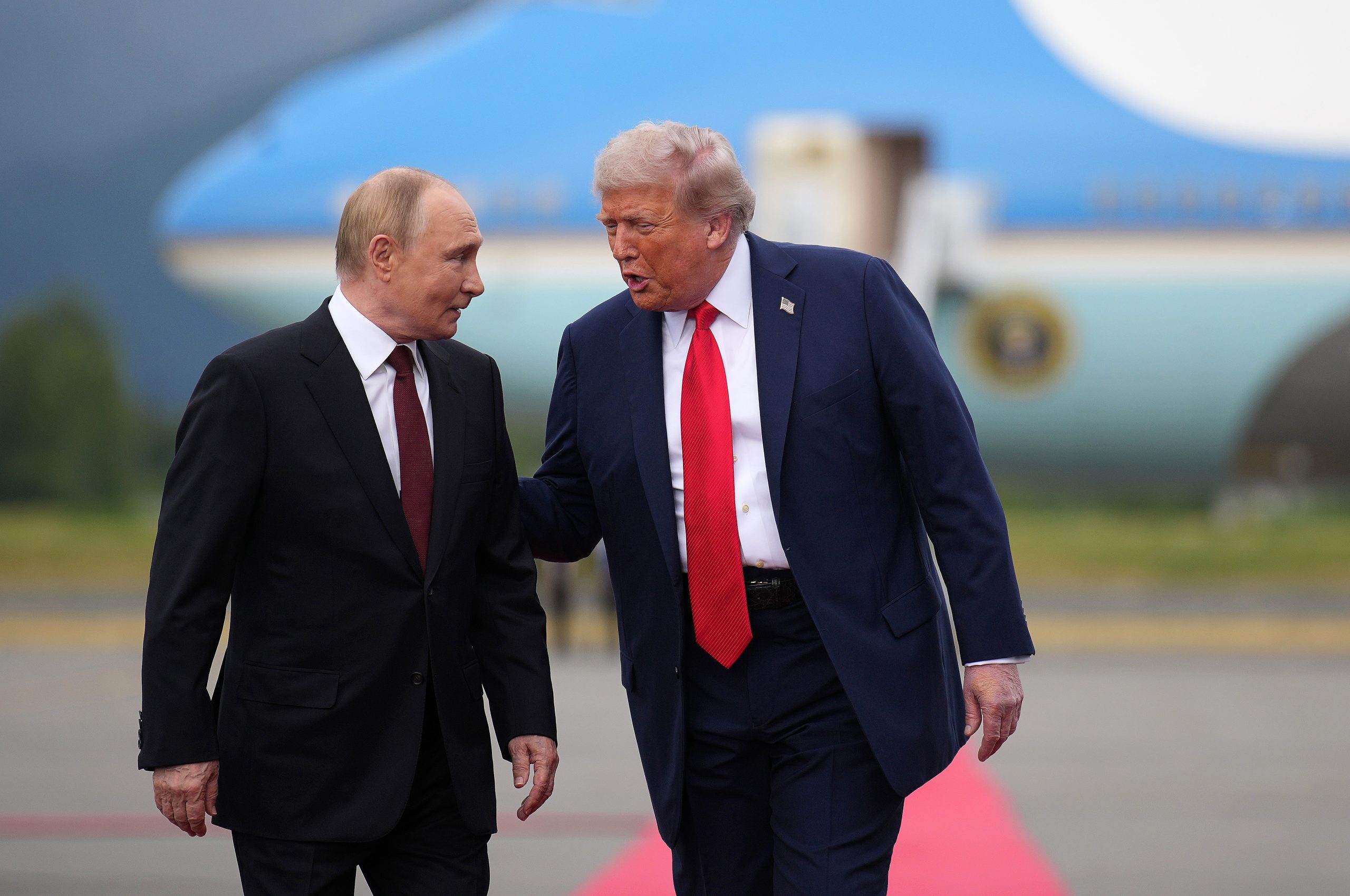
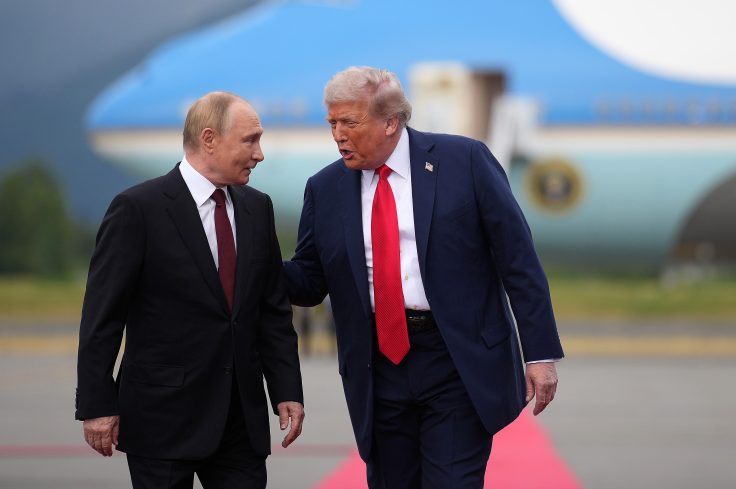
Donald Trump's relationship with Vladimir Putin has long been the subject of controversy, and the recent diesel purchase agreement brought it back into the spotlight. Setting aside the feverish accusations that Trump is somehow Putin's subordinate, many think the president is overly deferential to the blood-soaked tyrant or even sympathetic to Putin's open disdain for Western pieties.
Trump is not eager to antagonize Putin, and he clearly believes there is still a deal to be had with Moscow. But that does not mean he sees Putin as a charter member of some new world order. Rather, Trump is trying to squeeze as much value out of the relationship as he can. Putin, though, is increasingly unable to deliver.
There is a strategic logic behind Trump's open hand to Moscow. The increasingly close alignment between Russia and China multiplies America's international problems. That alignment is controversial even in a Russia that desperately needs China to keep its war machine humming: The Kremlin is wary of Chinese influence and quietly raised tariffs on imported goods like cars. Driving a wedge between Russia and China could complicate Putin's and Xi Jinping's decision-making and reduce the pressure on the United States and its friends.
The surprise announcement that the United States will purchase Russian diesel is a classic case of Trumpian improvisation. Iran is desperately trying to halt the flow of oil out of the Strait of Hormuz by striking oil tankers, but some ships are getting through. American farmers, construction workers, and truckers in particular are struggling to deal with higher diesel prices, though, and the midterms are weeks away. The G-7's release of diesel and other oil reserves this month has not driven down prices far enough, and Russia can in theory still export some refined diesel, so Trump is hoping that the news of the deal will tame prices at least through the election.
There are several problems with this plan. Less than a month ago, Trump signed the Lindsey Graham Act penalizing other countries for buying Russian energy exports, and the sudden pivot will disorient and even enrage friendly and neutral countries. The Russians promise to deliver only about 2 percent of U.S. daily demand for diesel, and since the United States is a net exporter anyway, the effect on prices is unclear. And that only applies if Russia, which rations domestic fuel consumption, can actually deliver.
Putin's unprovoked attack on Ukraine has exposed his regime's fundamental weakness. Russia has elaborate surveillance and air defense systems, but it cannot prevent Ukraine from taking the fight deep in Russian territory. Last summer, Operation Spiderweb mauled Russia's bomber fleet. In the past few days, Ukraine damaged half the data centers operated by Russia's state-backed internet company Yandex, which only owned six. Ukrainian drones regularly shut down Moscow's airports and have bombed Russia's energy refining into its lowest output since 2002. The Russians characteristically ignored the energy ceasefire Trump announced on Sunday, and the Ukrainians are back to hitting Russian refineries.
This weakness is part of a larger problem for Moscow. Eastern Russia and even Chinese border cities are scrambling after a Russian researcher from the Irkutsk Anti-Plague Research Institute died under mysterious circumstances. If, as many suspect, the unfortunate woman was exposed to a pathogen in the lab, it will be a shocking slipup for a country that has devoted considerable resources to bioweapons for decades.
Russia cannot defend its own territory and is having trouble asserting its authority over its near abroad too. Putin began attacking Ukraine because he could not keep it from drawing closer to the European Union. So far, he has little to show for his "special military operation" other than around one-and-a-half million Russian casualties and Sweden's and Finland's joining NATO. The Trump administration is working on a pipeline project across Armenia and Azerbaijan that would give Central Asia an outlet for exporting oil to Europe without traversing Iran or Russia, which would further weaken Putin's hold on the former Soviet states.
Putin is still dangerous. His military is innovating against Ukraine, and he is exporting the lessons learned to his fellow anti-American autocrats. The Europeans are responding inadequately to his increasingly brazen campaign of arson, subversion, and murder across the continent. And the upcoming French and German elections could land him a friend in Paris or Berlin.
But none of this changes Russia's fundamental downward trajectory. Putin inherited a diminished Russia that struggled to control its territory, was economically moribund, and could not shape the international environment in its favor. He promised to pull the country out of the doldrums, and at first seemed to deliver. But thanks to his own hubris, he could leave his country in worse shape than when he found it.