

Sometimes the New York Times is so biased it’s actually funny. This was one of those days, on multiple fronts.
Start with page one of the print paper, where a "news analysis"—maybe the other articles should all be labeled as being analysis-free?—refers to "the mass riots in France, which started as protests over underfunded schools."
A headline on the front of the business section reports, over a picture of fire and smoke on a Paris street behind police in riot gear, that "A Debt Trap Threatens France Amid Rising Populism." To read the New York Times, you’d think that the people sacking synagogues in Paris (while leaving mosques untouched) are just a bunch of populist education reformers.
Two-thirds of a print page are devoted to an article headlined "French 14-Year-Old Maimed by Police Tear Gas Grenade at School," as if the big problem in France is police brutality rather than an intifada.
A piece in the October 20 print Times offered a similarly vague take: "Students started protesting last month to express frustration with the condition of their high schools. Other groups like labor unions joined the student demonstrations in solidarity and to highlight their own grievances, like the cost of living and rising fuel prices. But nebulous groups took advantage of the demonstrations to attack government buildings, smash shops and loot on Saturday." That piece appears under the byline of one "Zane Irwin," previously a reporting fellow at the far-left, foreign-funded Pulitzer Center. The Pulitzer Center says "Zane has covered global issues, from the experiences of migrants to climate change, and local topics, like the legacy of racism in Kansas City’s housing policies."
Who could these "nebulous groups" possibly be? President Trump offered his own explanation: "Paris is going to be a Muslim city very soon, and that wasn't the deal. … Emmanuel [Macron] should've closed his borders a long time ago. I told him to do it." Prime Minister Benjamin Netanyahu offered a similar assessment, recently answering "yes" to the question "Are Muslim migrants burning down France?"
But the Times is going with the "nebulous groups" and "students" and "populism" rather than marauding Muslim immigrants. If you read the paper with a magnifying glass you might occasionally get a hint of the underlying reality. Buried at the bottom of page A12 is a story about "a strange new slogan" that the Times describes as a "somewhat mystifying rallying cry." The slogan, "bismillah c'est les ténèbres," is not actually "new"—photos of it amid the riots date back more than a week now. The Times describes it as "a mash-up of the Islamic blessing ‘In the name of God.’" Imagine that, an Islamic blessing. It’s only "strange" and "mystifying" to anyone clinging to the belief that these are protests about education reform or "populism" or driven by "nebulous groups" rather than by, as President Trump and Prime Minister Netanyahu said, Muslim immigrants.
The "move along please, nothing to see here" attitude toward violent Islam extends beyond Paris to the Columbia University campus. A Times headline reports, "Pro-Palestinian Activist Appeals to Supreme Court to Halt Deportation." Here’s how a Washington Free Beacon article about the activist, Mahmoud Khalil, had described some of the context:
Khalil—a Syrian native and Algerian national—emerged as an outspoken leader in the anti-Israel movement at Columbia shortly after Hamas's Oct. 7 terror attack, serving as a negotiator during the April 2024 encampments on behalf of Columbia University Apartheid Divest (CUAD), a radical student group that called for "death to America" in the wake of Operation Epic Fury, the joint U.S.-Israel military offensive against Iran. He also participated in a series of illegal protests, including the storming of Barnard College's library, which involved CUAD agitators disseminating Hamas propaganda.
He told reporters at the time that he and his movement would push Columbia to divest itself from Israel by "any available means necessary."
The Trump administration detained Khalil in March 2025 and revoked his visa and green card, with a State Department official telling the Free Beacon that, "under this administration, if you support terror groups, we will deport you." An immigration judge in September found he "willfully misrepresented" both his campus activism and his work for the Hamas-tied United Nations Relief and Works Agency at the time of the Oct. 7 attacks on his green card application.
The Times mentions none of that. It does say "Mr. Khalil has denounced antisemitism and said that criticism of Israel is not inherently antisemitic." As if that settles it. How would the Times handle an applicant who willfully misrepresented her experience on a job application?
Then there is the Times report on what the paper describes as "ugly attacks" on Michigan’s Democratic Senate nominee Abdul El-Sayed’s "faith and family ties." A triple-bylined piece tells us that El-Sayed’s "ethnicity, religion, and family" have come under scrutiny and, in the second paragraph, that Republican Mike Rogers has tried to "draw a connection" between El-Sayed’s mother and Al-Qaeda. Only 11 paragraphs later do we learn that’s because she "worked for a charity that was designed by the U.S. government as a supporter of terrorist groups, including Al-Qaeda." Ugly indeed.
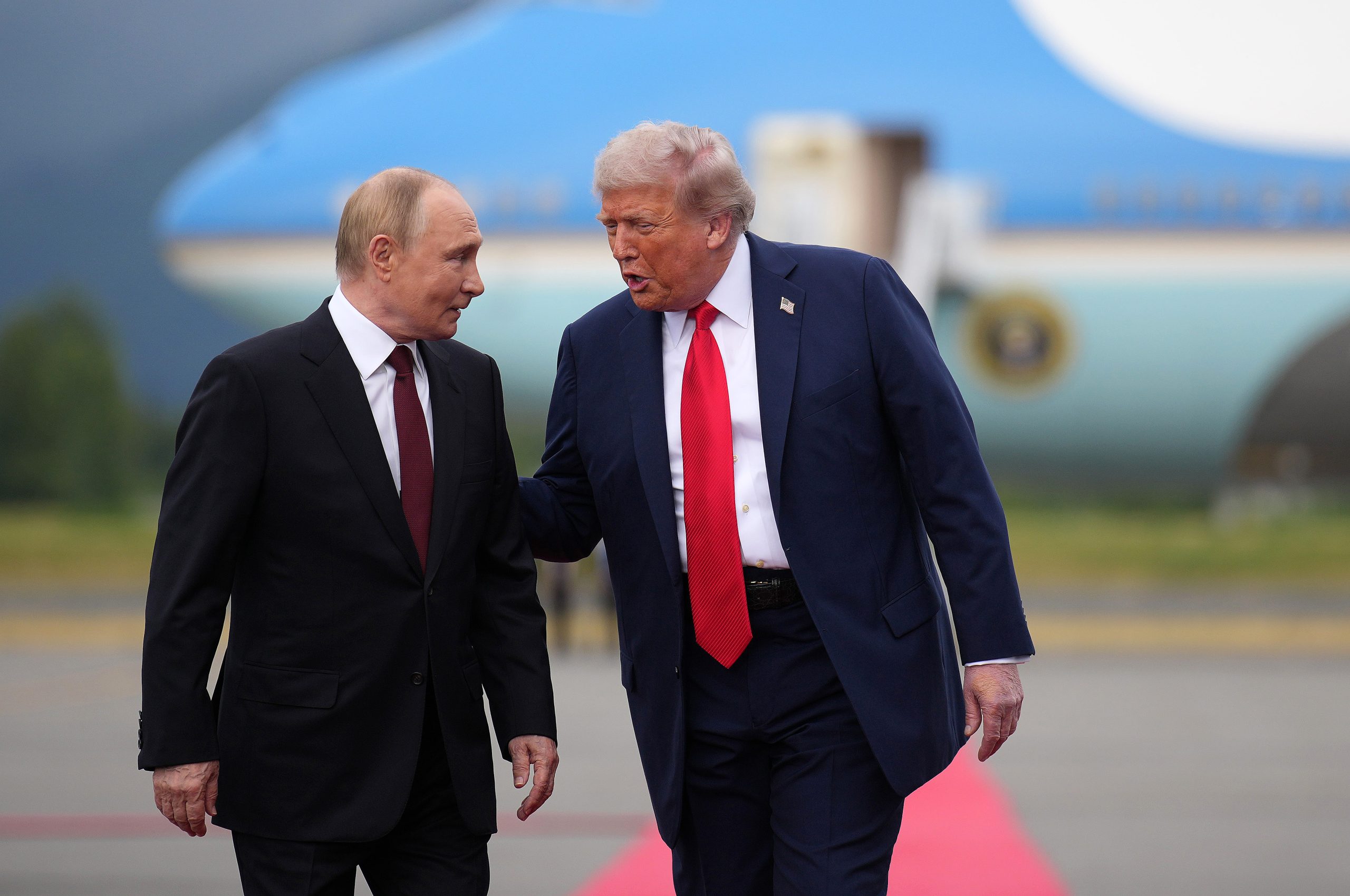
The final laugher in the print Times comes on the editorial page, an editorial headlined "Stop Appeasing Russia." This is an editorial board that has been plumping for years to appease Iran and the Palestine Liberation Organization. An editorial board that literally met the Munich agreement with Hitler in 1938 with an editorial admonishing, "Let no man say that too high a price has been paid for peace in Europe until he has searched his soul and found himself willing to risk in war the lives of those who are nearest and dearest to him. Let no man say that it would have been better to resist, and to fight it out, ‘now rather than later,’ unless he himself would have given the order that would have sent young men marching into the dreary hell of war." Now, finally, the Times finds a variety of appeasement that it opposes? When the Soviet Communists ruled Moscow there was almost no concession on arms control that the Times editorialists did not favor. Now that Putin is in charge and in a position to help on energy amid the Iran clash, suddenly the Timesmen are a bunch of Russia hawks? It’s almost as if what the Times is against is not appeasement, per se, but President Trump.
It’s particularly cynical of the Times to ride in on the anti-appeasement line on the horse of the late Lindsey Graham. "Senator John Cornyn of Texas said, ‘Lindsey would be appalled,’ referring to the late Lindsey Graham, a Trump ally who frequently pushed him to be tougher on Russia and sometimes succeeded. … Washington should continue to punish Mr. Putin, the oligarchs who support him and Russia’s war-making economy. The way to do so is straightforward: enforcing the law named for Mr. Graham." This is the same Lindsey Graham who, when he was alive, the Times crapped all over: "Lindsey Graham Is the Saddest Story in Washington … Donald Trump’s slobbering manservant." Or "emblematic of the men and women who defined the Republican Party in the first decades of the 21st century, who lacked both the political strength and the moral character to resist a malign force, a man who chose to join that force and its assault on American democracy rather than resist it." Now that Graham is dead, suddenly the Times posthumously exhumes him as a revered foreign policy brain. You know how Lindsey Graham would have liked to finish the war in Iran? With tens of thousands of pro-democracy protesters murdered, the Times editorialists did venture back on January 14, 2026, that "The Khamenei regime is too depraved to be reformed." Agreed. Since then, though, the Times sages haven’t exactly been leading the charge.
Anyway, we’ll wait for a Times editorial explaining the higher order principles on when appeasement is and isn’t appropriate. Does it depend on whether those being appeased are Muslims, Communists, or something else? Or on the political party of the U.S. president doing the appeasement? How can you not laugh? It’d be funnier if there were more readers sharp enough to see past the spin, and fewer relying on the paper to report the reality.