





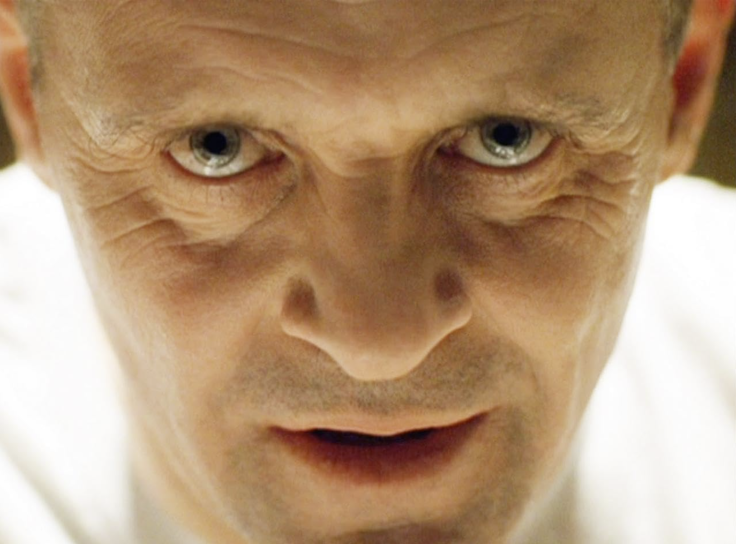
Brian Raftery's investigation of the serial killer, cannibal, gourmand, and pop cultural icon Hannibal Lecter is a very good book that sounds as if it should be a very bad one. When I first heard that Raftery, a respected entertainment journalist, was writing what purported to be a biography of Lecter, I both groaned and wondered about copyright law. After all, Lecter's creator Thomas Harris is still alive, and the four novels he has written that feature the character—Red Dragon, The Silence of the Lambs, Hannibal, and Hannibal Rising—remain perennially popular, selling tens of thousands of copies a year in the United States alone. Was Hannibal Lecter: A Life going to be some accursed piece of fan fiction, unaccountably published by a major house and leading the opportunistic Raftery to deserve a visit from a hungry, understandably aggrieved Dr. Lecter some dark and stormy night?
Thankfully, this is anything but an exercise in egomania. While it is conceivably possible that another author might have tried to come up with something more impressionistic, Raftery should be given credit for blending two apparently disparate genres—literary biography and Hollywood reportage—and doing so both entertainingly and enlighteningly. He begins with some necessarily sketchy but nonetheless illuminating biographical chapters that introduce Harris, an affable but deeply private man who, on this evidence, would give the Salingers and Pynchons of this world serious competition when it comes to ducking out of the spotlight.
Harris was fortunate enough to find immediate success with his first novel, 1975's Black Sunday, which was a fictionalized response to the 1972 Olympics massacre and sold decently enough to be made into an unexceptional film. His second book, however, 1981's Red Dragon, was a better showcase for his literary talents, which drew on his previous career as an Associated Press reporter for its spare, immensely readable style and pared-back narrative.
The novel focuses on the triangular, mutually antagonistic relationship between the burnt-out FBI profiler Will Graham, his serial killer prey Francis Dolarhyde, aka "the Tooth Fairy," and, most tantalizingly of all, the incarcerated psychiatrist and evil genius Hannibal "the Cannibal" Lecter. The book barely features Lecter, who's only in a dozen pages or so, and when it was filmed by Michael Mann as Manhunter, Brian Cox filmed his brief scenes as Hannibal in a few days.
Yet Harris knew that he was onto something worthwhile and so gave his antihero a greatly expanded role in a follow-up novel, 1988's The Silence of the Lambs, in which Lecter squared off against FBI agent Clarice Starling, who is desperately trying to find another serial killer in the form of the equally deranged "Buffalo Bill." Red Dragon and Black Sunday had both been successful, but Silence was something else altogether: a phenomenon. It sold more than 10 million copies, was adapted into a multi-Oscar-winning film by Jonathan Demme and made the Lecter character probably the best-known fictitious monster of the 20th century.
By the time Anthony Hopkins played him on screen, he was not just a literary creation but an immortal figure, to be discussed in the same breath as Dracula, Iago, or Moriarty. Yet, as Raftery insightfully observes, the appeal of Lecter—unlike the more straightforwardly evil Dolarhyde or Bill—is that he is a civilized, cultured, and brilliant man who has almost superheroic powers of deduction, as well as impeccable taste. That he is also a cannibalistic serial killer should not lead his admirers to shun him. Instead, by the time that Hopkins was embodying him, and being awarded an Oscar for his pains, Lecter was as much a cult antihero as he was someone to be feared. And then it all went wrong.
One of the strongest aspects of Hannibal Lecter: A Life is that Raftery is unafraid to criticize hubris on the parts of Harris and Hollywood alike. Hannibal, the long-awaited new installment in Lecter's misadventures, was a massive commercial success, but Harris had now veered away from the spare, almost clinical and meticulously researched style he had adopted in his earlier books and instead embraced full Grand Guignol absurdity. The novel was rightly pilloried not only for its improbable plot developments, but also for its ridiculous, poorly written conclusion, in which Lecter and Starling become lovers. A Ridley Scott-directed film pared away the worst excesses but introduced new silliness into the equation, too.
Raftery is unsparing about the way in which Lecter's own creator seemed to lose sight of what made the character so diabolically appealing, and in the process ended up devaluing him. Harris was eventually prevailed upon to write both a prequel novel, Hannibal Rising, and the screenplay for a Peter Webber-directed film of the same name. Both were doomed from the outset, as origin stories tend to be. Finding out about the young Lecter's early forays into cannibalism was less appealing to readers and audiences alike than being presented with the character as fully formed and absolute in both his wickedness and his wit.
It was left to Bryan Fuller to resurrect the character with his NBC series Hannibal, which, a decade after it concluded, looks all the stranger and more daring for its homoeroticism, extreme violence, and dreamlike qualities. It was never a particular success with viewers, who were tiring of Lecter, but those committed aficionados who stuck with it were rewarded by its sheer brio. Raftery has corralled a comprehensive list of interviewees for the book—although Harris and Hopkins are regrettable absentees—and Fuller is a particularly engaged and passionate figure, who continues to express his hope that a fourth season of Hannibal will allow him to adapt the canonical Silence saga, complete with Mads Mikkelsen as Lecter.
This thoroughly enjoyable and immaculately researched book does come with one caveat. Raftery brings in Donald Trump early on, as the president made a habit of referring to Lecter on his stump speeches in 2024 as if the character was both real and an old friend of his. The author avoids explicit political point-scoring, but when he writes in the epilogue, in which Trump returns, that "The real monsters are equal parts charming and cunning. They look you in the eyes, listen to your fears and concerns, and figure out how to exploit your needs for their own gain—smiling all the while. And when it's over, you want to tell them even more. That, perhaps, is their most monstrous trait: that they don't seem monstrous at all," it is not too hard to glean the inference he is making.
Many readers will find this comparison invidious—while others, of course, will cheer—but even if you disagree with Raftery's insinuation, it does not detract from the ghoulish appeal of this deep dive into a stylishly diseased psyche.
Hannibal Lecter: A Life
by Brian Raftery
Simon & Schuster, 318 pp., $29
Alexander Larman is a journalist, historian, and author, most recently, of Power and Glory: Elizabeth II and the Rebirth of Royalty (St. Martin's Press).