Man cannot bear too much reality television. Nor can television bear too much reality. This is why almost everything on television is unreal, and why almost everything there has ever been on television is unreal. We don't like to admit it, because we watch so much of it. Television is a space-filler, a time-killer, a dumb-downer. If you are not stupefied to halfwittery when you sit down, you will be when you stand up. There can be no doubt about it. The results have been in for decades. We fell into our screens in the 1950s with the advent of commercial television. We have dived ever deeper into the postliterate Pool of Narcissus ever since. I watch something most nights.
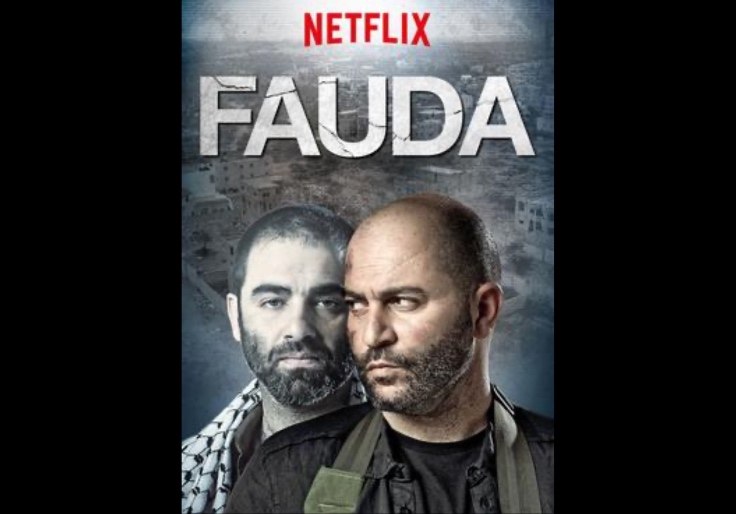
Fauda, whose fifth season premiered on Netflix in September, is neither unreal nor dumb. It is as complex and realistic as a simple medium can be. Fauda is about a unit of Mista'aravim, Israel's antiterrorist special forces, usually of Arabic-speaking background, who work undercover with Arab identities. There have been Israeli shows that American studios have adapted to domestic taste, notably Homeland (2011-2020), which was adapted from the two-season Israeli series Chatufim ("Prisoners of War"). But Fauda is a ratings rarity. It's a foreign-language import that Americans watch in the original; outside the massive parallel market for Spanish-speaking series, this rarely happens. And not just Americans. Within days of its release in mid-September, the latest season topped Netflix's chart in Lebanon and was in the top 10 in Egypt, Jordan, Qatar, the UAE, Bahrain, Oman, Kuwait, and Saudi Arabia. The fifth season is the first to appear since Oct. 7, 2023, and the regional war that ensued, and it interweaves the events of that day with the Mista’aravim's attempts to track down Hamas agents in France.
Fauda is a procedural in which detective work is paced by the countdown of the timer on a bomb. The team leader, Doron Kavillio (Lior Raz), and his friends must track down and neutralize Islamist plotters before they kill Israelis; Raz and his co-creator of the series, the journalist Avi Issacharoff, both served in Arabic-speaking units of the Israel Defense Forces. Like all TV cops, Doron has a precinct captain who loves his charges to "Be careful out there" but must also compromise with his political bosses; he is the cajoling, bullying interrogator Captain Ayoub (Itzik Cohen). Like all TV cops, Doron has anger issues and a fractured marriage. Like many TV cops, Doron has family members on the force. Like Jason Bourne, he keeps trying to escape but keeps getting drawn back in.
"Men can only be highly civilized while other men, inevitably less civilized, are there to guard and feed them," George Orwell wrote in 1942. Doron is a less civilized man leading a double existence as he moves between Hebrew-speaking Israel, where he makes wine and tends to his horses on a remote farm, and his undercover identity as Arabic-speaking Amir Mahajneh, who hunts killers in the crowded alleys, cafés, and homes of Palestinian Arabs. The distance is a matter of miles. A recurring set-up is the view from a drone as it zooms past an Israeli town, over a ridge and down to an Arab town. The base where the Mista'aravim smoke shisha and play the darbuka while waiting for the alert is minutes from enemy territory. Much of the dialogue is in Arabic. In the first two seasons, Doron's pursuit of the terrorist Walid al-Abed leads him to fall in love with Walid's cousin Shirin, a French-educated, unveiled doctor in Ramallah. The results are both efficient—Walid is killed—but personally catastrophic.
"Fauda" means "chaos" in Arabic. The chaos of Doron's emotions and relationships is continuous with political and tribal conflict. As the firewall erodes, he becomes both a barricade against chaos and a vector for its spread. The partition collapsed on Oct. 7, 2023, when Hamas breached the Gaza fence and an untold number of ordinary Gazans joined their rampage of murder, rape, torture, and kidnapping. As in the Yom Kippur War of 1973, Israel's security failure was a failure of a conceptzia, the overarching assumptions that shape security policy and misread or ignore intelligence that contradicts it. In retrospect, the first two seasons show the conceptzia in operation, and the second two show why it broke down.
In the first two seasons, Captain Ayoub presses Abu Maher, his counterpart in the Palestinian Authority's Preventive Security apparatus in Ramallah, to work with and for him against Hamas and Iranian infiltration. Abu Maher, who resembles the real-life Jibril Rajoub, serves coffee, and the two wrestle over who gets the better of their collaboration. Their common enemy in the West Bank, the Hamas leader Abu Ahmed, is shown as making the best of the situation, maintaining a luxurious home, riding in a Mercedes, and diverting funds from the struggle to his family. In the second season, ISIS infiltrators are a threat to Hamas as well as the Israelis. The implication is that Hamas can be contained and even bought off—sheket l'sheket ("quiet for quiet"). Similar assumptions drove the pre-October 7 policy of trying to dilute Hamas's hostility by allowing Qatari cash into Gaza.
The next two seasons show the limits of the pre-October 7 conceptzia, and the limits of a one-man wrecking machine. In the third season, Doron must prevent weapons smuggling into Gaza and extract kidnapped Israeli hikers. In the fourth, he travels to Brussels and comes up against Hezbollah agents. In 2023, the producers turned down a proposal that the fifth season should be about Hamas terrorists taking over a kibbutz near the Gaza Strip; jumping the shark, they thought. Instead, the season begins in the aftermath of October 7. Doron and his last surviving colleagues Eli (Yaakov Zada-Daniel) and Steve (Doron Ben-David) are traumatized; in reality, their castmate Idan Amedi (who plays Sagi) was badly wounded by exploding munitions during an anti-tunnel operation in Gaza.
The events of the worst day in Israel's history come back to Doron in flashbacks while he pursues a Hamas team in Marseille. Again, the plot tracks reality: In 2025, German, Austrian, and British intelligence, working on Mossad tip-offs, intercepted a Hamas plan to mark the second anniversary of October 7 by massacring Jews in Germany and Austria. If Fauda has retained its knack for trendspotting in terrorism, we should note that in season five, Hamas recruits and trains French leftists as terrorists, much as the PLO did with German leftists in the 1970s.
Fauda offers a real-time reflection of realities that are violently reshaping the Middle East. For Israelis, the fifth season attempts to incorporate a trauma that is still ongoing. The war with Iran is not over. The political reckoning has yet to come; Israel did not hold its first post-October 7 elections until Oct. 27, 2026. Fauda also opens a well-crafted window into the core of a society that Arabs widely despise, distrust, and fear, even as security collaboration is quietly maintained behind the scenes and public ties thaw at the state level. This is important for two reasons.
The Jews of the Mista'aravim can pretend to be Arabs because they are Arabs, culturally speaking, just as European Jews are culturally European and many American Jews, as Frederick Seidel wrote in Sunrise, can pass as "just another/Greek nose in street clothes in/Harvard Yard." More than half of Israeli Jews are descended from Arabic-, Turkish-, Kurdish-, and Persian-speaking communities that never left the Middle East. The official discourse of Arab states denied this for decades and presented Zionism as a European invasion and Israelis as ginger interlopers. American universities, much of American media, and even some Democratic Party candidates still push this line even after the Abraham Accords.
Second, Fauda is candid in ways that Arab shows are not allowed to be candid. The heart of the Israeli state is its legendary security apparatus. Fauda shows a heart riven by human weakness and, especially in the fifth season, broken by strategic failure. It shows Jews as human beings. It shows the reality, obvious to anyone who visits, that the lives of Israelis and Palestinians are intertwined in a small and crowded space, and that they are closest to each other when it comes to the issues on which they are also furthest apart, religion and security.
The motor of the fifth season is the compatibility of the Arab tribal concept of tha'r, blood revenge, with the Jewish tribal concept of nekmat dam. One of the first scenes shows Eli, who has become a religious settler after losing his wife and children on October 7, and his Bedouin friend Salem (Bian Anteer), whose son died with Eli's family, praying in parallel. This is presented in the matter-of-fact way that these things occur in Israel. We do not have to be either happy or clappy when we see them praying. The series is a hard watch, and there is no happy ending; every season of Fauda ends with a small victory that defers the tide of chaos at great personal cost. But it is good to see things as they are, and surprising that a TV series, of all things, should capture so much reality.
The episodes in which we see Hamas murdering Jewish civilians came with a trigger warning. In truth, the fictional representation pulls every punch; you can compare it with the real footage that circulates online. Raz and Issacharoff chose to lessen the impact of the atrocities and show only as much as was needed to justify the response. In this, and not for the first time, Fauda shows that the difference between civilization and barbarism is not a plotline or character conceit.
Dominic Green is a Wall Street Journal and Washington Examiner columnist.