

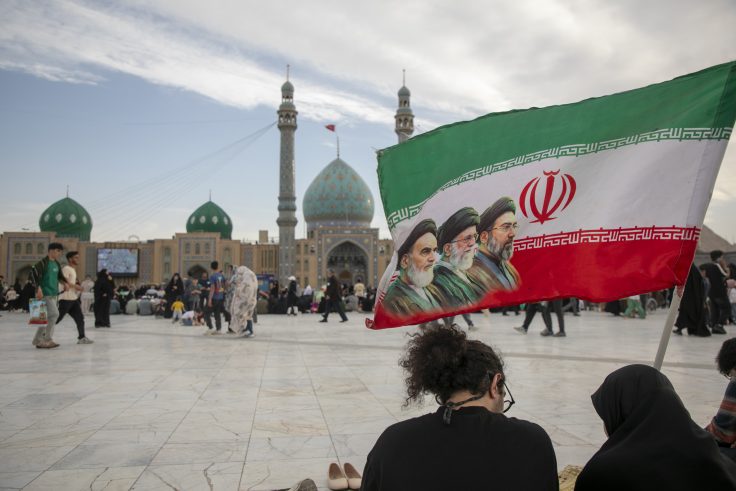
With skirmishes breaking out around the Persian Gulf and a memorandum of understanding allegedly making its way to the president's desk, the Middle East is teetering between a new round of fighting and an uneasy peace. As of this writing, the terms of this MOU are not fully known, but reportedly for 60 days Iran will reopen the Strait of Hormuz in exchange for the United States lifting its blockade and allowing some oil sales.
As described, the MOU would largely benefit American interests. Negotiations over other issues, such as Iran’s remaining stock of enriched uranium, would be more challenging, and President Trump can only secure a lasting success if he avoids the pitfalls that frequently plague U.S. diplomacy.
For some Americans and their allies, this MOU would be a bitter pill to swallow. Many had hoped the Iranian regime would fall during the war, but neither a coup nor a mass uprising materialized. The supreme leader and many of his top subordinates did not survive this conflict, but their henchmen will emerge in control, albeit of a diminished empire.
The Iranians have little cause for celebration. Tehran had hoped to checkmate Washington by closing the Strait, but instead—if it keeps its commitments this time—it will give up leverage in exchange for ending the blockade. This would essentially be a return to the prewar status quo in the Gulf, and Iran would be about $270 billion poorer and have much less ability to enrich uranium or manufacture long-range weapons.
Treasury Secretary Scott Bessent described Trump’s "several red lines" on Thursday. Iran "has to turn over their highly enriched uranium, they cannot pursue a nuclear weapon, and the Strait of Hormuz … has to be free and open." Those are worthy objectives, and he will only achieve them if he avoids the common mistakes Americans make in diplomacy.
When conducting diplomacy, Americans often make two fatal errors: The first is that they tend to ignore or downplay the ideologies and narratives that motivate their counterparts and hope that offering economic benefits will paper over other differences. The other is that they think initial agreements build goodwill that will lead to further, better deals.
These blindnesses contributed to the failures of two of the most consequential American diplomatic acts of the past four decades, the Oslo Accords and the Obama-era JCPOA nuclear agreement with Iran. Oslo was a fine provisional measure for establishing some governance over disputed territory. But it could not lay the foundation for a fuller peace because it did not resolve the fundamental contradiction between Zionism, the belief that the Jewish people should have their own state in their historical homeland, and the anti-Zionism rampant in the region. Similarly, the JCPOA did not lead to a new understanding between America and the "death to America" crowd.
There are two better ways to conduct diplomacy. One is developing a serious understanding of how other countries view their own interests and creating options for them that are more robust than the typical Beltway pablum about overcoming differences and taking risks for peace. When negotiating with people whose goals are either fundamentally opposed to America's or are irrelevant to its interests, the goal of diplomacy should be to change facts on the ground in our favor rather than to create good feelings.
Unlike the JCPOA or the Oslo Accords, the Abraham Accords worked because they fit the overall goals of the Arab countries that joined. They generally saw their fossil fuel reserves as wasting assets and wanted to transition into other industries, including tourism and emerging technologies. Few tourists or investors relish visits to war zones, so this transition requires peace and stability. A partnership with Israel offered important benefits: Israeli military strength was a powerful deterrent for Iranian aggression, and Israeli innovation promised to leap them ahead technologically.
The new leaders in Tehran do not appear likely to abandon their raison d'être, to destroy Israel and harm Americans, so using the negotiations to lock in tangible gains is the best course left. They promised to reopen the Strait during the ceasefire, but did not and triggered the blockade. Imposing consequences for further violations will be important.
So will preventing Iran from reconstituting its war machine. The bombing offensive severely degraded the regime's ability to enrich uranium or build long-range weapons. Removing existing stockpiles of enriched uranium from their control would reduce the threat still further. The mullahs could use any sanctions relief to rebuild their arsenals, but they would risk an uprising from their furious and impoverished subjects.
If the negotiations actually begin, that is. Reports of Revolutionary Guard attacks on international shipping began swirling shortly after Sec. Bessent described Trump’s red lines. Their masters in Tehran are unremittingly hostile to Americans and their allies, after all.