

The past few years have seen the almost unprecedented intrusion of politics into chick lit. It seems no novel about the life of wives or mothers can be complete without the occasional diatribe about systemic racism or Donald Trump or the genocide launched against transgendered people. For someone who is looking for a little escapism, the proverbial beach read is no longer a place to find it. But just as these authors are clearly under the sway of their political environment—or at least virtue signaling to show that they don’t just care about romance or drama in the PTA—they are also influencing the political environment as well. And they can use the broader audience they attract to plant information about niche ideological hobby horses.
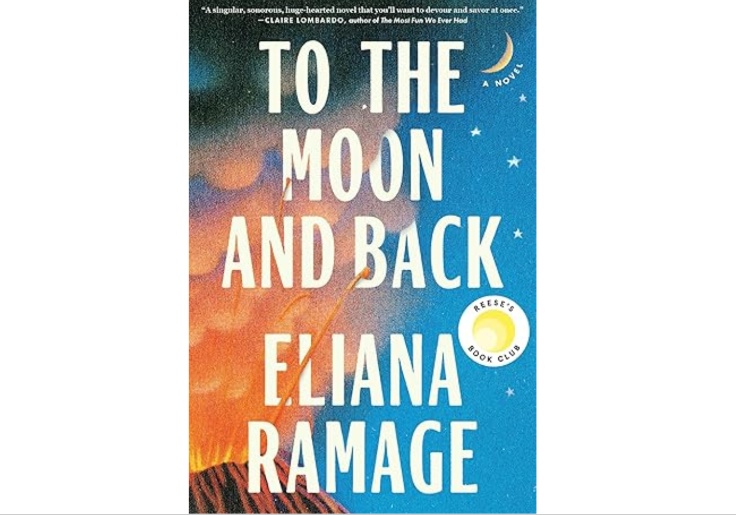
In her debut work, To the Moon and Back, Eliana Ramage tells the story of Steph Harper, a girl growing up on the Navajo reservation who dreams some day of being an astronaut. Chosen by Reese Witherspoon’s book club, To the Moon and Back chronicles how after Steph is taken from an abusive father in Texas, she and her younger sister are raised by their mother and her boyfriend, Brett. In college she meets Della Owens, a girl who was raised in Utah by adoptive parents after her mother and Navajo father relinquished their parental rights. The Cherokee nation sued for custody under the Indian Child Welfare Act on behalf of the father, who says he didn’t realize the mother wouldn’t be raising the child herself.
The ICWA, which was passed by Congress in 1978 in an effort to ensure that Native kids were not being taken away from loving homes simply because they were poor, allows tribes to get involved in custody decisions. The ICWA gives preferential treatment in placing kids with foster and adoptive families who are Native over those who are not (even if they are from a different tribe, in a different part of the country, and even if that placement overrules the preference of the biological parent).
Della, who plays a significant role in Steph’s life both personally and as a reflection of questions about her own identity, is loosely based on the subject of a 2013 Supreme Court case called Adoptive Couple v. Baby Girl (colloquially known as the Baby Veronica case). In that case, the Court ruled that certain provisions of the Indian Child Welfare Act don’t apply when the child has never lived with the biological father. As a result, the child remained with her adoptive family. But the ICWA remained the law of the land.
In To the Moon and Back, the characters suggest that state authorities are regularly and unnecessarily separating Indian children from their families or their communities. When Steph is young, she attends a rally with her family in support of Brett, who is running for principal chief of the tribe. "Cherokee Families, Cherokee Strong!" one of the attendees shouts.
Brett tells the crowd that if he wins, he plans to "honor the family, once again, as the principal bedrock of this nation." He says, "That means more family reunifications, more Cherokee kids fostered or adopted by Cherokee families. Our children are the promise of our continued existence." This principle might seem like the same one that guides any racial or ethnic group, until you start substituting other words for "Cherokee." What about ensuring the "continued existence" of a black nation or a white nation? Maybe Indians should count as a religious group? In which case you might think about the continued existence of the Jewish nation or the Amish people. But then you might wonder why the ICWA would favor putting kids from the Cherokee nation with Seneca families, which have a different language, traditions, and rituals.
A new reader coming to this topic might also wonder why this is such a big issue. Are Cherokee children regularly adopted by white families because the tribe isn’t honoring the family? They might wonder whether Brett’s promise to bring more affordable housing or "improved access to balanced, traditional diets" or "comprehensive tribal health care" will solve the problem of creating stronger families.
The truth, though, is more complex and tragic. Native children are not just disproportionately poor or unhealthy. They are more likely to be subjected to abuse and neglect at home than any other racial group, according to federal data. In addition to prescribing preferential placements for Native children, the Indian Child Welfare Act also holds Indian families to a lower standard than other families. That is, the legal bar to prove they have abused or neglected their children is higher than for white, black, Hispanic, or Asian kids.
Many of these problems are related to high rates of substance abuse and family breakdown in Native communities, which is one reason there are not enough families on reservations to take in these children when their mothers and fathers cannot care for them. They are more likely to be placed in foster care because they are more likely to be the victims of maltreatment. In Minnesota, which has one of the largest Native populations in the country, there are about 7,800 kids in the foster care system, about a quarter of whom are classified as Native—despite the fact that Natives make up only about 2 percent of Minnesota's population. As of 2022 only 12.5 percent of the 3,200 non-relative foster homes available are Native. In other words, there are about 2,000 Indian kids in foster care and 400 Native homes to place them in.
Della is ultimately adopted by a Mormon couple in Utah. She remembers hiding in a closet with her biological grandmother when the authorities come to return her to her adoptive home after a court decision. Ramage makes the couple seem unsympathetic, letting Della visit her father for a single day each year (never staying overnight) and not being allowed to take back any gift that won’t fit in her backpack. Her father’s mother is devastated by the situation as this is her only grandchild and spends visiting day sobbing and barely speaking.
Della becomes a kind of folk hero in a drama where white people steal Native children. She wants to ask her biological father "what it feels like to learn that the law meant to keep kids in the tribe doesn’t apply in your case, and maybe it’s a tiny bit your fault, or maybe it’s the power of nine non-Indians in black robes, and what you do when you’re standing outside the Supreme Court with a five-year-old girl in your arms and you know that she doesn’t know that they’re going to take her back. You don’t know when they’ll take her, only that they will, and the clock starts now."
Della, the reader learns, never really belongs with her adoptive family. She comes out as a lesbian and her parents can’t accept her. They go on a two-year mission and don’t speak to her. She doesn’t exactly run back to her biological father, but does end up embracing her Indian identity.
At the end, she adopts a child and writes an op-ed in support of the ICWA. "The op-ed was the first time I’d told my story after more than two decades building back my privacy." Despite earlier offers to tell her story in a memoir, she said nothing for years. "But the Indian Child Welfare Act was being challenged at the Supreme Court this term, again, over the contested adoption of a three-year-old Osage boy. I had skin in the game. Now my baby did too. This time I’d said my piece."
But whose rights is she protecting? It is not the rights of mothers, who, as long as they don’t severely abuse or neglect their children, can raise them as they see fit. And it’s definitely not the rights of mothers who, if they were any other race, would have the right to place their child for adoption with the loving family of their choice without the interference of a tribe. It’s not the rights of children, who, if they were any other race, would be guaranteed a higher level of safety from abuse and neglect by their parents.
No, the defenders of the ICWA—the most racist law in the United States—are protecting the rights of the tribe. In America, though, ethnic, racial, and religious groups aren’t supposed to have rights. Instead, we have individual rights. Eliana Ramage seems to have missed this point and now, I worry, the minions of Reese Witherspoon will too.
To the Moon and Back: A Novel
by Eliana Ramage
Avid Reader Press/Simon & Schuster, 448 pp., $30
Naomi Schaefer Riley, a senior fellow at the American Enterprise Institute and the Independent Women's Forum, is the author of No Way to Treat a Child: How the Foster Care System, Family Courts, and Racial Activists Are Wrecking Young Lives.