



Among the bad tastes lingering in the mouths of Republicans from the 2020 election, prominent is a letter signed by 51 former senior officials within or adjacent to the U.S. intelligence community. It baldly claimed that explosive emails recovered from soon-to-be first son Hunter Biden's abandoned laptop had "all the classic earmarks of a Russian information operation." The emails and the rest of the contents of the laptop were, in reality, entirely authentic. So here was a partisan effort on the part of Biden supporters to lean on their résumés in an effort to discredit the damaging disclosure.
In truth, I'm not sure which is worse: whether they were flatly lying about "all the classic earmarks" or whether they believed it. To me, the revelation had all the classic earmarks of a cocaine-fueled attempt to ditch the evidence. If it had actually been a "Russian information operation," it would have been among the most brilliantly executed such campaigns in history, which would make it all the more baffling that the Russians had no answer to the full-court press by Democrats to suppress the story.
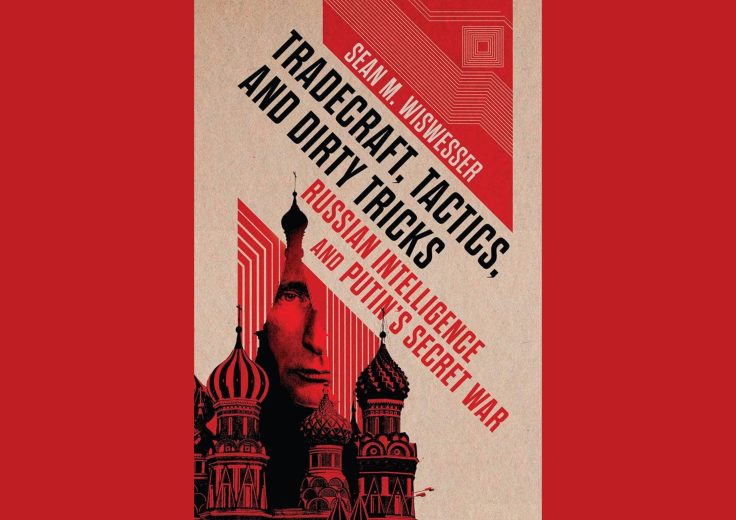
In any case, many Republicans came away persuaded not only (and not wrongly) that a bunch of former senior intelligence officials were partisan stooges and/or boobs, but also (and erroneously) that their agencies were comprised of "Deep State" hacks all the way down. As evidence of the fallacious character of the second conclusion, consider Sean M. Wiswesser's Tradecraft, Tactics, and Dirty Tricks: Russian Intelligence and Putin's Secret War.
In the Spy vs. Spy game, Wiswesser, now retired, was about as heavy a CIA hitter as they come. He spent a 30-year career specializing in Russia, culminating as a senior operations officer in the Directorate of Operations and chief of station in various unspecified posts abroad. In short, he ran spies. He has spent myriad hours over many years working with and on members of the Russian intelligence services, such as the FSB and GRU, in order to extract information of value from them. In some cases, he prepared the way for their defection to the United States. Clearly, for reasons of ongoing secrecy needs, his knowledge of what transpired at the agency during his tenure far exceeds his ability to tell of it. Yet to judge by the result, he has put in a yeoman effort in collaboration with CIA reviewers to inform readers of as much as he safely can.
Readers should not expect a true-life version of a ripping John le Carré novel. What Wiswesser has produced is instead a kind of reference handbook on Russian intelligence activities from the Cold War through the present—who (in general) its members are, the agencies they work for, the training they receive, what they do in daily life, how they do it, and the overall objectives of their activity. He is not a professional writer, and the result is often clunky, never slick. But it is highly informative, not only for the details it offers, but also for its thorough citation of additional open-source references on cases and methods for readers to consult.
Wiswesser's book has a broader and more sobering message than its nuts-and-bolts depiction of the operations of Russian intelligence. He writes, "we are and have been in an undeclared war waged by their intelligence services and their corrupt government against the West for some time—we just don't recognize it." What for many Americans was a benevolent post-Cold War era was for Russia a continuing confrontation with its "main enemy," as its intelligence officers described the United States during the Cold War and have continued to describe it since. As one of them told him: "Forget about the other threats; America comes first for us."
Vignettes about Russian spy "tradecraft" and such make for entertaining reading, but Wiswesser's purpose is not primarily to entertain. It's to build awareness of just how serious a challenge Russia represents to the United States to this day. Apart, perhaps, from a short post-Cold War period under Boris Yeltsin, Russian intelligence has been at the forefront of what its strategists call "noncontact war" against the United States and the West. A single Russian intelligence officer was directing two of the worst traitors in recent American history: the CIA's Aldrich Ames, arrested in 1994, and the FBI's Robert Hanssen, arrested in 2001. The activities of each led directly to the loss of lives of individuals secretly working for the United States.
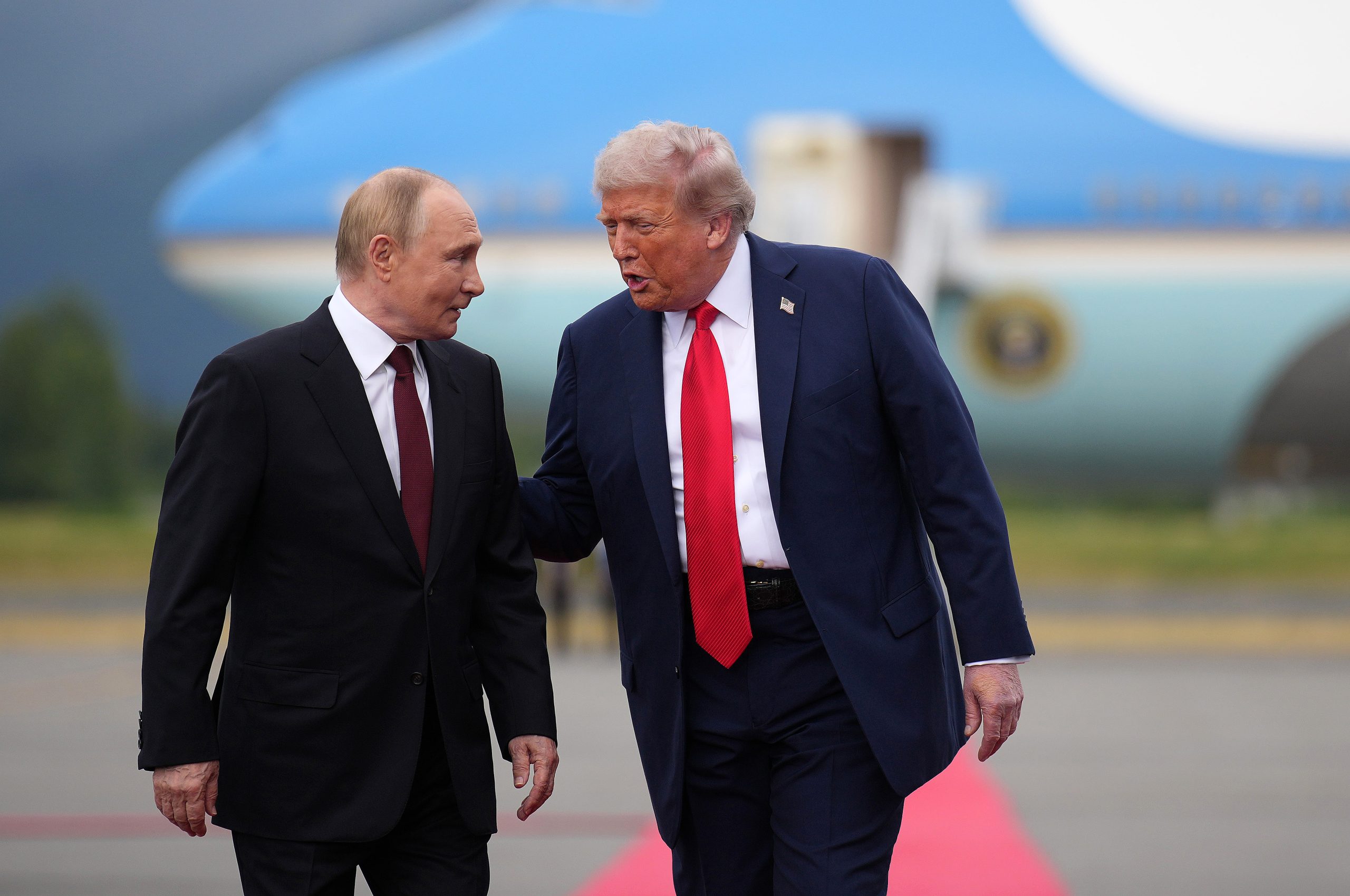
Vladimir Putin was a 16-year veteran of the KGB and director of its successor service under Yeltsin before he assumed the presidency in 2000. His background led him to look first to Russian intelligence for strategic and other insight and to rely on its covert capabilities, which include the assassination at home and abroad of his enemies. Wiswesser details Putin's often-expressed public admiration for the personnel and activities of Russian intelligence. In 2010, the United States exposed a group of Russian "illegals"—Russian intelligence officers living secret lives in the United States. After an ensuing prisoner swap, they "were greeted personally by Putin on the tarmac as they landed in Russia, with the Russian president presenting flowers to them." Wiswesser sees Russian intelligence services as the spine of Putin's regime—his most trusted resource.
This has its downside as well. Putin relied heavily on Russian intelligence in planning and setting his expectations for his 2022 full-scale invasion of Ukraine. He accordingly expected to have control of Kyiv within days. Four years on, it's clear that, as the saying goes, mistakes were made. Yet such is Putin's dependence on Russian intelligence that there could be no accountability for what seems in retrospect a wildly off-base Russian exercise in telling the boss what he wanted to hear.
Wiswesser draws a subtle portrait of his longtime antagonists in espionage. They are formidable in their way and often ruthless. But they have generic faults as well. The services are rife with corruption. It's part of the expectation of officers that they will have ample opportunity to feather their nests. They are arrogant as a rule, and the more so the higher in rank they rise. They are often undisciplined in their spy tradecraft. Hanssen got nabbed because his handlers had him repeatedly use the same park for "dead drop" communications. A perennial problem with "illegals" is that they don't much care for doing any spying, despite frequent exhortations from their masters. Their daily lives come to mean more to them than their covert allegiance.
These debilities create opportunities for our Directorate of Operations. Here is perhaps the most charming passage in Wiswesser's book:
In summary, these are traits that won't change, no matter how many [Russian Intelligence Officers] might read this book. It's not a secret among their services; they all know it. If one or more of them were reading this and nodding, I would say to them: come to the other side! Your services will be welcomed and appreciated by very professional, competent U.S. intelligence agencies who will, as you work your way toward trust and mutual respect, welcome you and your families to a new life.
It is clear from Wiswesser's book that the visual impairments of post-Cold War Washington included a blind spot for the extent of Russian animosity. Fortunately, Wiswesser remained clear-sighted. Such is his loyalty that it's hard to imagine he would have gone forward with this book if his former employer was opposed to the project. It's not easy to tell tales of secret things, but it's sometimes necessary in order to acquaint a broader audience with the dangers their country faces.
Tradecraft, Tactics, and Dirty Tricks: Russian Intelligence and Putin's Secret War
by Sean M. Wiswesser
Naval Institute Press, 277 pp., $32.95
Tod Lindberg is a senior fellow at the Hudson Institute.