

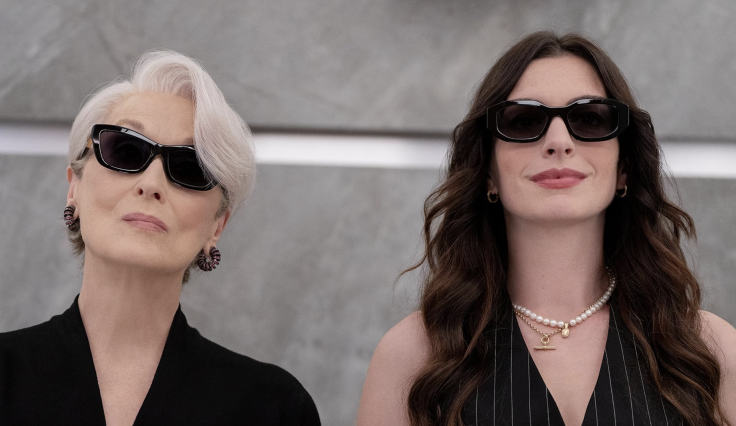
The novel called The Devil Wears Prada was a sensation upon its release in 2003 because it told the truth about the abusive atmosphere at the media organization that was then the most powerful company in magazine journalism, and about the disgusting behavior of the ice-cold monster who sat atop the greasy pole of fashion publishing. She bears another name in the book—Miranda Priestly—but there was literally no one in the world of writing who had any doubt the model for the monster was Anna Wintour, the editor of Vogue.
Lauren Weisberger’s novel was a milestone of a kind, and not only because it was sharp as a tack and deserving of its success as a merciless portrait of the poisoned chalice every wannabe young thing who loved fashion and Sylvia Plath would find herself drinking from if she got the coveted assistant job at Condé Nast or another glossy monthly (remember those?). It had a prophylactic effect on high-end workplaces within the ambit of Page Six and other media-gossip fulcra because rotten bosses all over New York immediately understood they might be in the crosshairs of a mistreated smart kid who could craft a decent sentence and wouldn’t take their shit.
Wintour/Priestly’s disgraceful conduct begins on page 10 and runs through the book’s final pages. Miranda actively seeks to destroy the future employment prospects of her long-suffering assistant, Andy Sachs, when Andy finally loses her cool after nearly 300 pages and curses Miranda out.
When the movie version came out 20 years ago, in 2006, with the luminous Anne Hathaway as Andy and the forbidding Meryl Streep as Miranda, something weird happened. The plot was mostly the same, as were the situations Weisberger laid out—like Andy getting her hands on a copy of the manuscript of the newest Harry Potter novel prior to its publication so Miranda’s children could read it first. And indeed, Andy was abused and frightened and condescended to and terrorized. But the screenwriter, Aline Brosh McKenna, and the director, David Frankel, somehow managed to turn Miranda into a kind of goddess figure with important lessons to impart—and the source of Andy’s new job rather than the would-be destroyer of her ambitions. As the movie ends, they lock eyes on Sixth Avenue and Miranda… smiles kindly.
It was a betrayal of every aspect of the book that had made it not only salaciously thrilling but also a work of some sociological and even moral value. But the filmmakers knew what they were doing. Meryl Streep didn’t want to play a villain, Anne Hathaway didn’t want to play a victim, and the idea that they would end up mentor and mentee while wearing smashing clothes helped make the movie the latest iteration of the "young kid makes good in the big city" story that has thrilled every generation of strivers from time immemorial. It was irresistible and audiences didn’t resist it then and have loved it since.
Two decades on, we have a sequel—a nostalgia trip, a money grab, the exploitation of intellectual property that makes sense because people really do think fondly of the original and are excited to see Streep and Hathaway reenacting these signature parts. The Devil Wears Prada 2 brings Miranda and Andy back together, along with their sidekicks and rivals—a seen-it-all wise fashion director played wonderfully then and now by Stanley Tucci and a scorpion-like mean girl nemesis for Andy (Emily Blunt, reprising her indelible breakout role from 2006). And it has the same writer and director as the first.
But unfortunately for McKenna and Frankel, they don’t have a smart novel to rely on for a good plot structure or a fresh understanding of the difficulties of life in the world of fashion and media in 2026. In the place of a life problem anyone can empathize with—how do you cope with an impossible boss who holds your life in her hands—the movie is about… well, I don’t really know what it’s about. What I do know is that The Devil Wears Prada 2 is a disaster. It’s not an unwatchable disaster, but there is not a comprehensible human emotion on display here.
Andy loses her job as an award-winning journalist—and wouldn’t you know it, gets the news just as she’s publicly accepting a Pulitzer (basically)! At that very moment, Miranda is trying to host the Met Gala while reading story after story on her phone attacking her magazine for running a puff piece about a fast-fashion manufacturer that uses slave labor. Double crises! The owner of the magazine cold-calls Andy late at night and offers her a job starting the very next day as Miranda’s deputy to restore Runway’s tattered reputation. But—wouldn’t you know it!—he doesn’t tell Miranda! So when Andy shows up for work, Miranda not only isn’t nice to her, but doesn’t know what she’s doing there and says she has no memory of ever having known her.
Trust me, when a famous journalist was some editor’s subaltern, that editor not only remembers, but goes to parties and brags about it (or, in my case, when it comes to my employment of Tucker Carlson, causes that editor to curse the day he, the editor, was born).
This is just one of the thousand little things that makes no sense in The Devil Wears Prada 2. Miranda is instantly nasty, rude, dismissive, and hostile, and the fortysomething prize-winning Andy doesn’t tell Miranda to stuff it or say she’s there to save Miranda’s bacon so Miranda better be nicer to her, which is what would happen in any place remotely resembling the real world. Miranda has no power over Andy in the scenario the movie proposes. Hathaway is not believable in any way as her character sinks into the same dysfunctional place she found herself in when she was a kid out of college, and her Andy seems weak-willed and chicken and somewhat contemptible rather than someone we should root for.
Nor is Miranda’s frigid demeanor all that explicable, as she is entirely responsible for the mess she has gotten herself into—and ought to have lightened up since the first movie anyway, since she has ended up with a sweetie-pie of a husband (Kenneth Branagh) who seems unaccountably to love her when any sane man forced to live with Miranda would more likely poison her açai bowl and collect the insurance.
The plot lumbers along, as Andy—again unaccountably—decides she needs to save Miranda’s job from the depredations of the nepo baby who has taken over the company that owns the magazine. She engages in some very convenient backdoor shenanigans with her former enemy Emily and Emily’s billionaire boyfriend that backfire on her. But not to worry, because Andy knows another billionaire! It’s kind of like the Warner Discovery takeover fight, only even more stupid.
You might enjoy The Devil Wears Prada 2 if you love dresses. I don’t know about or care about dresses, so I can’t really comment on the value of the fashion platery here, but the original did find a way to echo the emotional resonances of Working Girl and Pretty Woman as it converted Andy from a nerdy shlub to a radiant neo-Audrey Hepburn. Since Hathaway is gorgeous from the outset and has maintained her knowledge of how to dress well from the original movie, there’s no transformation here to make you ooh and ahh.
I have nothing against sequels, or legacy sequels, or fluffy movies that only seek to entertain. But Rule 1 is they need a story that makes sense. And Rule 2: They do need to entertain.