



A recurring problem with contemporary books about the Islamic Republic is that authors often deny Iranians the agency they deserve. Especially on the left, Western and Iranian journalists and scholars can embrace this crippling sentiment since it’s been a way to cast off blame for the ugliness—the primitiveness—of the Islamic revolution and the theocracy that followed.
How many times, for example, do conversations on Iran quickly gravitate to the 1953 coup against Prime Minister Mohammad Mossadegh, either saying or suggesting that if Mossadegh hadn’t fallen, that if the Central Intelligence Agency and Britain’s MI6 hadn’t conspired against him (ignoring the wide array of his domestic opponents), his downfall and the Islamic revolution would never have happened? Rewrite that moment, as guilt-ridden progressive revisionists are wont to do, and Iran would be what no other Muslim country in the Middle East is today: a functioning, rather liberal democracy. A right-wing version of this, not uncommon among expatriate Iranian monarchists and American conservatives, also exists: America (Jimmy Carter) and Britain (the BBC) actually gutted Shah Mohammad Reza Pahlavi when he needed them the most.
For better or worse, Iranians have been agents of their own destiny. Under the Pahlavis and especially under the mullahs, Iranians, like the postwar French, have punched way above their weight. They have been among the most consequential Third Worlders in great part because, even when they have been mired in conspiracies, they haven’t been helpless. And since 1979 they have seized history and done their damndest to bend the arc toward them—now much to the displeasure of a vast majority of Iranians who surely would prefer to lead less eventful lives.
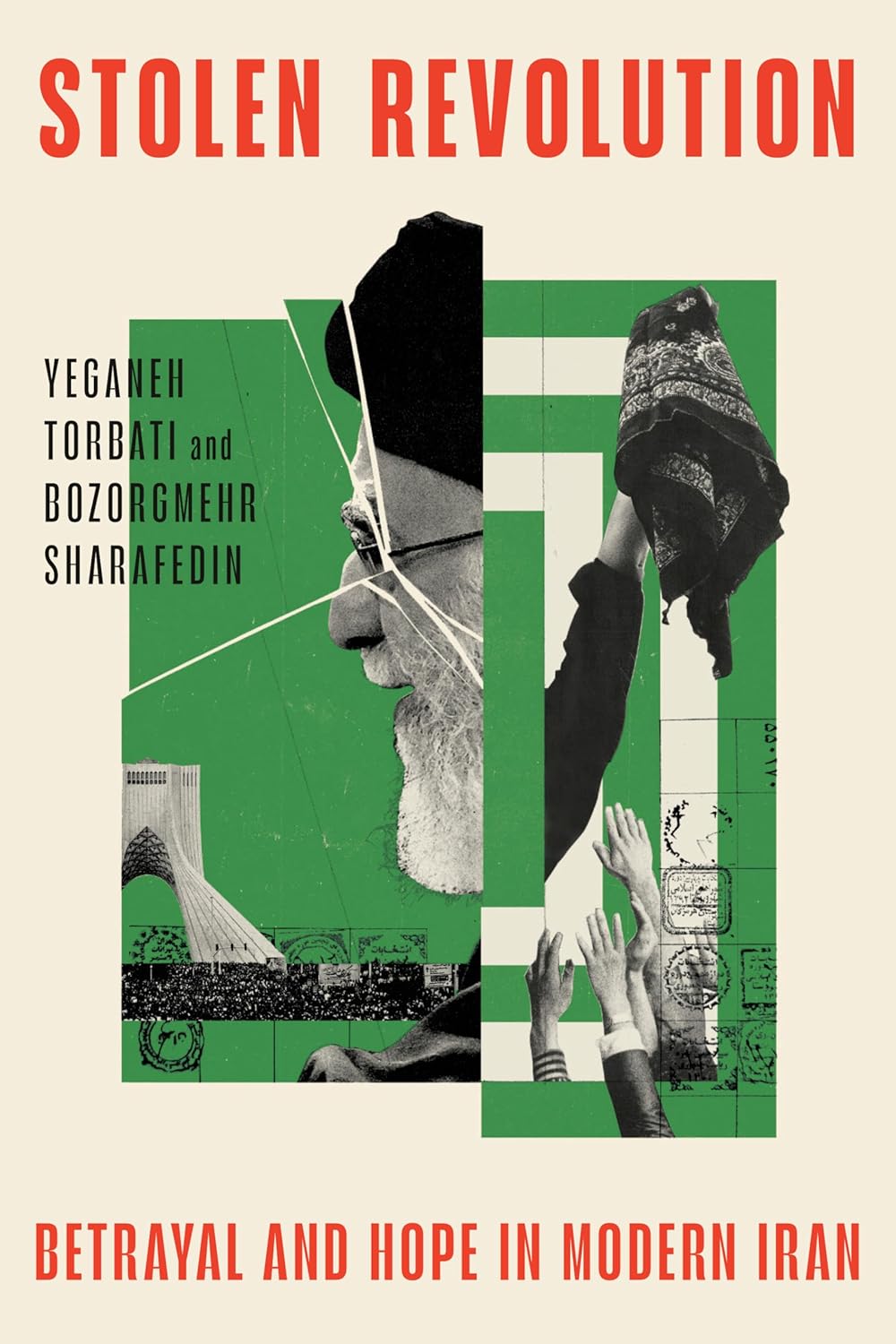
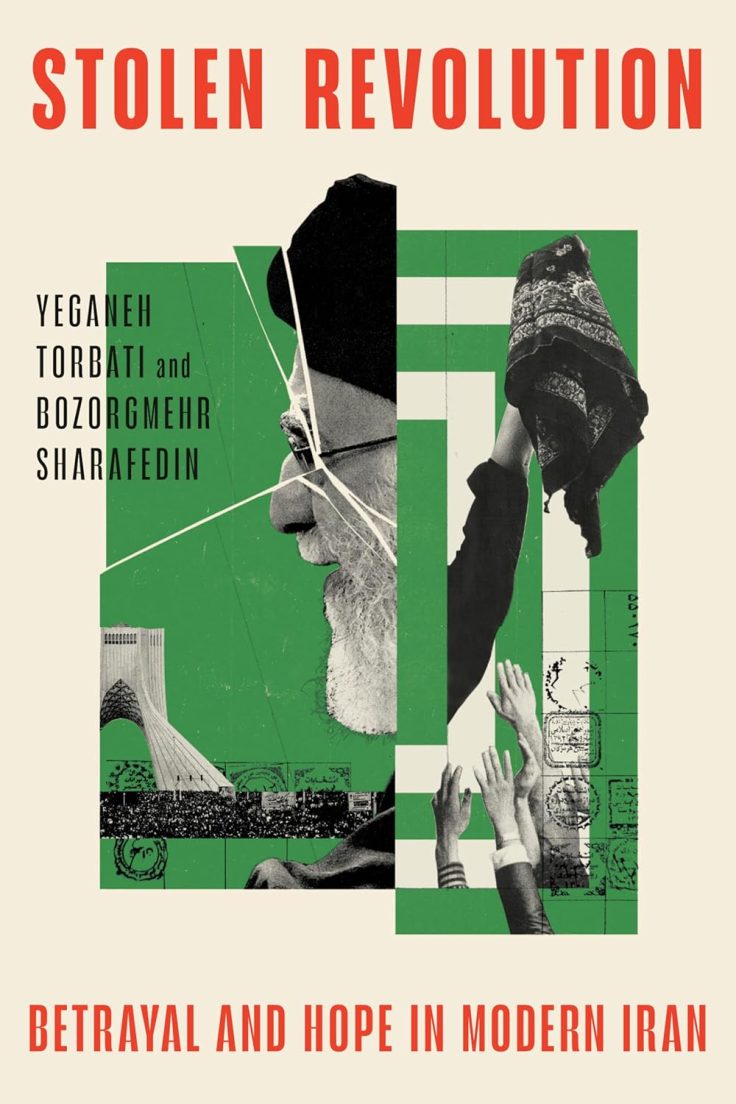
Stolen Revolution: Betrayal and Hope in Modern Iran does a fine job of showing Iranians who were intent on making a difference, first through the Islamic revolution or later in opposition to ever-worsening despotism. There aren’t any "buts" in this book, digressions about American "misunderstandings," and foreign-policy malpractice. Nineteen fifty-three passes in a paragraph. The CIA gets four fleeting mentions. The book’s coauthors, the American-born Washington Post-turned-New York Times reporter Yeganeh Torbati and Bozorgmehr Sharafedin, who left Iran in 2008 and now writes for Iran International, give us an unapologetically Iranian story about practical idealism slamming into Islamist autocracy. They capture well the complexity of the Islamic Republic, its contradictions where good and evil can so closely reside, sometimes in the same people. In Stolen Revolution, the hope of Iranians who tried to make their homeland better gives way to regret and reflection and, at least with some, a perdurable belief that they, or the next generation, will finally overcome.
Torbati and Sharafedin sketch the book’s principal characters and events gracefully and emotively. The authors literarily are at their best in recounting the mournful reflections of Hila Sedighi, a passionate young woman who as a girl once impressed her teachers by her ability to recite the Quran and later became a poet, artist, and an ardent reformist swept up in the aspirations of the 1990s, when it appeared that the young just might have a chance to remake the Islamic Republic. In 2012, after she had become an internationally recognized dissident, enduring numerous interrogations by the intelligence ministry, the former reformist president Mohammad Khatami Skyped in to officiate at her wedding since Sedighi’s fiancé had left Tehran for a safer and more prosperous life in Dubai. By then her hope in Khatami, if not the country, had faded:
For a time, [Hila] could maintain that even within a system built to dehumanize, there were still people who remembered their humanity. She and her friends had encountered them in the halls of city government, within the military barracks, and even in courtrooms, interrogation rooms, and prison cells. An interrogator had once helped her avoid spending the night in jail by detaining her long enough for her family to deliver her bail money. Another time, an escort officer had hassled prison and judiciary officials so that Hila would be released more quickly. There was some give to the system, a flexibility that did not redeem it, yet reminded one that there were always choices to be made. … Each of them could, when the pen was in their hand, make a choice to be a tyrant or not. In time, as she watched her country descend further into darkness, she grew unsure whether even that meager potential for mercy could still be found.
The books starts in 2022 with the Women, Life, Freedom protests, which began after the beautiful Iranian-Kurdish woman Mahsa Amini was murdered by the morals police for improperly covering her hair. This eruption became the most pivotal rebellion in the Islamic Republic’s history. It terrified the ruling elite by bringing into the limelight what the regime had known since the presidential election of Khatami in 1997: A lot of women, both rich and poor, even the daughters of the ruling elite, weren’t happy and were politically showing their anger.
These protests also fundamentally changed Western commentary on Iran, diminishing if not banishing the apologias that so often appeared on the reverse side of even the most severe criticisms of the Islamic Republic. Stolen Revolution is a product of the revulsion and empathy that this female-centered uprising sparked in the West. And what Amini’s death began, the nationwide uprising in January 2026, which ended in the slaughter of unarmed civilians (tens of thousands may have perished), intensified. The book’s captivating portrayals of brave Iranians against a brutal system may also in part spring from the fact that Torbati and Sharafedin knew they were going to write this book outside Iran. Distance gives freedom. Journalists still dreaming of visas or a trip home to see Iranian relatives just don’t wander through the past with such sharp eyes.
Following the model that Laura Secor elegantly used in Children of Paradise: The Struggle for the Soul of Iran, Torbati and Sharafedin string together complementary vignettes of Iranians. All but one are compelling young women and men who gave their all, got hurt, sometimes shot, and eventually fled their homeland. And among the good-hearted, intellectually inclined dissidents, standing a bit apart, are the young tech entrepreneurs, on whom Torbati and Sharafedin do first-rate, original reporting. The techies learn that without a civil society and laws they can’t flourish and can even, perversely, just end up abetting oppression.
Better than any other writers on Iran, the authors vividly convey the ruling elite—a mafia of clerical families and the Revolutionary Guards—feeding on the country. Their accounts of relatives of the powerful who end up in Evin Prison because of disputes and jealousy among the elite, in refurbished suites and bathrooms, supplied with booze, prostitutes, and servants, are eye-opening. So, too, their descriptions of the dismal presidency of Hassan Rouhani, who delivered the nuclear accord with Barack Obama and discovered how little the proceeds of that deal could even matter to an economy dominated by poorly managed state enterprises and semi-public foundations, both often controlled behind the scenes by the Revolutionary Guards and clerical cliques.
Torbati and Sharafedin’s most insightful and clever choice of subjects is Mehdi Karroubi, a famous revolutionary cleric, a deeply loyal follower of the father of the revolution, Ruhollah Khomeini, a former big-time player of the Islamic Left, once the most intellectually vibrant side of the revolution and the Islamic Republic. Karroubi starts to dissent, at first gradually and quietly and then more openly and loudly, under the rule of Khomeini’s successor, Ali Khamenei. Torbati and Sharafedin have used a variety of hitherto unpublished sources—including interviews with a son of Karroubi—to get at the larger-than-life cleric, who was instrumental in pushing forward Khatami for the 1997 presidential election. His election surprised Khamenei, Karroubi, and especially Khatami himself. It revealed discontent even within the younger ranks of the Revolutionary Guards. It shocked—it became a clarion call to—senior guardsmen and their clerical overlords who long harbored doubts about whether even limited democracy could coexist with theocracy.
Still in Khamenei’s clerical doghouse but living off his unchallengeable revolutionary credentials, Karroubi decided in 2009 to stand as a hybrid reformist-establishment presidential candidate in the most tumultuous of all presidential elections, which saw the pro-democracy Green Movement rise and fall. Khamenei’s favorite, Mahmoud Ahmadinejad, the Islamic Republic’s first Islamist populist, wins that election in a clearly rigged vote. Karroubi and the man who probably won that election, Mir Hossein Mousavi, a former prime minister who fought constantly with Khamenei during the Iran-Iraq War, both end up under immiserating house arrest. During his confinement, which only ends in 2025, Karroubi evolves further, and Torbati and Sharafedin nicely show both his "ideological shift" and his continuing intellectual dissonance:
One day, Karroubi summoned his sons. He informed them that they should expect little inheritance. He planned to give away most of his remaining wealth. It was one way, he felt, he could make up for the unjust government he had helped to create. … ‘This clerical establishment behaved so poorly that we left behind deeply damaging consequences,’ he told them. ‘I myself feel a moral burden because of it.’ … But there were limits to his rethinking. … He still viewed Khamenei’s rule as a deviation from, rather than just a continuation of, the example Khomeini had set. He still believed that the Islamic Republic was reformable—though he still conceded that it needed deep structural changes. … The potential for a just Islamic Republic was what he believed in since he was twenty-five. ‘Questioning it is like questioning my very being,’ he told his son.
This sentiment didn’t afflict Mousavi, a layman who had once been more restrained in his criticisms of the theocracy than Karroubi but by the early 2020s clearly wanted to tear it down. By 2023, after the Women, Life, Freedom movement had broken out, the Islamic revolution had become for Mousavi, Torbati and Sharafedin tell us, "the people’s revolution of 1979." He’d deleted both Islam and Khomeini.
Stolen Revolution doesn’t try to answer the biggest question now before the Islamic Republic: its fate after the war that started in February finally comes to a close. The book was written before this conflict broke out. It ends after the much less damaging 12-Day War in June 2025. Its insights are still pertinent.
Torbati and Sharafedin write of Round One:
That any Iranian would welcome such an assault was stark evidence of how deeply the Islamic Republic had alienated most of its people. Many Iranians viewed the government itself as an occupying force that did not care about the country. And it showed how little hope they had in their ability to change the situation for the better. Perhaps a military assault could succeed where they had failed. … Or at least, the attacks could be a measure of vengeance against those who were otherwise immune from any consequence for their crimes … many Iranians were afraid for their lives, and as they tried to ensure their day-to-day survival, they showed little appetite for public protest. … Later, Iranian officials pointed to the lack of protest during the war and claimed that this was proof of national unity and solidarity, a show of support for the government. Karroubi thought nothing could be more damning than the fact that officials were grateful, and perhaps surprised, that people had not protested during a time of immense danger. Islamic Republic officials and their supporters co-opted symbols of national pride that they had denigrated and ignored for years, erecting billboards and statues honoring Iran’s mythical and pre-Islamic heroes. But in truth, Iranians were rallying not behind the Islamic Republic, but rather in aid of one another. … Iranians were showing that their bonds with one another had not ruptured.
And the repression after the 12-Day War is surely a small foretaste to what’s going to happen when the current conflict draws to a close if the Islamic Republic is still standing. "At least twenty-one thousand people were swept up in mass arrests, often charged with espionage or national security crimes. Arrests of ethnic and religious minorities spiked. Prison officials carried out a string of speedy executions. There would be no attempt to mend rifts, only the settling of scores."
I wish Torbati and Sharafedin had used more narrative history among the profiles in Stolen Revolution—a bit more to pull the past forward. They can also be a bit quick in their descriptions: Calling the great clerical majordomo Akbar Hashemi Rafsanjani and Khamenei "conservatives" does both men, complicated fellows with occasionally radical, modern habits and tastes, a disservice. The great intellectual struggles among the mullahs before the revolution and after also don’t get the attention they deserve. The same questions take center stage among the laymen who want to try to reform the Islamic Republic. Khatami’s reformist instincts originated in the century-old slippery-slope controversy about whether faithful Muslims could absorb Western thought without Islam, like Christianity before it, getting pounded to a pulp. (Khatami actually wasn’t sure about democracy, but wanted to give it a try since he couldn’t deny the basic humanity of the liberal West—its unique and contagious idea of progress—was superior to anything he could observe in the Islamic world.)
But these are small complaints against a wonderful book. I have no idea how long the current hot-cold war between the United States and the Islamic Republic is going to last. But anyone who is curious about Iranians, about how they have absorbed modernity, and why they have been the center of so much controversy, in the West and in the Middle East, would do well to read Stolen Revolution.
Stolen Revolution: Betrayal and Hope in Modern Iran
by Yeganeh Torbati and Bozorgmehr Sharafedin
Doubleday, 496 pp., $35
Reuel Marc Gerecht is a resident scholar at the Foundation for Defense of Democracies.