

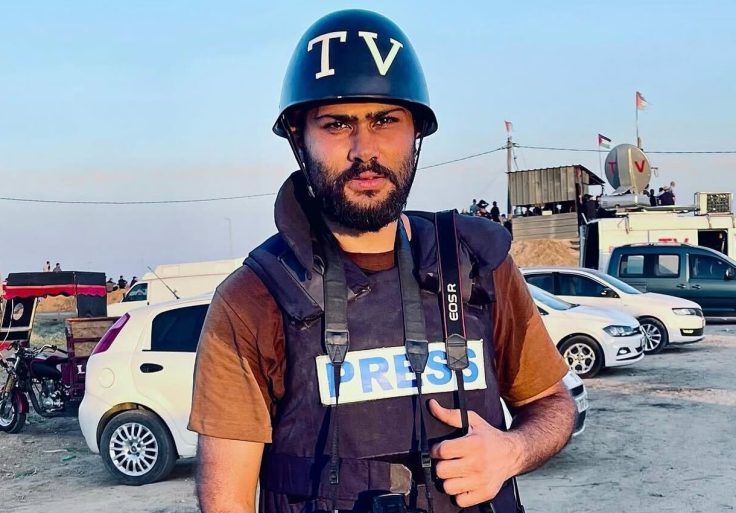
Saher Alghorra, the New York Times photographer who was awarded a Pulitzer Prize this week for his work in Gaza, has referred to uniformed Hamas fighters and other anti-Israel militants as "martyrs" and "resistance" forces, and repeatedly—in photo captions and social media postings—referred to Israel as an "occupation" force responsible for "the war on Gaza's children" and other "suffering." He has also repeatedly accused Israel of targeting civilians and journalists for death, according to a comprehensive Washington Free Beacon review of his social media postings and photo captions he and his California-based agency, Zuma, contributed to services that carried his photos.
As recently as last week, Alghorra promoted a post congratulating him for his Pulitzer for his "documentation of Israel's genocide in Gaza." Alghorra himself wrote on Facebook that he was honored to win the award for covering the "toll of Israel's attacks in Gaza."
Alghorra's rhetoric makes clear he is not a neutral documentarian, but rather aligned with the Hamas forces that have provided him with extensive access to work in areas under their control both before and after Oct. 7, 2023.
In April 2023, just six months before the Hamas terror spree, Alghorra wrote that Palestinians who set fire to tires along the Gaza border had done so "in rejection and denunciation of the violations committed by the Israeli army in Al-Aqsa Mosque." In reality, the Israeli police raided the mosque after Palestinians barricaded themselves inside. In other posts throughout the Gaza conflict—starting on the day of the Oct. 7 massacre—Alghorra repeatedly expressed solidarity with the many Palestinian "martyrs" killed in the war while portraying Israelis as part of an occupation force targeting civilians and causing starvation and suffering.
On Oct. 7, Alghorra posted photos of missiles flying from Gaza into Israel to his personal Instagram account with the caption, "The Palestinian resistance in Gaza fires thousands of missiles towards the occupied territories in response to settlers’ attacks and incursions into Al-Aqsa mosque."
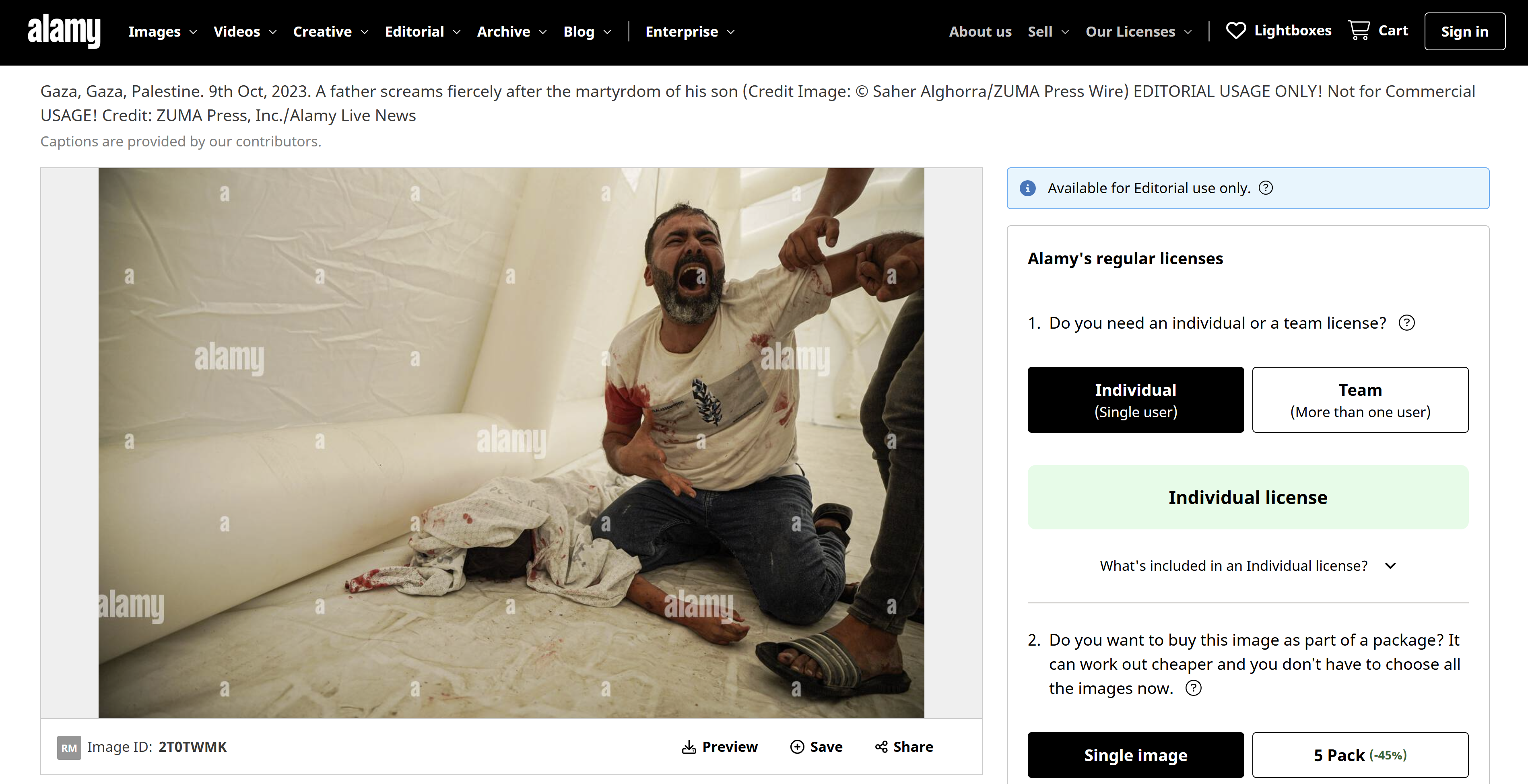
Alghorra also described terrorist fighters as "martyrs." In a photo posted to the stock photo site Alamy from "Gaza, Palestine," Alghorra said it depicts a Palestinian woman holding a "picture of her martyr son, who was martyred in the battle of Wahda al-Sahat in 2022," according to the caption. The "martyr" in question is Ali Ghali, a Palestinian Islamic Jihad member who was killed in 2023 during an Israeli airstrike. Alamy makes clear that its contributing photographers supply the photo captions.
The wire service Alghorra works for, Zuma, provided a similar photo to Alamy in January 2025 that referred to members of the Izz al-Din al-Qassam Brigades, Hamas's military wing, as "Palestinian resistance factions."
The postings are likely to generate further questions about Alghorra's work—and the Times's decision to champion him—after the media watchdog group Honest Reporting accused him of earning his Pulitzer "on staged scenes, a manufactured 'famine' narrative, and intimate access to Hamas terrorists." Hamas, the organization noted, maintains strict control over Gaza and heavily polices the movements of journalists working there. Alghorra has spent years working behind Hamas lines.
While the Times defended Alghorra, saying he performed "intrepid photojournalism at personal risk," the paper has cut ties in the past with other contributors who have publicly embraced the so-called Palestinian resistance and used language similar to Alghorra's. The paper cut ties with a photographer, Hosam Salem, citing his professions of "support for the Palestinian resistance against the Israeli occupation" on social media.
The Times did not respond to a request for comment.
Alghorra's social media postings use language and framing similar to that of Hamas and its vast public relations network, which aims to portray Israel as an illegal aggressor that intentionally targets civilians. In one Pulitzer Prize-winning photo, Alghorra snapped five masked Hamas members carrying the body of an Israeli hostage, a moment that Honest Reporting said would not be possible without "close coordination and trust with an internationally‑designated terror group." The photographer's numerous social media postings provide a window into how that trust was built.
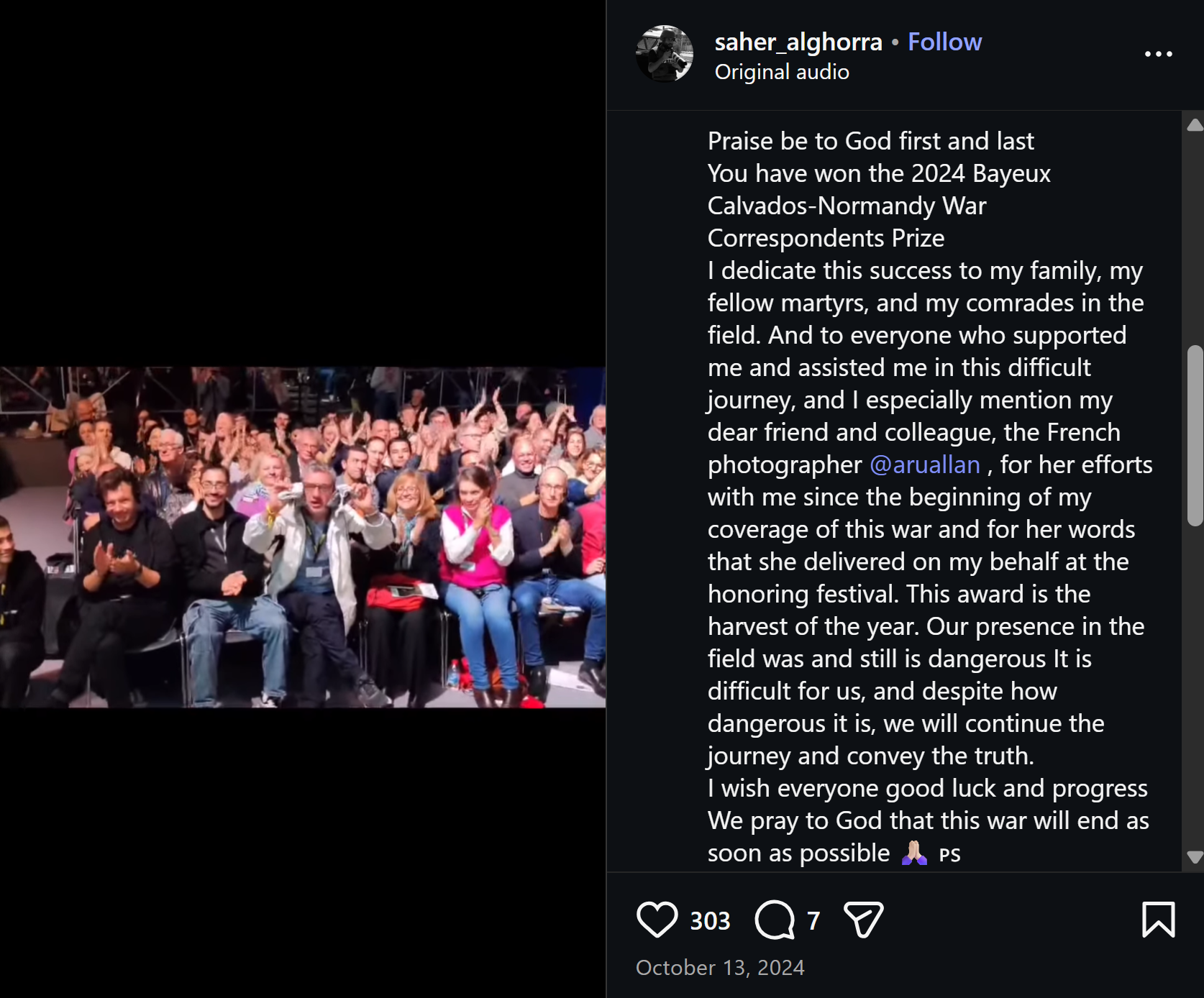
In October 2024, for instance, Alghorra dedicated his Bayeux Calvados-Normandy War Correspondents Prize to his "fellow martyrs, and my comrades in the field." The following month, Alghorra published on Facebook a photo of "wounded and martyred people" being evacuated to Nasser Hospital, a known Hamas logistics hub where Israeli hostages were held. Alghorra claimed in his post that "an Israeli bombardment" had "targeted a group of citizens, resulting in the martyrdom of 8 Palestinians."

One month earlier, Alghorra posted an image that purports to document an "Israeli occupation army" strike on a refugee camp in Rafah. "Palestinians search for missing people under the rubble after Israeli airstrikes killed more than 15 people, on a camp for displaced people in the Al-Mawasi area, which the Israeli occupation army has designated a safe zone in Khan Yunis, southern Gaza Strip," Alghorra wrote.

Alghorra employed similar language in a March 2025 Facebook post that claimed an "Israeli occupation aircraft bombed the Al-Israa refugee camp" in Gaza.
Another Instagram post from June 2024 claims "the occupation reached another sick milestone" due to the rising number of those killed and missing in Gaza.

Other posts show how Alghorra employs different framing depending on his audience. A photo from Oct. 2023, posted on Alamy and credited to Alghorra and Zuma, includes a caption that reads: "A Palestinian man reacts next to the body of his nephew, who was killed in Israeli airstrikes."
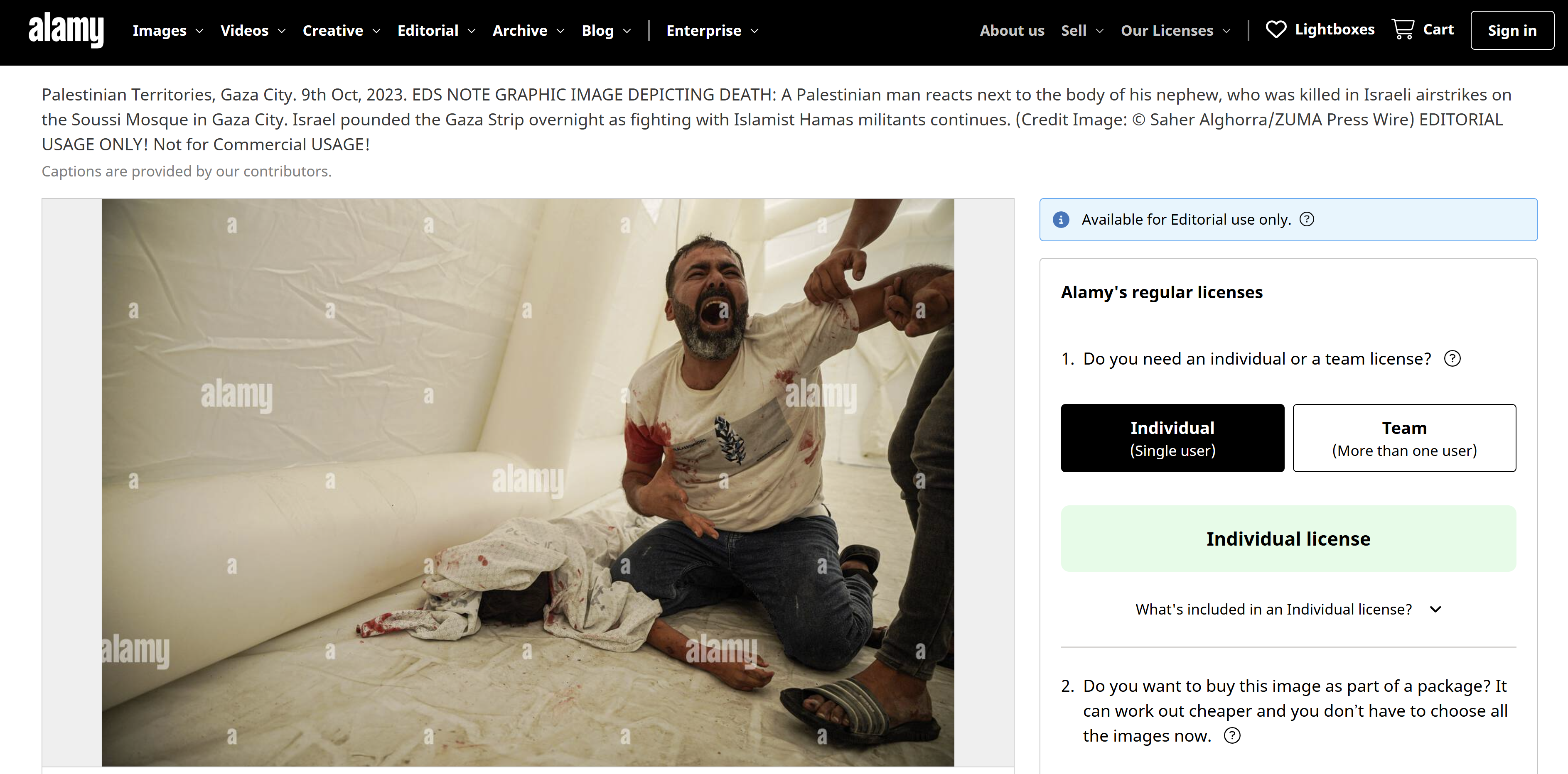
The same photo is also accessible on the site at a separate link with a substantially different cutline: "A father screams fiercely after the martyrdom of his son." In both cases, Alamy says that the "captions are provided by our contributors," meaning Alghorra himself.