




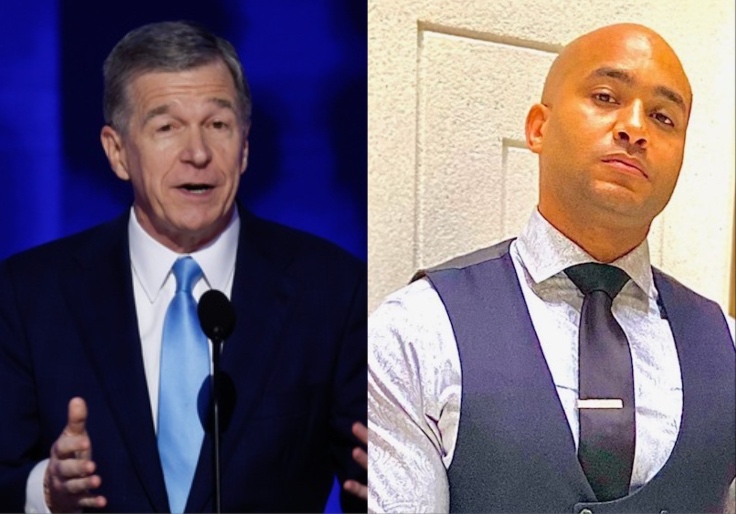
North Carolina's Democratic Senate nominee, Roy Cooper, named a former "ranking member" of the Bloods street gang—who was convicted of plotting a drive-by shooting murder—to a controversial "Racial Equity in Criminal Justice" task force he established as the state's governor.
Cooper created the task force through an executive order in June 2020 during the so-called racial reckoning following the death of George Floyd, when the notion that the criminal justice system was racist against black people was fashionable and Democratic leaders were taking calls to "defund the police" seriously.
Cooper's task force included a number of state officials, such as then-attorney general Josh Stein (now the state's Democratic governor), but it also included community activists who advocated for radical criminal justice reforms. One of these activists was a convicted felon named Kerwin Pittman.
In 2007, Pittman, a former "ranking member of the Bloods," was convicted of conspiracy to commit first-degree murder and sentenced to more than 14 years in prison. He ultimately served 11.5 years with over a year in solitary confinement before being released.
Pittman's conviction involved the murder of Jamel Amiens Jeffreys, 19, who died in a drive-by shooting in Raleigh in June 2006.
In 2004 and 2006, Pittman had also been arrested on assault and drug possession charges. He was sentenced to probation on both charges, records show.
"I was asked to contribute to conversations about criminal justice reform because of both my lived experience and the work I was doing in communities," Pittman told the Washington Free Beacon. "I have never hidden my past. The gang involvement and criminal conduct you reference occurred when I was a teenager and young man, at or before the age of 19. I am now 39 years old. I made decisions as a young person that had serious consequences, including spending more than a decade incarcerated."
Since May 2020—the same month of George Floyd's death—Pittman has been the director of policy and program for Emancipate NC, according to his LinkedIn. He is also a veteran of George Soros's Open Society Foundations.
Emancipate NC has openly called for abolishing the police.
"Maintaining white supremacy has always been the goal of policing. This simple truth is the reason policing cannot be reformed. Modern policing must be abolished, creating space for new systems of safety to rise from its ashes," a company blog post from February 2023 notes.
Emancipate NC's executive director, Dawn Blagrove, says policing is "just like slavery."
"Emancipate NC was founded on the knowledge that mass incarceration and structural racism harm all of us. Prison is state-sponsored violence," Blagrove said in December 2020 during the height of Black Lives Matter mania.
In April 2020, Emancipate NC was one of five organizations that sued Cooper's administration over COVID-19 in prisons, ultimately securing the early release of 3,500 state prisoners.
A December 2020 fundraising letter, cosigned by Pittman, declared that he was "practicing abolition" by, among other things, "speaking truth to power on the Racial Equity Task Force."
Around the same time—at the end of 2020—the task force came out with a long list of formal recommendations straight from the Black Lives Matter playbook.
The recommendations included sharply curbing cash bail, having social workers respond to some 911 calls instead of police, favoring tickets over arrests, mandatory implicit bias and structural racism training for police, reviewing death sentences for possible racism, decriminalizing smaller amounts of marijuana, and downgrading "school resource officers," or school security guards.
When the recommendations came out, Cooper lauded his racial equity task force as a "tremendous success" and said he looked forward to implementing its recommendations.
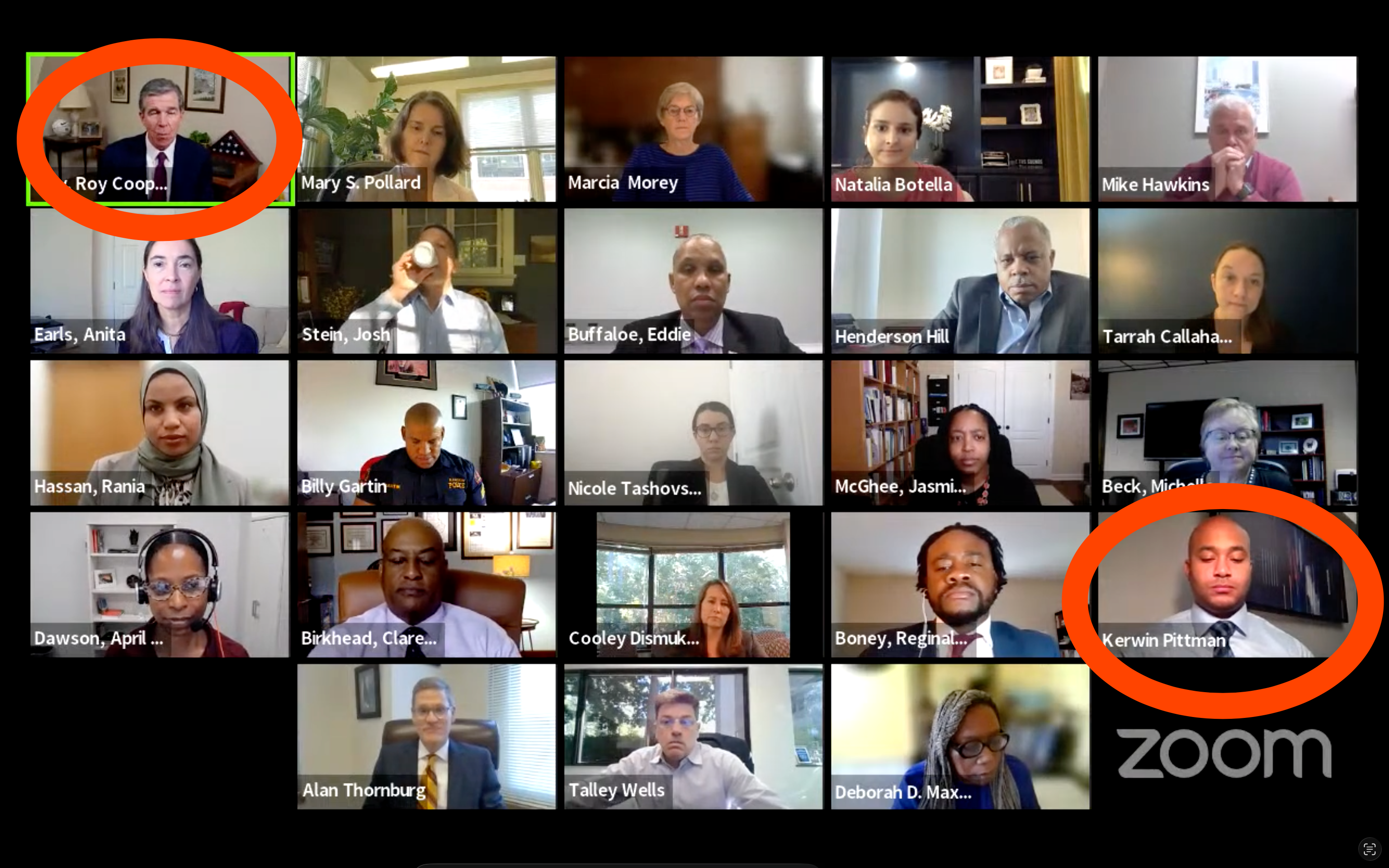
But as Cooper well knew, all but the most minor of the task force's recommendations had little real chance of becoming law. The vast majority of the now-disbanded task force's recommendations were blocked or ignored by the state legislature, where the Republicans have supermajorities in both houses.
Cooper tried to implement some of the committee's less controversial recommendations, signing at least three criminal justice reform bills into law that he said aligned with some of the task force's recommendations.
And the post-Floyd ethos of laxity might have led to a judge releasing a career criminal, Decarlos Brown, onto the streets of Charlotte, where Brown murdered Ukrainian refugee Iryna Zarutska on a light rail train a year ago.
At the exact moment of the slaying, Brown was free on cashless bail after a magistrate judge released him with a "written promise" to show up for court, the New York Post reported at the time. Brown, a longtime career criminal, had 14 prior arrests, including for armed robbery.
After Zarutska's murder, the president pro tempore of the North Carolina Senate, Phil Berger (R.), blamed Cooper's task force, which he said "advanced weak on crime policies" and encouraged a mindset that kept "Iryna's murderer on the streets." He has sought to block future governor-created task forces.
Cooper will face former Republican National Committee chair Michael Whatley in what both parties expect to be a major fight that will help determine who controls the Senate for the remainder of President Donald Trump's term in office.
"While Roy spent his career putting rapists and violent criminals behind bars and signing tough on crime laws as governor, Michael Whatley spent his appointing a convicted child sex predator who served six years in prison and spent over a decade as a registered sex offender to a top role within the North Carolina Republican Party that gave him access to events with children," a Cooper spokesman told the Free Beacon.