

When the story of Karyann Parkinson—a Virginia mom convicted of child abuse for letting her five-year-old walk alone to a nearby pond—went viral last month, I didn't know what to think. Of course, the authorities' reaction was disproportionate; trusting your kid shouldn't be a crime. But as a parent, I wondered whether I would be comfortable giving my five-year-old that much freedom. Probably not.
And yet I'm convinced that the psychologist Jonathan Haidt is correct when he suggests today's kids are overprotected in the real world, and underprotected online—a toxic combination contributing to unprecedented levels of anxiety. In some ways, it seems more obvious what to do about the latter. Just keep your kids far away from screens and social media, and for as long as possible. But in "the real world," the lines are less obvious. When and where is it okay to let your kid roam free?
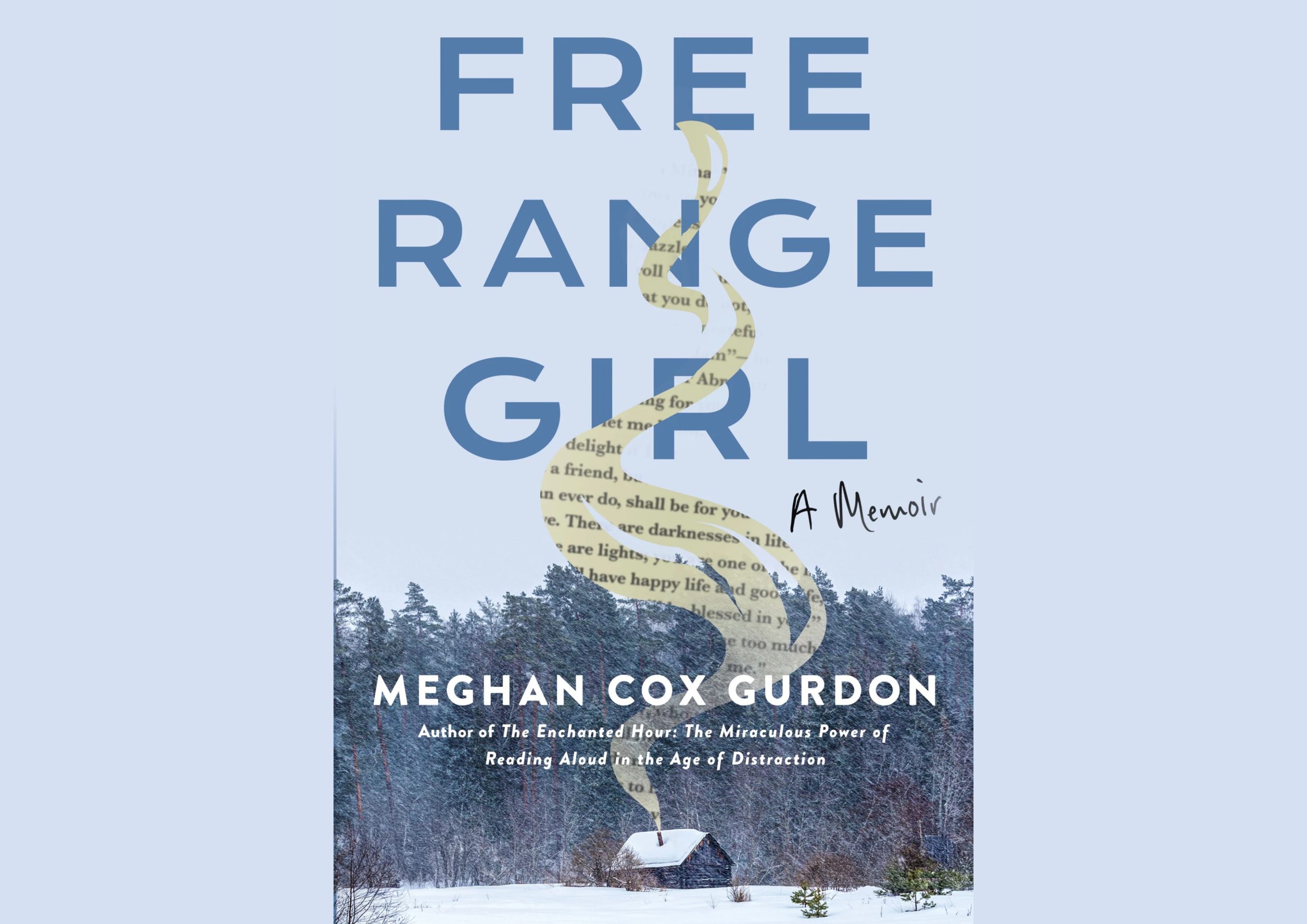
To recover perspective, it's sometimes helpful to recall what others have done, in simpler times, or in far-off places. Enter Meghan Cox Gurdon, with her new memoir, Free Range Girl. Cox Gurdon takes a look at the year of her life in 1976—between the ages of 12 and 13—when she moved from her mother's home in New York and went to live with her father, a devotee of the back-to-land movement in rural Maine, and what it taught her about life's ups and downs, and her sense of self.
Her father built the house from scratch and, for many years, it showed. When Cox Gurdon arrived, there was no hot water. She recalls bathing in a tin tub, which she sarcastically calls "an artifact from a time before electricity and hot running water and other cushy inventions that softened the body and weakened the character." They had to haul the water indoors in a bucket from a spring, then heat it on the stove. "It was ridiculous."
The homestead also featured a purely "decorative" pony named Dusty, who bit and kicked, as well as chickens that laid multicolored eggs. "Owning hens that laid such eggs was like having cows that produced chocolate milk, or trees that grew sugar plums," Cox Gurdon recalls.
The memoir is charming: a classic North American coming-of-age story, as in Anne of Green Gables and Little House on the Prairie, but with a more modern bent, as in Judy Blume's Are You There God? It's Me, Margaret. Perhaps I'm biased, having once been one, but the inner lives of girls that age are singularly endearing.
I loved Cox Gurdon's account of when she tried to eat a real speckled blue egg at her father's friend's house, thinking it was chocolate, then had to spend the rest of the visit concealing her disgust and embarrassment "in terror of discovery." Or her indignation and dismay at learning from her school teacher, in passing, "that 'of course' there would be no more books about Narnia because C.S. Lewis was dead." ("I'd had no idea.") Or the scene in which she tries explaining to her nonplussed father why she and her friends have raw egg smeared all over their faces. (Despite all three of them having clear skin, the women's magazines they read warned about "oily T-zones.")
Growing up in rural America in the 1970s—before the internet or the dark vortex of social media—Cox Gurdon had wild adventures: riding horses bareback, driving a Ford, surviving a horrifying brush with leeches, and cooking roast dinners. These experiences—mostly occurring beyond adult supervision—were not without mishaps. Once, while babysitting for her younger cousin, she accidentally burnt off her eyebrows when lighting an oven. On another occasion, after riding alone and losing control of her horse, she was found lying face down in a field with a bad concussion and two black eyes.
But what permeates throughout her account is that Cox Gurdon was a child who, through repeated risk-taking and exposure to the elements, cultivated the most important quality (after virtue), which is resilience.
After her dad's car got stuck in the mud, and he insisted she put it in gear and drive it forward while he pushed from behind, she was daunted. "I was just a kid. There were so many steps to follow. What if I missed one? I was afraid to try and I was afraid not to try," she wrote. But try she did, and in doing so, gained confidence. Less than a year later, she was telling him: "Dad, I'm thirteen. I know how to drive."
Her father did have some boundaries. He drew a red line at amusement park rides after the nephew of his friend was killed in a freak accident. And when she briefly thought smoking was cool, he quickly disabused her of the notion. "No goddamn cigarettes," he told her, throwing them in the fire and grounding her for two weeks.
Being a free-range girl was hugely formative for Cox Gurdon. In the 1970s, there was no virtual world from which she needed protecting. Instead, there was an adult world full of adult vices. And it's here, out of the mouths of babes, that Cox Gurdon conveys the immense pain this underprotection caused.
Cox Gurdon's parents divorced when she was six and though the aftermath was amicable, she pined away, futilely, for their getting back together. She writes of "the wistfulness I sometimes felt for a way of life I had never known." More specifically, "the older adults I knew, those of my grandparents' generation, lived with more order and less disruption. They had fewer divorces."
And it wasn't just her own parents. Divorce shattered the stability of her extended family, too. A much-beloved aunt, Mickey, who had been such a warm and lively presence in Cox Gurdon's life on the homestead, vanished when she abruptly left her husband, Uncle Bill, and son—and took her daughter to live with another man. Devastated, a 12-year-old Cox Gurdon nevertheless "recognized with a kind of cold maturity how little my opinion mattered in this affair."
Cox Gurdon had moved from New York to Maine to live with her father as her mother moved to Massachusetts to live with her boyfriend, Ronnie. And Cox Gurdon recalls the irrational resentment she felt toward Ronnie's kids, who, by virtue of visiting their father every weekend, got to see her mother more than she did. Still, she wrote: "They probably hadn't wanted their parents to split up any more than I had. I didn't like having to share Mom with them, but they hadn't arranged things that way. The grown ups had."
One thing I marvel at—as a parent daunted by the AI revolution—is how conducive Cox Gurdon's childhood was to deep and wide reading. "I would read everything. I read labels and cereal boxes. I read over people's shoulders. I read books I picked up at school. I read what my parents were reading," she wrote. She even recalls a report card noting that, "Meghan needs to take time from her outside reading to pay better attention in class." Oh, if only that were the problem facing today's kids instead of the dreadful opposite! In 1976, the year Free Range Girl is set, "40 percent of high-school seniors said they had read at least six books for fun in the previous year, while 11.5 percent said they hadn't read any," as noted in the Atlantic. By 2022, those percentages had reversed.
Cox Gurdon was an admirably innocent child, but even when she did go astray—she and a friend once got caught shoplifting red-handed—the experience reinforced the moral framework that was observable to her in the real world and still very much discernible in the world of books she so frequently inhabited.
"We'd simply been selfish. We'd been reckless too," she wrote, reflecting on her behavior. "We had not thought about right and wrong. We certainly had not thought about consequences." She was resolved: "There would be no more of this, I decided. I was not a thief and a liar."
None of us gets through adolescence with a clean conscience. But it is not the immorality of the internet and social media that frightens today's parents as much as its thundering amorality. AI isn’t so much usurping right with wrong as obliterating these categories all together. What, then, can we do to preserve the moral sense and imagination of our children?
In truth, most of us aren't going to do something as drastic as Cox Gurdon's father: build our own homestead and go "back to the land." But we might settle for more walkable neighborhoods, limiting screen time in favor of books, and plugging into a community of like-minded parents eager to let their kids play outdoors unsupervised.
Free Range Girl: A Memoir
by Meghan Cox Gurdon
Morehouse Publishing, 256 pp., $28.95
Madeleine Kearns is a contributing writer at the Free Press.