




"You think we’ll go to Hell because we’re worshipping Walt Disney instead of God?"
So asks one Disney Adult of another.
Yankees fans spend thousands of dollars on tickets, jerseys, and collector’s items. Heavy metal fans follow around bands on tour and track bandmates obsessively. Political junkies bet on races and put their identities in political movements. Little differentiates these fandoms from Disney Adults, one of only hundreds of groups of fanatic Americans. Yet somehow these fanatics have become one of the most hated groups in America—and the one most accused of idolatry.
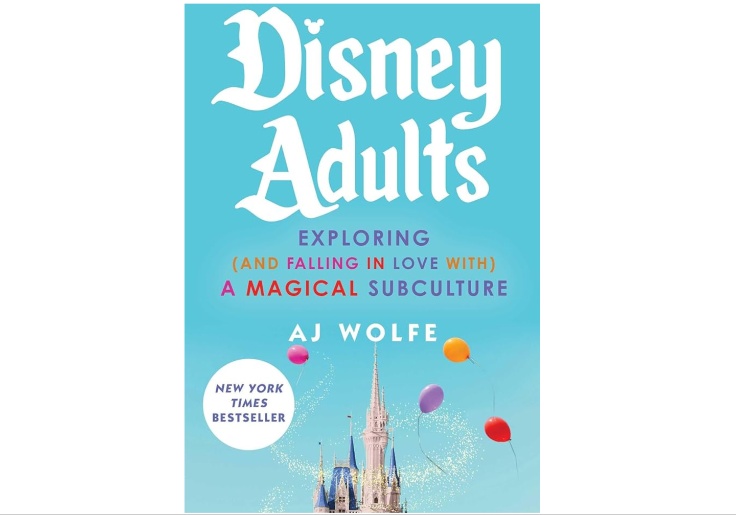
Not without reason, either, the author of Disney Food Blog since 2009 and an expert on all things Disney AJ Wolfe writes in Disney Adults: Exploring (And Falling In Love With) A Magical Subculture. Disney enthusiasts are childlike, costumed, stereotypically childless adults who sometimes turn "r" sounds into "w" sounds ("fwiends" not "friends"). They bombard social media with cringe content like "Plus-Sized Park Hoppers," a group of women ranging in size from 2x to 5x who review food and show plus-sized Disney lovers how to fit in rides. They spend tens of thousands of dollars traveling to the same amusement parks, to ride the same rides, eat the same foods, and purchase variations of the same merchandise.
Part of the secret behind their addiction is Disney itself. When Walt Disney launched the Laugh-O-Gram Studio in 1923, his Mickey Mouse cartoon was both an immediate hit and a goldmine. Mickey Mouse watches, clocks, plushes, hairbrushes, clothing, and more were sold by the millions, and they still are. When the company opened successful theme parks in the latter half of the 20th century, it expanded that marketing genius to create the most addictive sense of nostalgia it could.
How? Through details like "smellizers," devices that "pump specific scents into specific areas" and convince visitors to crave anything from popcorn to another ride on the Pirates of the Caribbean attraction, where the water is laced with bromine to give it a musty smell; custom paint colors like "Go Away Green," a color used to obscure trash cans, fences, and cast member exits; visual illusions that make visitors feel as though attractions are built to full-scale; and familiar soundtracks that direct and transition visitors to different locations, Wolfe explains. Every Disney experience is engineered to keep people coming back.
Visitors to the theme parks, adults or otherwise, aren’t naive. Wolfe reveals through her writing that they have a remarkable sense of self-awareness. Many of them have happy family memories at the parks, a parent with whom they bonded over Disney movies, or some other deep connection to Disney. This ability to capitalize on nostalgia is incredible, but it’s not trickery: Disney just creates products people love to remember.
"We knowingly—and eagerly—pay to be fooled into buying a story we absolutely know is not true," Wolfe admits.
Social media is the likely culprit behind the mass and recent hatred of Disney Adults, Wolfe explains. Enthusiasts have turned their hobbies into careers in the digital age, opening them up to communities beyond their own that can’t fathom why grown adults are so obsessed with a brand meant for kids. Ultimately, the park does the same thing for adults that it does for children: give individuals an escape from reality, a world in which to dream, and a heavily curated sense of nostalgia.
Brandon, a drag queen in Hollywood, is such a superfan that he built a mini-expo in his home based on the 1964 World’s Fair (which featured iconic Disney exhibits). A former employee at Disneyland, Brandon has created partial replicas of the Disney World restaurant, the 50’s Prime Time Café, Carousel of Progress, and more. People don’t understand him, he says, and that’s ok. People either get it or they don’t.
"I’m a firm believer that life is a feeling, and that is why people love the Disney parks so much," he says. "It’s not the rides, really. It’s the feeling that it gives people. It’s a million little details in every corner that all come together to create a fully immersive experience."
Reducing life to pure emotion doesn’t always work out well. Disney-Adult-in-recovery Sharon is on a break from Disney right now, she tells Wolfe. Sharon used to go to Disney six times per year until her church approached her about a mission trip. She became convinced that she should spend her money, time, and energy on God instead.
"My conviction was, you need to put down your idol of Disney," Sharon tells Wolfe. "I love, love, love, love Disney. Everything about it. But I said, ‘Okay, I get it.’"
Wolfe’s work is a defense of her own tribe. It is also, however, an honest reflection on why people loathe Disney Adults, and if some of that disdain is valid (some of it is). Wolfe is most shocked during her research to learn that the people primarily responsible for the Disney Adult hatred are Disney Adults themselves—it turns out that enthusiasm breeds fierce competition.
Enthusiasts’ passion is admirable (though not admirable enough to read extensively about). Although they live in a sort-of arrested development, it’s charming how little Disney Adults care about the outside world’s opinion. Why should they? They’ve created their own reality, one that’s easy enough to escape to on a screen, a plane, or a cruise.
Escapism is Disney’s main objective, which is fine for kids, who should remain in a state of imagination for as long as possible. That same escapism is perverted with age. Adults don’t get to center their lives around fantasy, or feelings, which are at the core of every Disney-obsessed story Wolfe details. While feelings can get you far, emotions are too fleeting and subjective to ever be facts of life.
Disney fans don’t see things that way. Loving Disney has no "bearing on our ability to live productive lives and face reality," Wolfe writes. Disney gives adults "joy, a community, and a safe place to land so that we can put the real world into even greater perspective."
And feeling as though the magic of Disney is real "is worth all the criticism in the world."
Disney Adults: Exploring (And Falling In Love With) A Magical Subculture
by AJ Wolfe
Gallery Books, 272 pp., $28.99
Haley Strack is a staff writer at National Review.