


The "affordability" agenda of New York City's new mayor apparently includes nurses getting paid more than $200,000 a year.
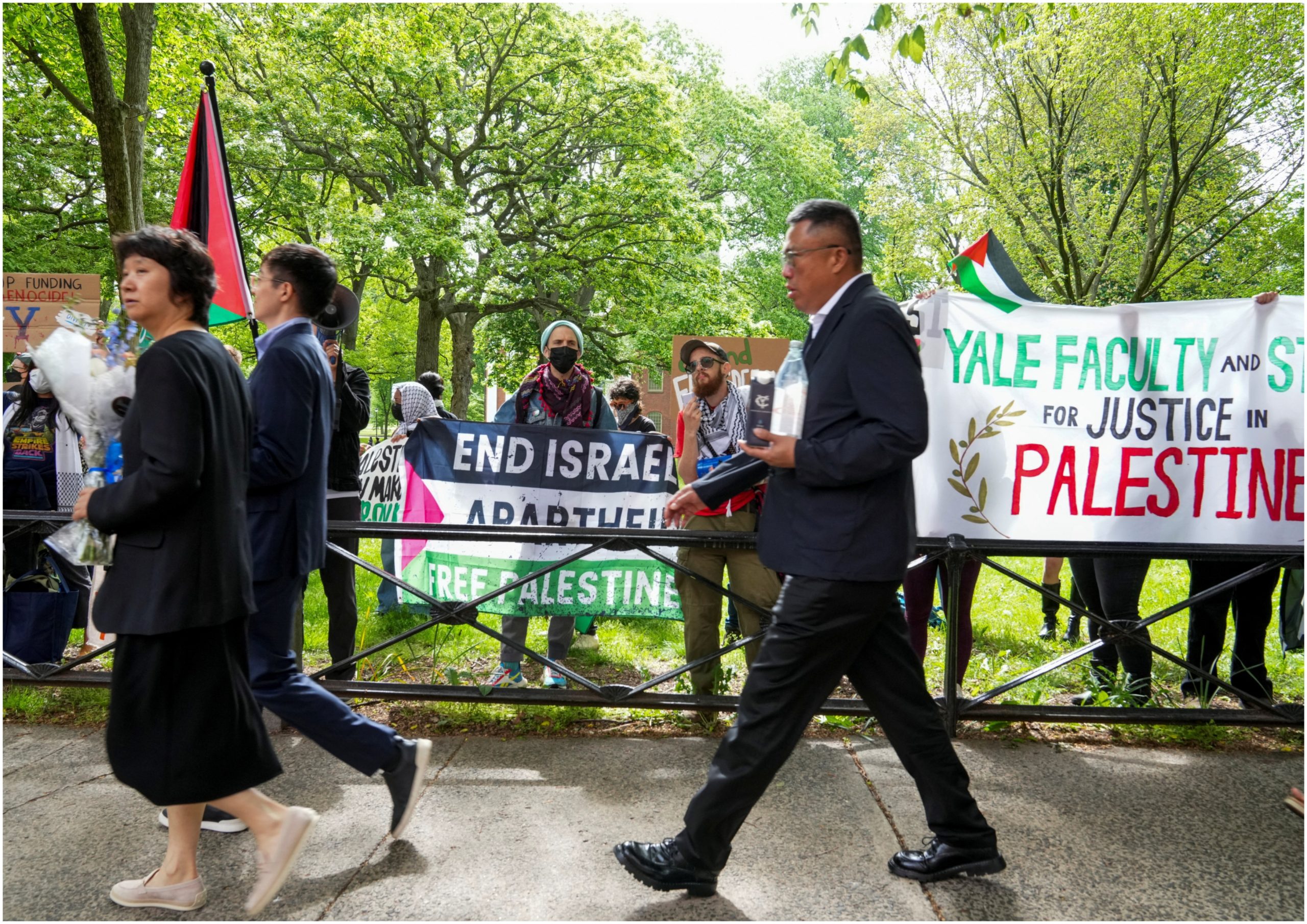
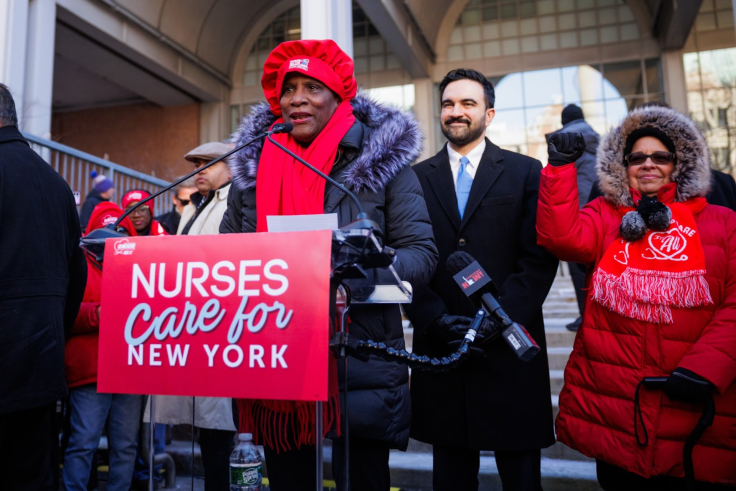
Mamdani showed up this week at an event to support striking members of the New York State Nurses Association, who are participating in what the union characterizes as "the largest nurse strike" in the history of New York City. The union says nearly 15,000 nurses have gone out at Mount Sinai, NewYork-Presbyterian, and Montefiore hospitals. Socialist Sen. Bernie Sanders (I., Vt.), a frequent Mamdani wingman, also turned up; the Associated Press quoted Sanders as saying, "The people of this country are sick and tired of the greed in this health care industry."
That action earned Mamdani a scathing rebuke from the Washington Post editorial page, which said, "Mamdani is behaving more like an activist at Bowdoin College or an organizer for the Democratic Socialists of America than the leader of a city of more than 8.5 million." The editorial suggested Mamdani might be engaged in "a cynical move to build support for single-payer insurance — and then a full government takeover of health care." It concluded that Mamdani "has taken a side. It isn't the side of patients" and argued that "Performative acts of 'solidarity' may feel good, but they don't solve problems."
Subsequently, my former New York Sun colleague Joe Goldstein, with Patrick McGeehan, revealed in the New York Times that the nurses "are seeking raises that could propel nurses' salaries on average past $200,000." The Times reported that the nurses already earn $163,000 a year on average at NewYork-Presbyterian, "$165,000, not including overtime" at Montefiore, and $162,000 at Mount Sinai.
The cost of those salaries winds up getting passed along to patients and businesses, according to Bill Hammond, senior fellow for health policy at the Empire Center and another former New York Sun colleague of mine. He said the money would come from insurance premiums paid by average New Yorkers, their employers, and taxpayers. "They shouldn't pretend like the money's coming out of the air," Hammond told the Washington Free Beacon. "Whose affordability are we talking about?"
Hammond noted that other demands of the nurses' union, related to working conditions and staffing ratios, would require employing more nurses. "The costs compound," he said.
And, he said, health care costs in New York are already among the nation's highest.
The hospital boards include many of the business and real-estate-industry executives and members of the city's Jewish community that Mamdani has denounced as "oligarchs" and otherwise demonized during his campaign. The Montefiore Einstein board of trustees, for example, is chaired by Daniel Tishman and includes Alisa Doctoroff and David Keidan. The Mount Sinai board includes Henry Kravis and Carl Icahn. The NewYork-Presbyterian board includes Daniel Och, David Lauren, David Solomon, Leonard Wilf, Peter Kalikow, Ray McGuire, and Stephen Schwarzman. These are not, generally speaking, people leading the charge for the Mamdani socialist agenda of "freeze-the-rent," "tax the rich," boycott Israel, and open government-operated grocery stores.
One irony is that if the nurses get what they are asking for, they eventually may qualify as "rich" for the purposes of New York taxing them to oblivion. The New York City top marginal income tax rate of 3.876 percent kicks in for married-filing-jointly filers at $90,000, and the New York State individual income tax rate for single filers in 2025 has an increase at the $215,400 a year mark to 6.85% from 6 percent. As Hammond drily observed, eventually nurses, or two-nurse households, might find themselves hit by New York's millionaires tax. That is, if they don't join some of the hospital trustees and decamp to lower-tax, lower-health-care-cost destinations, such as Florida.