
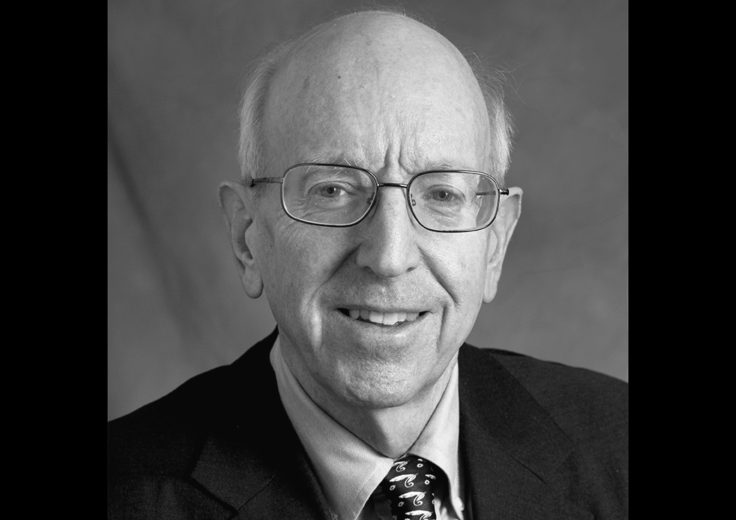
There have been many tributes and critiques of Richard Posner and his towering intellectual achievements since he left the bench in 2017, well before his death last week at the age of 87. Thus, there is little point restating what is already in the public domain. But, from my perch as a constant observer, colleague of, and combatant with Dick in his earliest years, I will direct my remarks to the years before Posner went on the Seventh Circuit in 1981. To keep this manageable, I will confine myself to a discussion of his views on antitrust and tort law that reveal so much about Posner as a human being and a thinker. I thus put aside his work as a judge.
I entered teaching at the University of Southern California Law School as a raw 25-year-old recruit who studied law at both Oxford and Yale. I had just learned of the existence of one Ronald Coase on the day of my arrival at USC from my late and much missed colleague Michael Levine, who had studied with Coase in 1967-68 at Chicago. With this meager background, in early February 1969, I grabbed my gym bag and an issue of the 1968 Stanford Law Review, which contained Posner's article, "Natural Monopoly and Its Regulation," published in his first semester of teaching. The gym bag was left on the backseat of my 1965 Dodge as I stood there, agog, and read the article from start to finish. Who was this man Posner? How could he take on established scholars with an ill-concealed contempt and make good on his revisionist views? The article was elegantly written; Posner was clearly in control of its subject matter and supremely confident in his tone. Rereading it again years later, it has the added virtue of passing the test of time. Even then, here was a man to watch from a distance.
And watch I did. In 1970, Guido Calabresi—born 1932, Yale through and through, and still active today—was the leader of revisionist tort scholars who published a book, The Costs of Accidents, whose thesis was that the law of torts should minimize the costs of accidents, the administrative costs of resolving these disputes, subject to a constraint of justice. Posner rose to the bait and published a critical, even nasty, review of the book that began: "Torts is not my field. But in one sense neither is it Guido Calabresi's, although he is a professor of tort law at the Yale Law School." The beef from the future pragmatic judge was that Calabresi was inattentive to the actual law, its statutory, procedural, institutional, and social bases. But the antitrust scholar felt, after the obvious blowback, obliged to pick up where his review had left off.
In that same interval, Posner had decided that the recently formed Journal of Law and Economics, then edited by Ronald Coase, was not to his taste. So in the fall of 1972 he started the Journal of Legal Studies, which remains a leading publication in the area of law and economics to this day. There was in the spring of 1973 a notable confrontation between two of the sharpest wits ever: Posner challenged Coase—"Why are you afraid of competition?"—to which came back this riposte: "Competition yes, a fifth column no."
Before this moment, Posner became my combatant and friend, when I arrived at the University of Chicago Law School for the December 1971 meeting of the Association of American Law Schools. Chicago dean Phil Neal had arranged for me to have a Hyde Park dinner at Dick and Charlene Posner's house because I had just accepted Neal's offer to visit Chicago in the academic year of 1972-73. In anticipation of the meal, Posner had given me an advance copy of his immensely influential article, "A Theory of Negligence," scheduled to come out shortly in January 1972. First Posner dismissed all existing theories of negligence liability. No, it was not a subsidy to nascent industry; no, its core function was not the compensation of victims; and no, negligence was not a moral system.
Instead, the whole world turned on the formula announced by the great judge Learned Hand in United States v. Carroll Towing Co. (1947), whereby "Hand said the judge (or jury) should attempt to measure three things: the magnitude of the loss if an accident occurs; the probability of the accident's occurring; and the burden of taking precautions that would avert it." In so doing, "Hand was adumbrating, perhaps unwittingly, an economic meaning of negligence."
Reading that article was watching Posner wave a red cape before the Epstein bull. I was at heart an English-trained lawyer where liability for negligence was decided metaphorically by the man on the Clapham omnibus.
There must have been seven people at that dinner, including Posner's wife and father, but for the next hour or two, it was hand-to-hand combat. Posner stuck to his position like the bulldog he was, as I countered on all fronts. What about corrective justice? Or was Aristotle toast? Did the formula handle trespass cases, occupier's liability cases, good Samaritan cases, the privity rule in products cases, the debates over proximate cause? To Posner these were all side issues, and the Hand formula reigned supreme, for, as he often said, "plunge ahead, don't worry about flanks." And then, as the debate wound down, he stopped, looked at me kindly, and stated, "You have to publish your views. Where? In my new journal of course." That exchange captured much of the man. He was the master pugilist at one moment, only to become the gracious and supportive colleague at the next. And it was that offer that helped launch my own career. Next year the solicited reply appeared in his Journal under the title "A Theory of Strict Liability," that closed Act I of our debate which, between our friendly tennis matches, continued unabated until he mounted the bench in 1981.
In those early days, I pushed hard on "corrective justice," which yielded a different set of rules starting with the simple paradigm that "he hit me" (causing damage) had more punch than the Hand formula. Laboriously as an English trained pleader, I continued building the system to cover both accidents and intentional harms, with Posner as my editor and muse. Looking back, I think there was much to be said on both sides of the debate. His insistence on global efficiency came in my view to be part of any general theory because tort theory had to account both for the position between the parties, but also with all third parties with positive and negative externalities. Yet at the same time that much-needed general theory could not rest on the negligence of the Hand formula. In some cases, strict liability could work to give clear signals to defendants in tort cases. In other situations, like medical malpractice, negligence based on custom—not explicit cost-benefit standards—was the basic standard; liability had to be cabined because the damage awards had to come out of the fees for service. But the earlier synthesis had been blown away by stricter duties that led eventually to the liability breakdown and social disruption in the field by the mid-1970s.
And finally there was a huge debate over the law of nuisance: "Corrective Justice and Its Utilitarian Constraints," the title of my essay, reveals the transitions in my own thought, by stressing what I had largely overlooked earlier, to wit, the key place of transaction costs in forming the overall system. In an often taut exchange, Posner then pressed his critique of my overall theory in his article "Epstein's Tort Theory," to which I then responded with an article on causation and corrective justice, and so as the decade ended so too that debate came to a close. A recap of the ins-and-outs has to wait until a later time.
In closing, however, it is worth saying something about the man. In Larissa MacFarquhar's 2001 notorious profile of Posner in the New Yorker, he described himself as having "exactly the same personality as my cat. I am cold, furtive, callous, snobbish, selfish, and playful, but with a streak of cruelty." The truth, but not the whole truth. His private persona was different. He was devoted to his wife Charlene of 64 years and his sons Kenny and Eric. His extended family included as well his clerks and research assistants. The severe exterior gaze was part of his grand scheme. In fact, he was an extremely private man, and that carefully crafted image was his protective cover. Masked or unmasked, we shall never see his like again.
Richard A. Epstein is the Laurence A. Tisch Professor of Law at NYU Law School, a senior research fellow at the Civitas Institute at UT-Austin, and senior lecturer and James Parker Hall Distinguished Service Professor Emeritus at the University of Chicago Law School.