


Medora, North Dakota, is positively cuckoo for Theodore Roosevelt.
Want to slumber like the 26th president? Stay at the Rough Riders Hotel on Third Avenue. Craving the hearty breakfast of the founder of the Bull Moose Party? Brunch at TR's Tavern in Theodore's Dining Room. Need an eponymous souvenir? Shop at Teddy's Bears near the Point to Point amusement park. Seeking to emulate TR's rugged outdoor adventures? Set out on the miles of bison-filled trails traversing Theodore Roosevelt National Park.
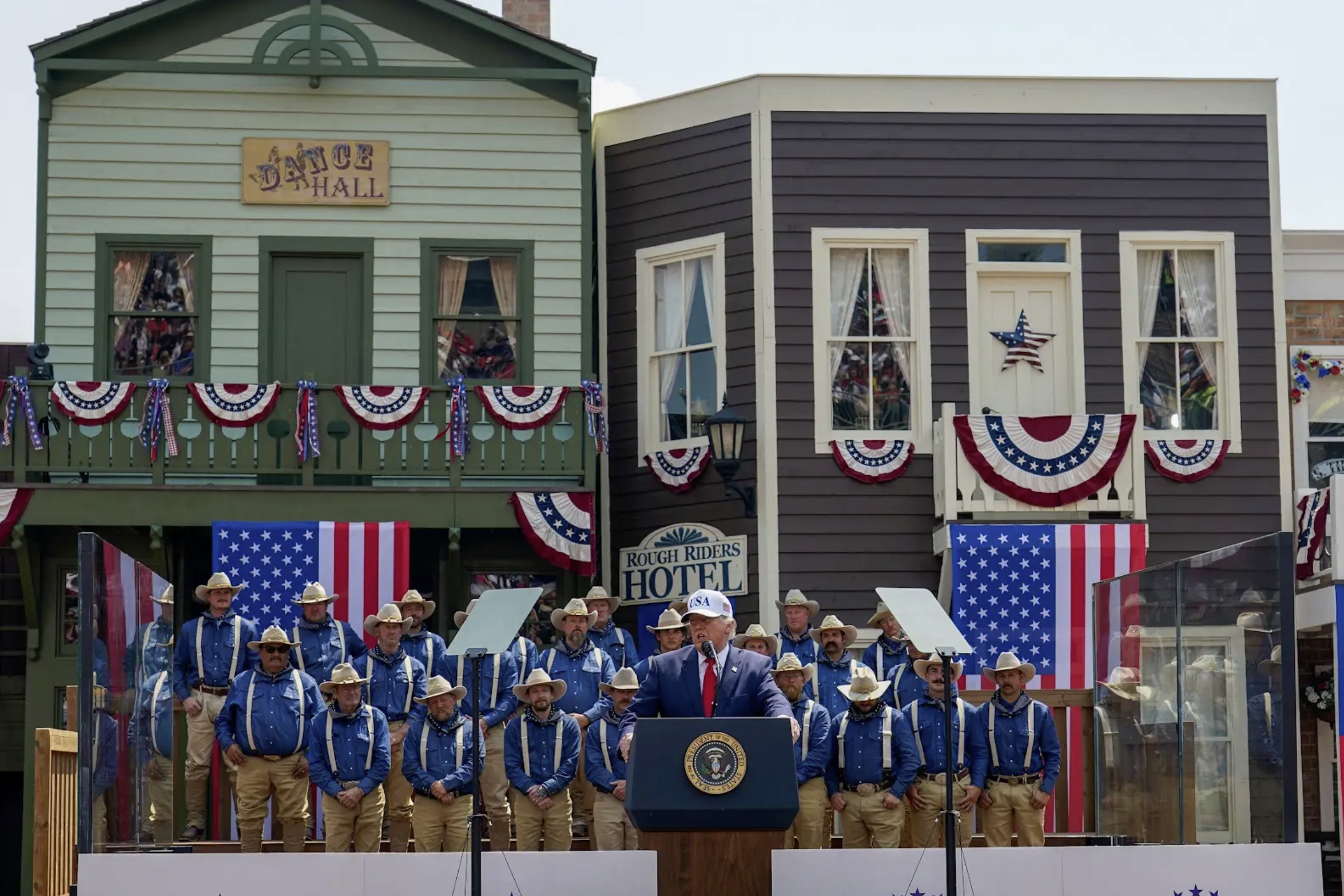
The town—situated in scrubland foothills 25 miles from the Montana border and 250 miles north of Teddy's likeness at Mt. Rushmore—is more or less governed by the Theodore Roosevelt Medora Foundation, and, frankly, its worshipful attitude toward its patron was enough to make even a die-hard Teddy fan like myself blush.
But beginning on July 4, to mark the semiquincentennial, Medora welcomed a much more ambitious and spectacular Roosevelt-themed attraction to its borders: the official presidential library of the youngest man ever to assume the office. My mid-August visit with my 19-year-old son left me satisfied with how well TR's legacy had been captured, impressed at how the designers integrated nature, technology, and artifacts, and also mildly depressed about how dominant digital modes of experience have become.
Built at the gaudy cost of $450 million, the layout, architecture, and content of Teddy's temple ably capture the spirit and achievements of the man himself. Seemingly carved out of a hilltop that commands a panoramic view of the canyons where Roosevelt built his legend as a hunter and conservationist, the 93-acre compound seizes the visitor's attention even from a distance. The grounds include a loop trail affording gorgeous vistas of the khaki-and-green surroundings, and the walkable "roof" of the low-slung central building mimics grasslands (we even spotted a frog hopping around the paths). As a matter of sheer physical beauty, it exists in another universe from the monstrosity built on Chicago's South Side honoring President Obama, which also opened its doors this summer.
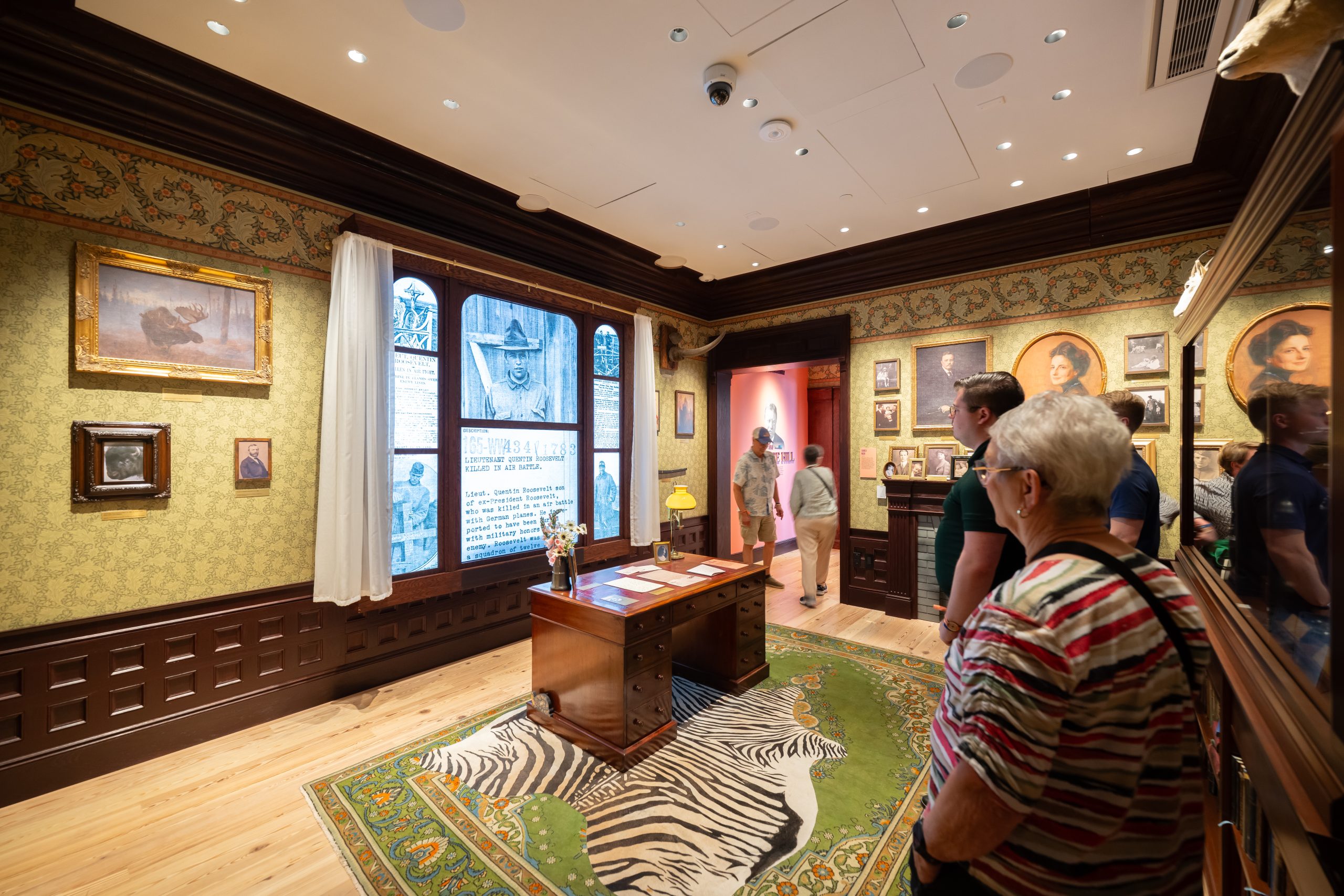
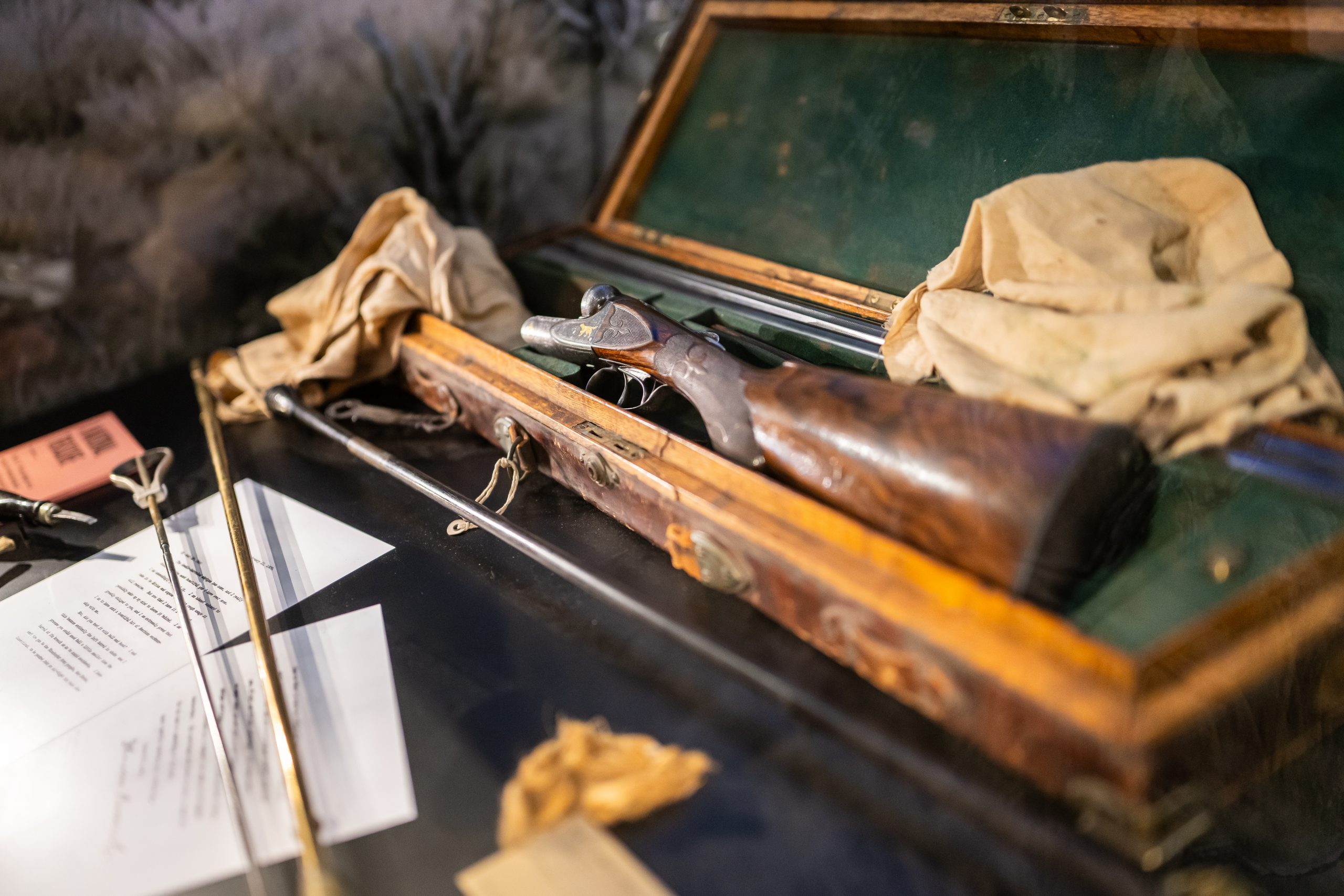
As a museum experience, the library does not disappoint. The exhibits take the visitor smoothly and evenly through Teddy's life, beginning and even dwelling on his youthful endeavors at some length. Diaries, letters, and physical artifacts from his childhood are on display (some original, others in replica), and his gradual maturation from an aspirational young man to an elected official is narrated effectively and even inspirationally.
The library's architects designed an easy-to-follow route that snakes its way through a central great hall, which captures key moments in Teddy's life over the decades, including the tragic deaths of loved ones that afflicted him throughout his life. The exhibits devote an appropriate amount of attention to the 1898 Spanish-American War, which showcased his bravery and made him a household name nationally, and his extremely eventful two terms in office, kicked off by the McKinley assassination that catapulted him to the "bully pulpit." The final section of the library capably outlines his post-presidency decade as "Colonel Roosevelt," when he crisscrossed the globe to revive his spirit of adventure.
TR captivated me the moment I first learned about him in high school, a fascination that intensified through the multi-volume Edmund Morris biography and that culminated in naming our first-born son Theodore (to be fair, he was also named for Theodor Herzl). While many conservatives disdain TR's excessive self-regard, blame him for inaugurating the era of big government, and castigate his "betrayal" of his onetime protégé William Howard Taft, which in turn led to the disastrous Wilson presidency, I remain awed by his personal fortitude, his principled leadership, and his sterling example of devotion to family and country. Visitors to the library are certain to come away similarly affected; my son—Theodore's younger brother, who isn't the world's biggest fan of museums—insisted we stay far longer than we had allocated to the visit.
And to its great credit, the library largely avoids succumbing to presentism and other faddish political notions that would have been foreign to its subject (one notable exception: a ponytailed professor delivering a monologue about how "the settlers of the prairies didn't believe in extinction," unlike the noble tribes they supplanted, who dedicated themselves to conserving the bison population). Two notable highlights: an entire room dedicated to TR's legendary "Man in the Arena" speech and a final exhibit devoted to his famous quotations, all voiced by a wide variety of narrators.
The library also nicely integrates technology into its presentation, even if the results are occasionally kitschy. At the outset, visitors are invited to grab a bracelet bearing a small electronic token. After registering email addresses and submitting to a facial photograph, we're invited to tap the token at various points throughout the museum to generate AI-assisted, period-appropriate photos and videos of us as turn-of-the-century New York City police officers, barnstorming presidential candidates, Rough Riders, and the like. Other exhibits invite participants to virtually "shoot" cans and bottles from various distances (hunting animals is apparently no longer acceptable), and one room offers a press conference with a holographic President Roosevelt who, with the assistance of a large language model, answers questions from the audience in real time. (Well, almost real time: After a girl asked e-Teddy if he ever encountered any tigers, the ersatz commander in chief responded, "Hmm. Okay. One minute. Well, Ella, tigers are native to Asia, and I never made it there, but let me tell you about hunting lions on the African savannah…")
These concessions to contemporary technology are, I suppose, necessary to satisfy younger visitors, and, to nobody's surprise, the kids and teenagers flocked to the digital displays. I sighed in resignation at what it takes these days to entice visitors. And then, my Gen Z son and I stepped out into the sunlight, got back into our rented SUV, and hit the trails of TR's park, where we promptly met up with a herd of bison. Bully for Medora, bully for TR, and bully for his astonishing legacy.
Michael M. Rosen is an attorney and writer in Israel, a nonresident senior fellow at the American Enterprise Institute, and author of Like Silicon From Clay: What Ancient Jewish Wisdom Can Teach Us About AI.