




When my husband and I moved into our first house, our closing lawyer handed us a piece of paper that just read "Joe" followed by a phone number. It was the name of a handyman—and no, we didn't need to know his last name. Within a week of moving into our charming 80-year-old Tudor, our garage had two feet of water. Joe soon became a regular and reassuring presence in our home, giving us tips on sealing windows and changing air-conditioning filters. He also offered advice about marriage and childrearing too. For instance, he recommended that my husband take at least one weekend day off from his family to golf. With a wife who worked full time and three kids under the age of six, my husband suggested that leaving the house for several hours on a Sunday didn't seem appropriate. When it came to hands-on fatherhood, though, Joe was on the other side of a generational and class divide.
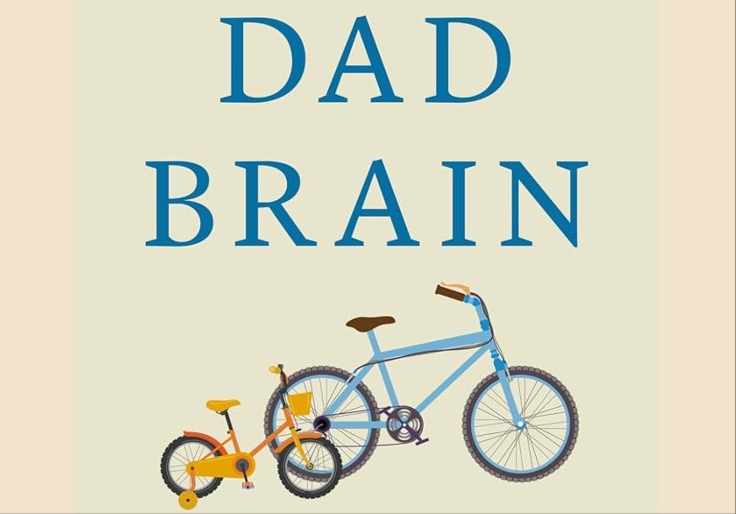
In her new book, Dad Brain: The New Science of Fatherhood and How It Shapes Men's Lives, Darby Saxbe argues that there is a lot of variation in our own country, around the world, and through history in terms of how much men participate in the daily activities of parenthood. Saxbe is a clinical psychologist at the University of Southern California, where she runs the NeuroEndocrinology of Social Ties lab.
The team there studies how "close relationships affect health, with a particular focus on the transition to parenthood as a window of neuroplasticity and a nexus of hormonal, behavioral and psychological change." Much of the research she presents suggests men go through biological changes when they become parents, just as mothers do. Fathers' hormone levels change, as does the volume of certain areas of their brains and even the size of the testicles.
In hunter-gatherer communities, she writes, "members must work cooperatively, since women's hunting and foraging adds essential calories to the family diet." As a result, men are more likely to help care for young children. In agrarian societies, though, roles become more specialized. "As the work of mother and father diverges more widely, parental roles like protecting, providing and caring end up in separate occupational baskets." Saxbe suggests our current society is in an in-between stage. Breadwinning is a shared responsibility, "but we have inherited long-standing, specialized gender roles from thousands of years of agriculture." So which model is better? Saxbe initially sounds agnostic. She quotes one anthropologist who tells her that "good fathers in any given culture are the ones who give kids what they need to thrive within their specific world."
Looking at two societies in the Congo, researchers found that in one, the men regarded as the best fathers were those with lower levels of testosterone, those who cared for children and were willing to share resources. In a neighboring village, though, the high testosterone fathers who are not involved with small children but who spend time teaching teens "how to fish, farm, hunt and clear farming plots in the forest" are regarded as the best fathers.
The biological changes associated with fatherhood seem to be both a cause and effect of a father's relationship with his partner as well as the role he is playing in the lives of his children. Even the highest testosterone fathers experienced a drop when their children were born. And interestingly, "the lowest levels emerged in fathers who spent at least three hours a day with their children, diapering, bathing, playing and co-sleeping with them." Spending more time on these tasks changes men physically and these changes encourage spending more time on these tasks.
Saxbe is walking a fine line, trying to write about the distinctly biological aspects of fatherhood at a time when many of her potential readers think gender is a social construct. She tries to set expectations early in the book, explaining that "I can't write about dads without acknowledging the reality of biological sex and the influence of gonadal hormones on brain and behavior." She even notes the "sexes evolved with different reproductive systems, requiring different choices and tradeoffs." But then again, she says, "biology is not destiny," and that there is more variation among women in certain traits than between women and men.
So far so good. Until you get to the part where Saxbe interviews a trans woman about their experience and the reader learns "the idea of a pregnant man no longer seems shocking or even particularly newsworthy." (Well, maybe to some.) And she compares human beings "parenting outside the gender binary" to seahorses where the male can become pregnant "by virtue of a brood pouch that attaches itself to their tale or abdomen." Saxbe may persuade readers that a person's environment and social cues can affect their hormone levels and even the way their brain functions, but most will still be reasonably certain that men can't get pregnant.
As much as Saxbe doesn't want to register a judgment about which kind of fatherhood is the best, she believes our society demands a more egalitarian form of parenting and wants to create policies that will allow for it. Because women are doing more breadwinning, children, she says, would benefit from men who do more hands-on parenting. While an older generation might have seen men do a greater share of the "hunting" and being more dependent on men having very specific roles that required them to be away from children for longer, today the situation is mixed. Women's changing roles have necessitated men's changing roles.
It's not only that, though. Saxbe correctly notes we are inviting men into certain parts of the parenting experience, but not fully equipping them to handle it. She points out men are now in the delivery room when women give birth but no one acknowledges the terror many feel when they see their partners and their children in what can seem like real danger. Helping them understand what is happening and bringing them into the process means they will be more likely to help with the care of infants.
This is all reasonable. But then, as is the wont of so many scientific researchers these days, Saxbe dives headfirst into public policy recommendations. And where else to look for recommendations besides Norway? (The frequency with which popular social scientists do this, I think, merits a new term—how about "Scandinenvia"?) Saxbe predictably recommends policies like mandatory paternity leave.
She worries that parenting can make us more "self-interested" and "greedy" when it comes to resources for our own children. "A competitive, individualistic society with a winner-takes-all economy pits parents against one another, but we can dream about a society that treats child-rearing as a collective enterprise and invests in policies that benefit all kids." She argues that a more egalitarian model of parenting will lead to happier parents and even a possible increase in fertility. Japan, Saxbe writes, is offering classes "where men try on pregnancy bellies and learn to bathe infant dolls" to "bolster their marriageability" and increase fertility.
But the women who are the most satisfied in the United States anyway are either the highly religious (married to highly religious men) or the very secular (married to very secular men). Yes, it's possible for women and men to be more closely aligned on egalitarian parenting, but those are not the parents who are increasing the country's fertility. If anything, they are pushing it in the opposite direction.
Saxbe's book begins with the story of her own father and how when her mother up and left him for another man, her father stepped up, making a lot of macaroni, taking the kids on camping trips, teaching them how to drive. Indeed, she found his home to be a calmer place for her and her siblings than her mother's house—Saxbe's research suggests that fathers' presence means less stress for children; mothers tend to be more high-strung. She even says "he glued together the parts of us that had been broken open" by the divorce. In her haste to make fathers more like mothers, though, Saxbe doesn't seem to ask whether anything that is distinctly fatherish will be lost in the process.
Dad Brain: The New Science of Fatherhood and How It Shapes Men's Lives
by Darby Saxbe
Flatiron Books, 304 pp., $29.99
Naomi Schaefer Riley, a senior fellow at the American Enterprise Institute and the Independent Women's Forum, is the author of No Way to Treat a Child: How the Foster Care System, Family Courts, and Racial Activists Are Wrecking Young Lives.