
Qatar more than tripled its funding of U.S. colleges and universities between 2024 and 2025 after becoming the largest foreign financier of higher education in the United States in 2022, according to Department of Education disclosure records.
The Gulf state increased its funding from $396 million in 2024 to $1.2 billion in 2025 in an unprecedented year-over-year spike, the data show. The surge coincides with Qatar’s expanded lobbying and influence-buying efforts, and indicates that it has no plans to trim its spending on higher education even as Congress has investigated its role in anti-Israel and anti-Semitic activity on U.S. campuses. The drastic escalation in Qatari funding only includes part of 2025, meaning the final total could end up being larger, pushing its lead over second-place China even higher than it is now.
The sharp increase appears to be driven by several large contracts between Qatar and U.S. universities that recently opened satellite campuses within the Gulf state. Carnegie Mellon University, which has a campus in Doha, disclosed entering a $936 million contract from Qatar last May, for instance. Cornell University, which has a medical branch in Qatar, disclosed a $163 million contract with Qatar in January 2025. Texas A&M University, which has a satellite campus in Doha as well, announced a $24 million deal the same month. Arizona State and Harvard universities reported contracts of over $1 million last year, while Duke University and Bard College disclosed both deals and gifts in the high six-figures.
The five biggest recipients of Qatari money over the years, according to the Department of Education, are Cornell, Carnegie Mellon, Georgetown University, Texas A&M, and Northwestern University in that order.
News of Qatar’s intense funding push—even though it is already the single largest foreign donor to U.S. higher education—comes after several years of scrutiny for the Gulf state over its influence operations in the United States and its support for terrorism. Qatar is believed to be one of Hamas’s largest bankrollers and offered its leaders asylum after the Oct. 7, 2023, terrorist attacks.
A student at Carnegie Mellon filed a lawsuit against the school in 2023, claiming that the school’s financial ties to Doha pushed it to allow a culture of anti-Semitism on its campus. In a court order last month, a judge described the concern as valid, writing that "Qatar and its affiliates could be a source of antisemitic influence upon CMU."
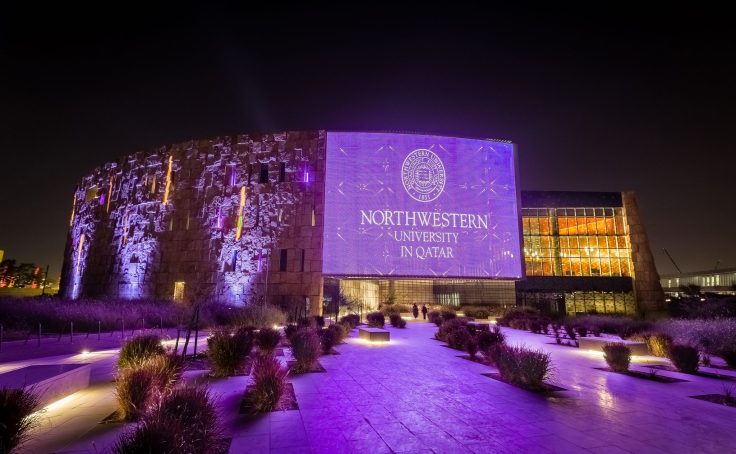
At Northwestern, which has received $737 million from Qatar since 2008 and operates a satellite campus in Doha, its contract with the Gulf state prohibits students and faculty from criticizing the Qatari government, the Washington Free Beacon reported in September. As the House Education and Workforce Committee revealed in a hearing that month, Qatar Foundation staffers sent messages providing talking points on "diplomatic role and mediation efforts in Palestine/Gaza and Afghanistan – along with reactions from international politicians" in the immediate aftermath of Oct. 7.
Qatari influence has other consequences, the Free Beacon reported in June. Georgetown, which houses the Walsh School of Foreign Service, allows Qatar’s Hamas-friendly government to wield outsized influence over several key programs—and Qatari royal Sheikh Abdulla Bin Ali Al-Thani sits on the university’s governing Board of Directors. The Gulf state’s influence operations extend beyond college campuses to K-12 schools as well, pushing for "social justice" lessons in U.S. classrooms. Suggested lesson plans include the controversial 2005 Palestinian film Paradise Now, which tells the story of two Palestinian friends plotting a suicide bomber attack on Israel and has been criticized for its sympathetic portrayal of terrorists.
Over the past year, Qatar has expanded those operations to influencers on both the right and left, flying podcasters, social media figures, lawmakers, and celebrities into the country for all-expense-paid junkets in an attempt to shore up its reputation.