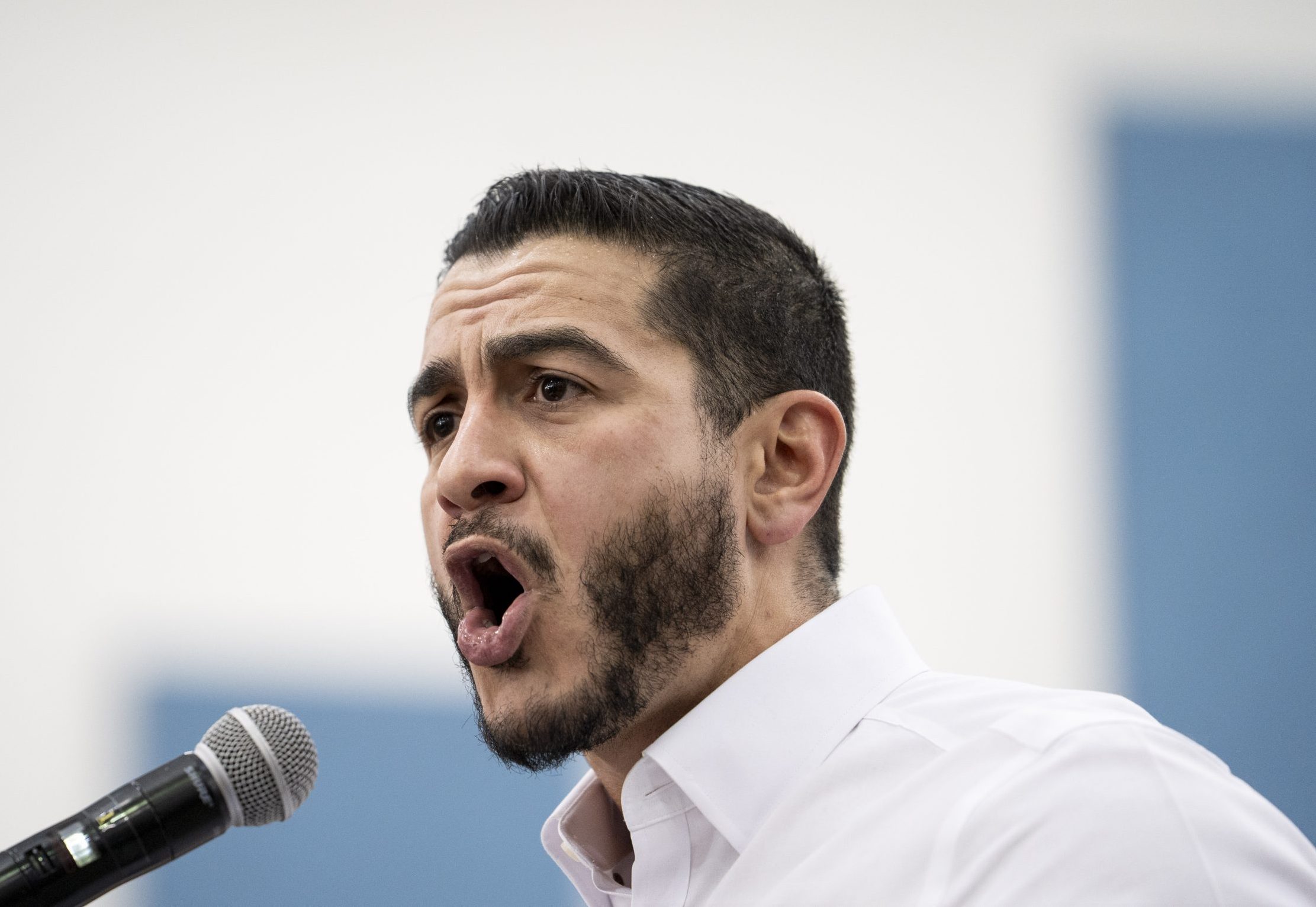




Terry Moran, an anchor and on-air personality ousted from ABC News after describing as "a world-class hater" President Trump and Trump aide Stephen Miller, turns out to be a hater himself.
Moran went on an anti-Israel rant on social media this week. "Netanyahu has lost for Israel the support of most of the American people," he wrote. "Gone in the slaughter and ruins of Gaza. Gone in Israel’s campaign of mass death, widespread displacement, hunger, destruction of homes, hospitals, schools, and the social fabric of an entire people." It initially struck me as the latest in a long list of examples of "mainstream" media figures disclosing themselves as partisans, like former CBS News "Justice Correspondent" Scott MacFarlane joining the left-wing media company MeidasTouch, which got its start as an anti-Trump political action committee.
At least Moran and MacFarlane have left their networks; not so Nicholas Kristof, who remains a columnist at the New York Times and made a similar point: "an astonishing turnaround in public opinion, one of the legacies of Bibi Netanyahu." Kristof's New York Times stablemate Ezra Klein devoted a recent hour-and-a-half-long video podcast to "Matt Duss, Senator Bernie Sanders’s former foreign policy adviser," maundering on about "the Gaza genocide," and how "that war did not begin on Oct. 7, as you know. It did not come out of nowhere. Israel was not just sitting quietly, minding its own business. There was an ongoing campaign of expulsion, of ethnic cleansing, of violence that existed in the Palestinian territories and had done so for many years."
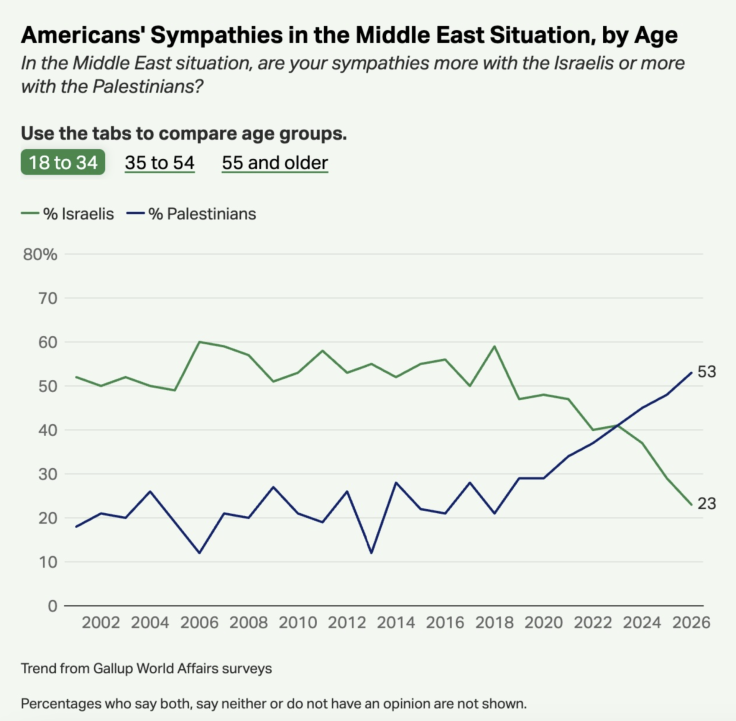
Then William Galston, a columnist for the Wall Street Journal opinion page, weighed in with a column about how "Netanyahu Has Lost Middle America." It blamed the Gaza war and Netanyahu’s leadership for the fact that "For the first time since Gallup began measuring attitudes on this matter a quarter-century ago, more Americans sympathize with the Palestinians than with the Israelis." Galston is the center-left ideological diversity on the Journal page, but he’s no Moran, Kristof, or Duss. His piece warrants a substantive response, not just a dismissive eye-roll.
The survey data deserve a sophisticated look. The same demographic groups driving the decline in support for Israel—young people and Democrats—are also driving the stunning decline in pride in America, which, according to Gallup, has hit a record low: "more Gen Z Democrats say they have little or no pride in being an American (32%) than say they are extremely or very proud." If you spent all your free time watching TikTok or YouTube videos from Qatar-owned Al Jazeera or Turkey-owned TRT World about how racist America is, you might hate Israel and America, too. Even the supposedly elite college students from this generation "can’t read books," according to the Atlantic. The Ivy League students are "suffering from religious illiteracy," according to a Princeton professor, Gregory Conti, writing in the Washington Post. While there are some encouraging signs of a religious revival, the long-term U.S. trend has been toward secularism, with Gallup finding those who report "no" hitting a new high in 2025. Gallup reports that more Americans identify "none" as their religion than as Catholic. In the 18-29 age group, "none" is 36 percent, and Protestant/nondenominational Christian is at 33 percent. A lot of people in this age demographic, sadly, are chronic cannabis users, which also isn’t exactly great for their critical thinking abilities.
Israel’s 1948 Declaration of Independence begins with Biblical and religious claims: "The Land of Israel was the birthplace of the Jewish people. Here their spiritual, religious and political identity was shaped. Here they first attained to statehood, created cultural values of national and universal significance and gave to the world the eternal Book of Books." Pope John Paul II’s note in the Western Wall in 2000 called the Jews "the people of the Covenant" and said "God of our fathers, you chose Abraham and his descendants to bring your Name to the Nations." For Americans who don’t believe in God or the Covenant and haven’t read "the eternal Book of Books" or, for that matter, any book, the Zionist idea of a Jewish homeland in the land of Israel may seem quixotic. There are secular cases for Zionism—it’s not as if ISIS or Hezbollah or Hamas, which throws gays off of roofs, should naturally appeal to feminist American college students, and Zionism was a success against British and Ottoman colonialism—but the secular animus against religion and nationalism (Palestinian nationalism and Ukrainian nationalism sometimes excepted) is a powerful one to overcome. Add to that the flood of recent immigration to the U.S. from Muslim cultures (Mayor Zohran Mamdani and his voters, for example) and the challenge compounds.
The investigative reporting geniuses who were so keen to see the hand of Russia, Russia, Russia in Donald Trump’s 2016 election victory seem remarkably incurious about the roles Turkey, Qatar, Iran, China, and the Palestine Liberation Organization have played in shaping U.S. domestic opinion, notwithstanding a 2024 press release from President Biden’s director of national intelligence, Avril Haines, that "Iranian government actors have sought to opportunistically take advantage of ongoing protests regarding the war in Gaza."
In other words, Netanyahu and the Gaza war aren’t the only variables. America is also a variable. The information environment is a variable. The Iran war is another variable. It is not over yet. If it concludes with a joyously free Iran allied with Israel and America and pumping plentiful and cheap oil and gas that gets paid for in U.S. dollars, Israel’s poll numbers—and Trump’s—will climb. A White House signing ceremony for Saudi Arabia, Indonesia, Kuwait, Pakistan, Iran and Lebanon joining the Abraham Accords would also help Israel’s popularity—and Trump’s. That won’t happen so long as a hostile Iranian regime armed with missiles, drones, and proxies and the ability to close the Strait of Hormuz remains in power in Tehran.
The Gallup data are misleading because they omit respondents who say their sympathies are with both Israel and the Palestinians, with neither, or who have no opinion. Gallup itself concedes that the 5-percentage-point difference by which American sympathies are with the Palestinians over Israel in the latest poll "is not statistically significant." As recently as September 2025, Pew found Americans viewed the Israeli government more favorably than Hamas or the Palestinian Authority, and also viewed the Israeli people slightly more favorably than the Palestinian people.
Netanyahu has been prime minister of Israel on and off since 1996. The decline in Americans’ sympathy for Israel predated the Gaza war, as evidenced by a former editor of the The New Republic, Peter Beinart, publicly abandoning Zionism in July of 2020, by the Harvard Crimson in 2022 editorially endorsing a boycott of Israel (while Naftali Bennett was prime minister in a coalition government that included Arab parties and Mansour Abbas as a minister), by the Harvard student organizations that came out with their letter on October 7, 2023, stating, "We, the undersigned student organizations, hold the Israeli regime entirely responsible for all unfolding violence" and "the apartheid regime is the only one to blame."
My own bet is that the U.S. will eventually get back on track—Trump’s election has already set some of this in motion, including some changes to immigration policy and the forced sale of TikTok, if not yet a thorough cleanup of the feeds emanating from there or other platforms. The eventual end of the wars and of the pandemic will make it easier for young Americans to go to Israel and to see the reality of the situation for themselves. If the travelers so choose, they can fly there via the United Arab Emirates, which sees Israel as a promising partner. The hunger for meaning, purpose, and community may fuel a return to Christianity and Judaism, to churches and synagogues. Eventually people will figure out that the real dictators aren’t Trump and Netanyahu but Erdogan, Xi, and Sheikh Tamim bin Hamad Al Thani of Qatar. Netanyahu will eventually die or retire or lose an election, and his successors will demonstrate the reality that Netanyahu wasn’t to blame for all the world’s Israel-hate. Until then, treat monocausal explanations—whether they come from former ABC anchor Moran or from the Brookings Institution's Bill Galston—with extreme skepticism.