
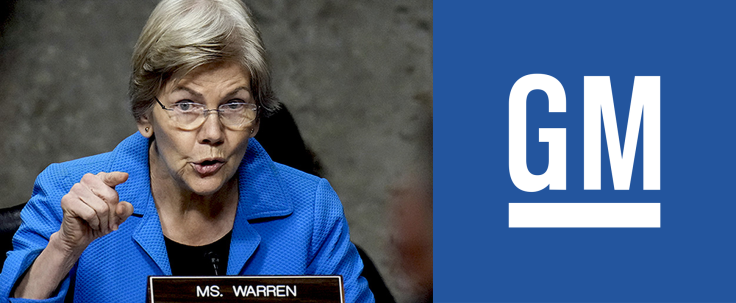
Senator Elizabeth Warren, the Democrat from Massachusetts who is set to take over as chairman of the Committee on Banking, Housing, and Urban Affairs, is trying to block General Motors from a $20 billion stock buyback plan.
A letter from Warren to the GM CEO, Mary Barra, complains that the buyback would "enrich … shareholders" and "prioritize investor profits," Bloomberg News reported. Isn’t that precisely what corporate managements are supposed to do?
Senator Warren has frequently expressed concern about the federal deficit and also desire for increased federal spending. If longtime GM shareholders sell, they’ll have to pay capital gains tax. You’d think Warren would be happy about the potential for capital gains tax revenue from the buyback plan. Yet even the prospect of more federal tax revenue for Warren and her fellow politicians in Washington to spend apparently isn’t enough to allay her anxiety about the danger that some shareholder, somewhere, might—heaven forbid—make a profit.
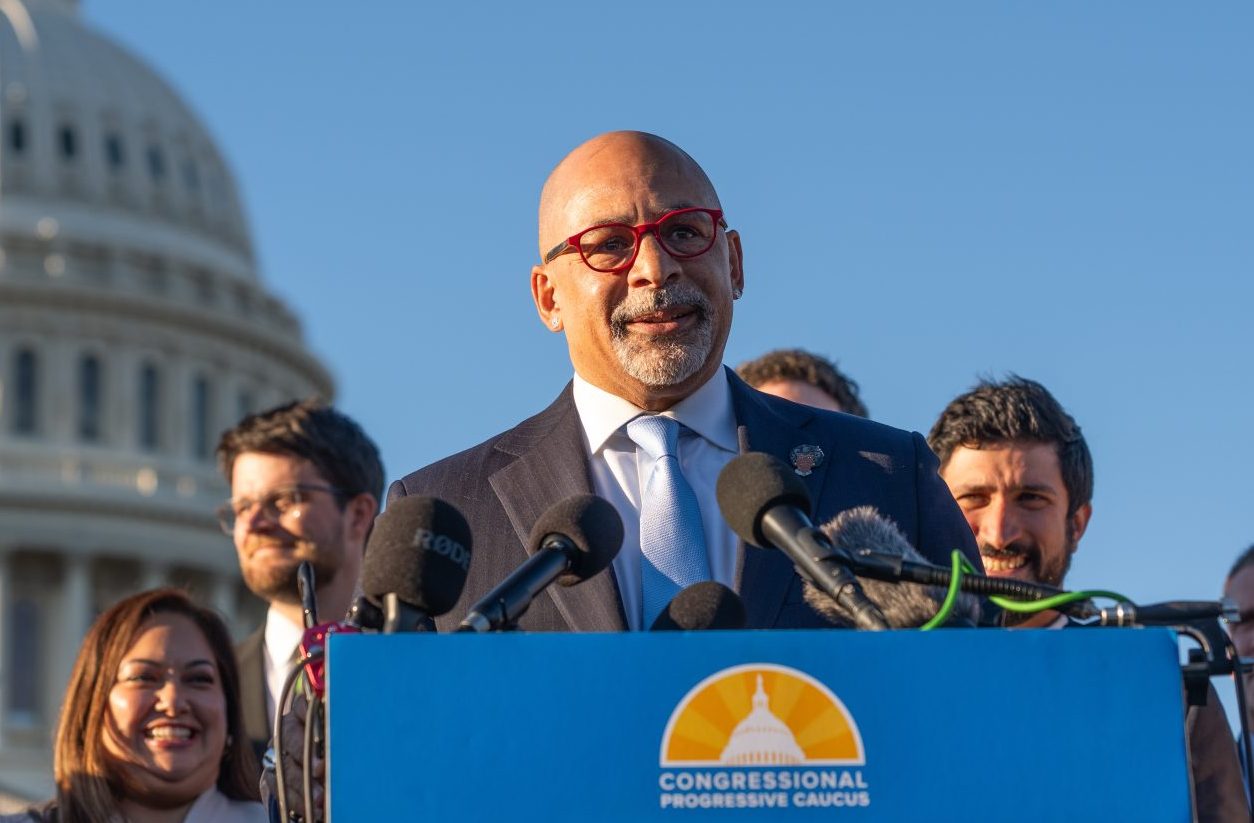
If this is going to be Senate Democrats’ attitude toward shareholder profits, it’s going to be a long and rough two years for American investors. Warren appears to have been inspired by the incoming senator from Michigan, Abdul El-Sayed, who campaigned alongside socialist Bernie Sanders. On October 21, immediately after GM announced the buyback, El-Sayed posted, "GM just announced the biggest stock buyback in automotive industry history. Instead of investing in their workers or new product lines, GM executives are robbing from the future to pay themselves and their shareholders today. Stock buybacks should be illegal."
If it were left up to El-Sayed, the American auto industry, and our entire economy, would be as pathetically stagnant and impoverished as that of Egypt, his ancestral home. The per capita GDP there is between $3,000 and $4,000 a year, where it’s been stuck for about a decade.
Warren, along with the Democratic leader, Chuck Schumer, and the top Democrat on the Senate Finance Committee, Ron Wyden, introduced legislation in June proposing to quadruple the tax on stock buybacks. That effectively gives companies an incentive to do the buybacks now before the Democrats take over and quadruple the tax.
Schumer, who was first elected to Congress in 1980 and who before that served five years as a member of the New York State assembly, has been a longtime campaigner against stock buybacks. As a Senate Democrats press release put it, "Leader Schumer has been outspoken on the need to increase taxes for stock buybacks. In 2019, he penned an op-ed with Senator Sanders calling for a limit to corporate stock buybacks. In 2022, he led the passage of the Inflation Reduction Act, which enacted the original stock buyback tax. … Schumer introduced, with Senators Wyden and Bennett (D-CO), legislation that would increase the excise tax on stock buybacks of large oil and gas companies from 1 percent to 25 percent."
Warren and the rest—except for Sanders, who is an independent socialist who caucuses with the Democrats—call themselves Democrats. What could be more democratic than allowing shareholders to choose for themselves whether to sell back their stock or hold onto it? That’s essentially what a buyback plan does. For shareholders who prefer to reallocate their cash away from GM toward other areas or companies they view as having more future promise for the price—whether super intelligence, space, nuclear energy, quantum computing or nanotechnology—they can do that. For shareholders who want to stick with GM, they can hold onto the stock. Perhaps some shareholders might even want to take their GM profits and donate them to Harvard, where Warren’s husband, Bruce Mann, is paid $424,873 a year as a law professor.
GM went bankrupt in 2009—and had a long decline before that—in part because management didn’t pay enough attention to customers or shareholders. The politicians will take shots at corporate management either way—for not making enough money, for making too much money. The perfect amount of money, from the Schumer-Warren view, is the precise amount that lets the company management and its lobbyists give campaign contributions to Schumer without leaving too much afterward for the shareholders.
Senator Warren’s office and GM did not immediately respond to inquiries from the Washington Free Beacon.
The politicians may have alternative preferred proposed uses for the capital—pay the workers more, or build factories for electric cars. But in a free enterprise economy, it’s the owners of a company—and the management they elect—that get to choose how to allocate capital. Allocating private capital is not the job of senators, even those like Senator Elizabeth Warren, who used to be professors at Harvard Law School, or Senator-elect El-Sayed, who has an M.D. from Columbia University (as Columbia has been publicly celebrating in the election’s aftermath) and a D.Phil from Oxford University. If the senators think they know better than management how to allocate corporate capital, let them buy shares and wage a proxy campaign. The alternative approach—performatively throwing their weight around with threatening political letters selectively shown to Bloomberg News—befits a dictatorship. There are places with state-owned automakers—North Korea, Communist China, Russia, Iran. Those are not free countries.