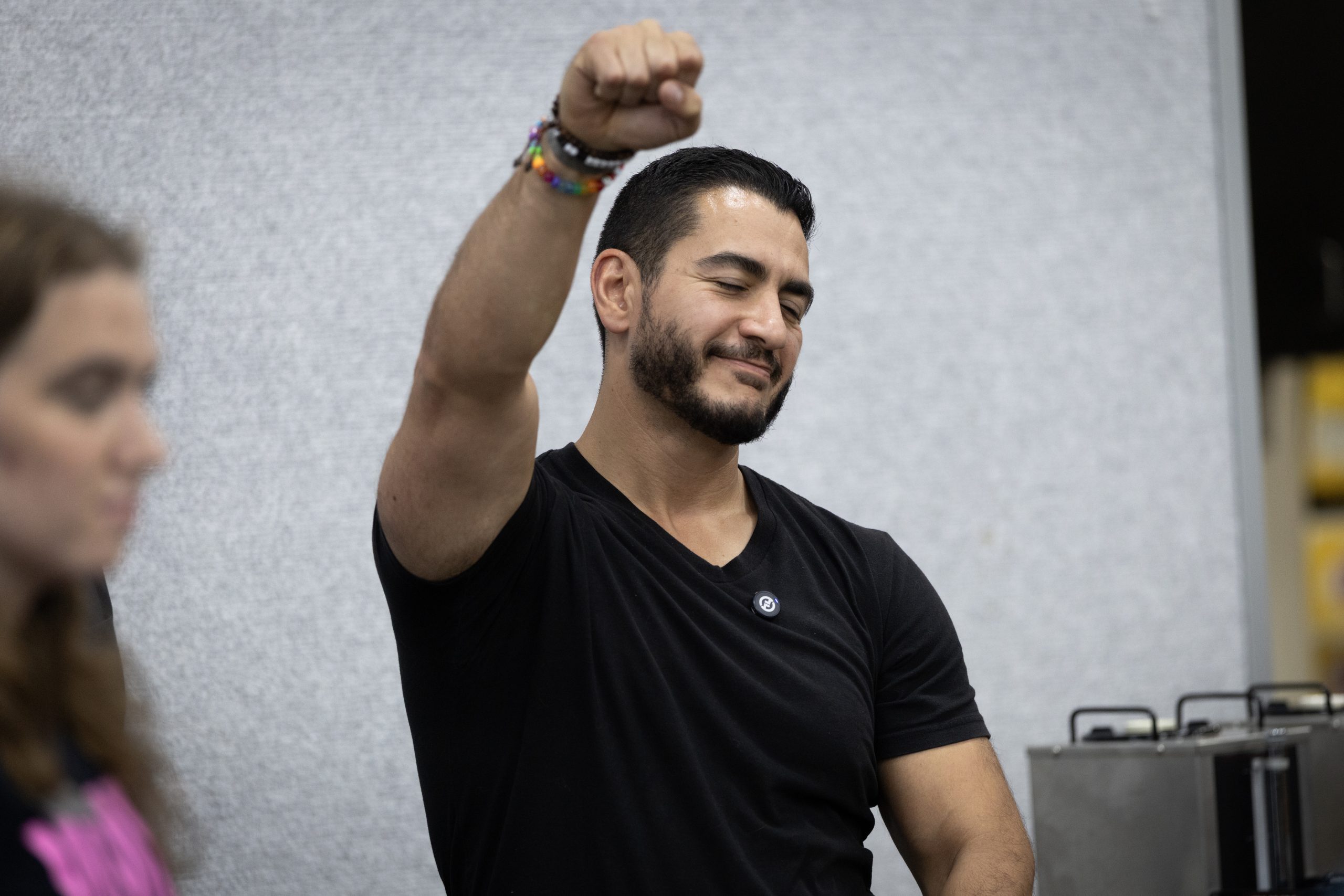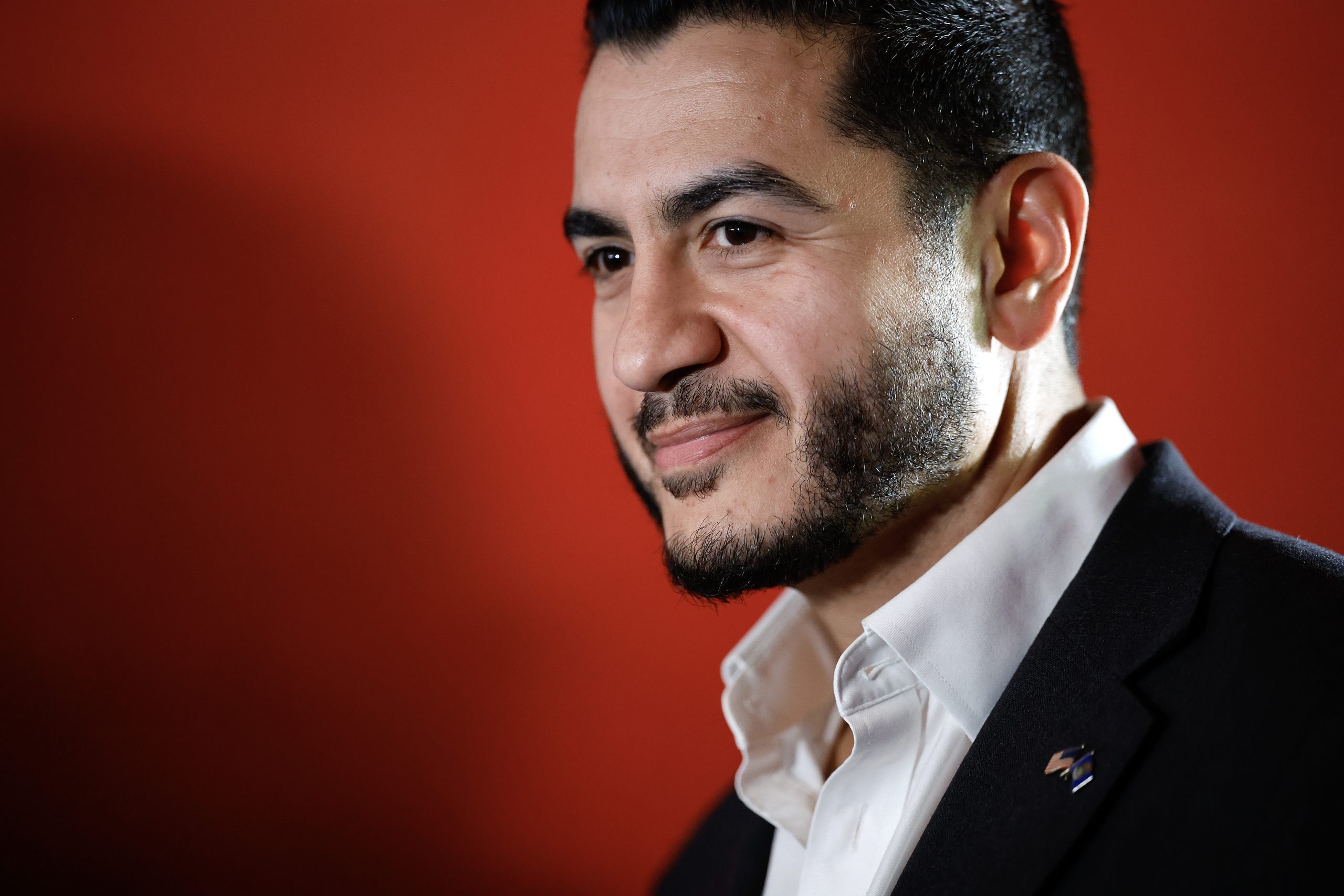


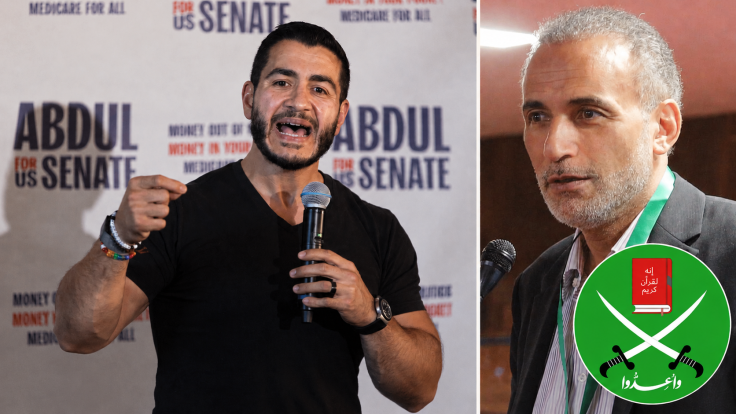
Left-wing Michigan Senate candidate Abdul El-Sayed said he drew inspiration from the "excellent" works of a disgraced Oxford professor—and grandson of the Muslim Brotherhood founder Hassan al-Banna—best known for his diatribes against "Jewish intellectuals" and for being sentenced to 18 years in French prison for raping three women.
The Democratic Senate hopeful told the SenseSustainability podcast in a 2011 interview that he draws inspiration from Tariq Ramadan, the grandson of the Muslim Brotherhood founder al-Banna, the extremist Egyptian imam. Ramadan is the son of Said Ramadan, who was married to al-Banna's daughter and emerged as a top Brotherhood leader in the wake of al-Banna's death.
Ramadan had been scheduled to teach at Notre Dame but was barred from working in the United States in 2004 after the George W. Bush administration revoked his work visa, citing his donations to two Swiss and French-based charities linked to Hamas, the Committee for Charity and Support for the Palestinians, and the Association de Secours Palestinien. The Treasury Department designated the groups as terror fundraising organizations in 2003.
Ramadan was appointed chair of Contemporary Islamic Studies at Oxford University in 2009, the same year El-Sayed began attending Oxford as a Rhodes Scholar. Two years later, El-Sayed cited Ramadan as one of the three authors from whom he draws "inspiration."
Ramadan left Oxford in 2017 after he was accused of sexual misconduct with minors, allegations he said were part of a "campaign of slander clearly orchestrated by my longtime adversaries." More women came forward accusing Ramadan of rape in subsequent years, and a Paris criminal court sentenced him to 18 years in prison in March for several counts of rape. Ramadan broke a court order by leaving France for Switzerland and did not attend the trial, claiming anxiety and depression, though a court found him fit to attend.
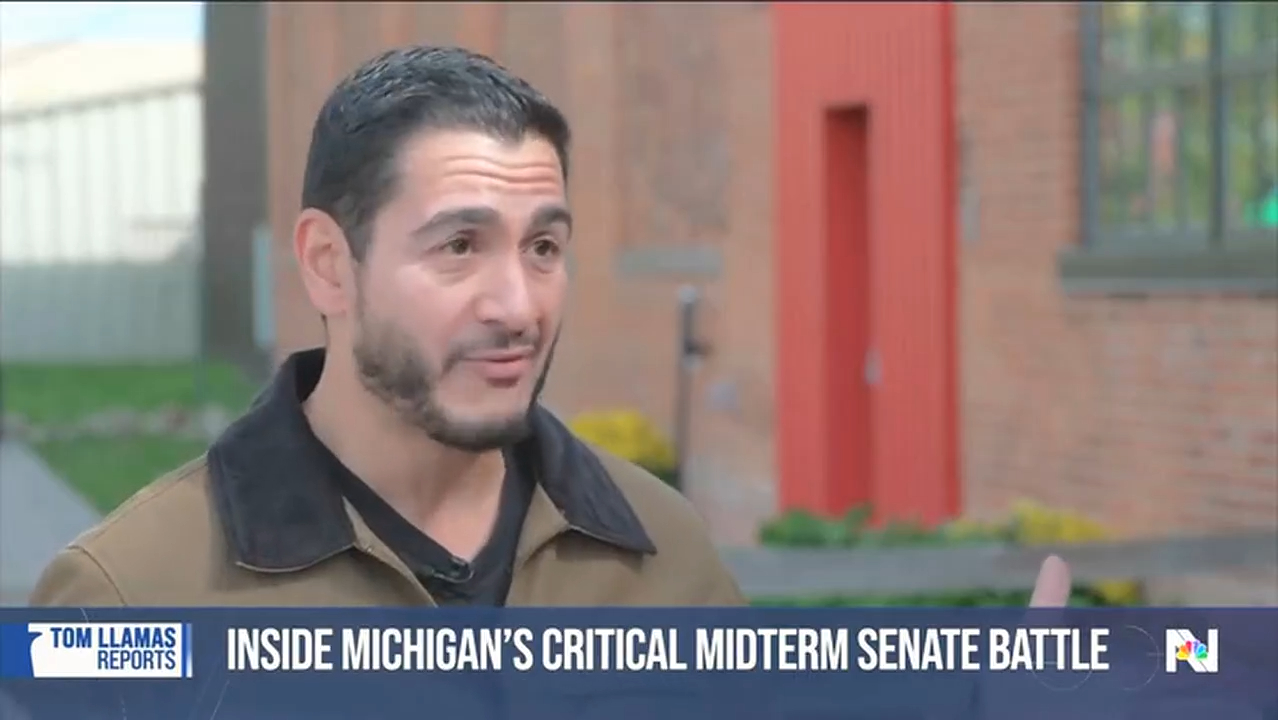
El-Sayed's deep academic interest in the Muslim Brotherhood and familiarity with its leading academic figures raises questions about his professed ignorance of his family's ties to the organization. After telling NBC News's Kristen Welker on Sunday that his family had no ties at all to the Muslim Brotherhood, El-Sayed bristled at follow-up questions from the network's Tom Llamas on Wednesday, who pointed to Washington Free Beacon reporting on 2012 and 2013 tweets from his sister, Eman Abdelhadi, celebrating El-Sayed's mother's college activism in the organization and stating that she has relatives who have been "jailed" for their ties to the group.
"You want to ask me about what was happening in Egypt in 1970? Are you serious?" El-Sayed told Llamas. "I get it, but you were asked a question," Llamas responded. "Yeah, I'm telling you, like, we—I have no ties. We have no ties," El-Sayed said. "So your mother had no ties?" asked Llamas. "I have never had these conversations with my mother," said El-Sayed. "Like, you're using hearsay evidence from a tweet. This is not serious."
El-Sayed has a serious academic interest in one of the organization's leading scions, he said in the 2011 interview. "One of my other interests—in the maybe non-academic interests—is the question of Islam in the West. And this is something I'm very interested in for personal reasons," El-Sayed told the SenseSustainability podcast. "And for that reason I would recommend—a third author would definitely be Tariq Ramadan, who's actually out of Oxford, and a lot of his work—he's got several books out talking about reconciling Islam and Western ideals and a lot of his work is excellent."
Ramadan's writings sparked controversy in the years prior to El-Sayed's remarks.
His 1994 University of Geneva pre-doctoral thesis on his grandfather, al-Banna, praised the Muslim Brotherhood founder's "profound spirituality and immense humanity, completely ignoring the Brotherhood's violent anti-Semitic campaigns" and was only accepted after Ramadan argued that his thesis defense committee was discriminating against him for being Arab, according to French media reports. Years later, in a 2003 article published in France, Ramadan took aim at "Jewish intellectuals," arguing that they can no longer be considered "universalist thinkers" because they place their support for Israel above their support for other groups.
The article, which also blamed Jews for the Iraq war, prompted condemnations from prominent French intellectuals like Bernard-Henri Lévy, who accused Ramadan of writing an "anti-Semitic text." Ramadan was dropped as a visiting professor at Erasmus University in the Netherlands in 2009 after it was discovered that he was also employed by the Iranian state-controlled media outlet PressTV.
Though Ramadan has billed himself as an Islamic "reformist" to Western audiences, critics have labeled him an "Islamist in sheep's clothing," citing his refusal to condemn brutal Islamic laws. In a televised 2003 debate with France's then-interior minister Nicolas Sarkozy, he refused to endorse a ban on stoning women who commit adultery, instead calling for a "moratorium," which he said would "start a dialogue." Ramadan has also called homosexuality "a disturbance, a dysfunction, an imbalance" and called for "reforming" gays, according to the French journalist Caroline Fourest.
El-Sayed's praise for Ramadan sheds new light on the Senate hopeful's ideological influences. It also marks the latest example of El-Sayed praising a figure associated with the Muslim Brotherhood.
In the 2020 documentary How to Fix a Primary, which followed El-Sayed's failed gubernatorial campaign from two years prior, cameras captured El-Sayed showing off his wedding photos while sitting in what appeared to be his father-in-law Tayeb Jukaku's living room. El-Sayed asked the filmmakers not to film a bookshelf in the room because he wanted to "keep the shot secular." They filmed the shelf anyway, and it included works by an unindicted co-conspirator of the 1993 World Trade Center bombing, a member of an Islamic group that sought to establish a Sharia-governed state, and a Muslim cleric whose writings have influenced al Qaeda and other major terrorist groups, the Free Beacon reported.
El-Sayed also appears to have a personal relationship with Mohamed Soltan, the son of a senior Muslim Brotherhood official who called to kill Zionists. In a since-deleted Substack post, he called Soltan, who was jailed in Egypt for his role in a series of 2013 protests aimed at reinstating Egypt's Muslim Brotherhood-affiliated president, Mohamed Morsi, his "friend," the Free Beacon reported.
El-Sayed's campaign did not respond to a request for comment.
Ramadan's grandfather, al-Banna, founded the Muslim Brotherhood in Egypt in 1928, while his father, Said Ramadan, succeeded al-Banna as a senior leader in the Islamist movement. In 1960, after the elder Ramadan was exiled from Egypt, Said Ramadan founded the Geneva Islamic Centre in Switzerland as the "main headquarters of the Muslim Brotherhood in Europe," and the "first of a score that Ramadan worked to set up throughout Europe with the financial support of Saudi Arabia," according to Lorenzo Vidino, the director of George Washington University's Program on Extremism. The brotherhood went on to spawn Hamas in the 1980s.
Tariq Ramadan's brother, Hani Ramadan, currently leads the Geneva Islamic Centre. While Tariq Ramadan has denied any official role with the Geneva Islamic Centre, he was listed as an administrator in the group's public filings, according to records obtained by Fourest, the French journalist.