




When Stefan Merrill Block is about 12 years old, his paternal grandmother, Mimi, comes to visit his family in Texas. "The boy should be in school," the elderly Jewish woman tells his mother. "It's a Thursday! A boy on Thursday should be in a school learning a thing. He needs the—what do they call it? The curriculum." Stefan's mother, who made the decision to homeschool her younger son for five years starting in elementary school, tells Mimi, "Actually, the new theory in education is that what matters most is teaching a child to love to learn, to let them follow their interests."
What may have seemed like a cutting-edge theory 35 years ago is actually perfectly mainstream practice in education now. Teachers—at both public and private schools—regularly talk about the need to teach topics and assign projects that are directed by student interests, not by any set curriculum. Even the classes that still read books—and there are fewer and fewer of them—rarely all read the same book. Students in elementary school are encouraged to find something that sparks their interest—usually a story about someone who looks and acts like them—and then check whether it is at their reading level by counting the number of words they don't know on a page. And just like Stefan's mother encourages him to spend his afternoons doing projects and presentations on whatever happens to strike his fancy, so students who are in regular school are now increasingly tasked with the same things. The skills necessary to succeed are not reading or writing or learning about history or science. They are Googling—or using ChatGPT—to compile a list of facts and then making them look nice on Canva.
But Block's mother was clearly ahead of her time. And also nuts. Keeping her son home from school for five years was partly the result of her desire to make sure that what she thought of as her son's genius was not stifled. But it was also because she was lonely and wanted her with him during the day when her other son and husband were at school and work. Oh, and also she didn't want him to grow up, holding him like a baby in the pool in their backyard, trying to bleach his hair with peroxide back to the blond it was when he was a toddler, and forcing him for months to crawl around the house on his hands and knees as an adolescent (because she read somewhere that it is at that stage of childhood that kids' handwriting skills are developed). She also doesn't bring him to the doctor for several years because she has some interesting theories about modern medicine as well.
Block, too, was lonely. Even though there were two other people who lived with them, they seemed largely absent from his childhood. His father was at work all day, and his brother (though not a particularly popular kid) had friends to hang out with. Block's world, by contrast, grew smaller and smaller—from a few friends at elementary school to one boy he could have playdates with, to no one his own age and no outside activities. He would try to make the time pass watching daytime television and reading comic books and running errands with his mother. At times he suggested to his mother that he was not happy with the arrangement, but mostly she made him feel guilty about wanting to leave her, and he kept quiet.
When Block finally convinced his mother that he should return to school, in ninth grade, he was a laughingstock. His mother made him bring a typewriter to school and wheel around a small filing cabinet from class to class. He was mocked and beaten by the other kids. And he didn't have the most basic grasp of subjects—he thought the Civil War was called that because of the etiquette displayed by both sides. The one exception was math, where his mother let him take a correspondence course.
Interspersed with Block's memories of loneliness and humiliation is a history of homeschooling. As he noted, "many families on both ends of the political spectrum wanted to exit a culture they no longer trusted and cloister themselves in a profoundly smaller community of their own making."
But it was the lobbying pressure of traditional Christian groups that resulted in a growing number of states creating legal avenues for families to choose homeschooling for their children. (Block's family was not religious. His mother had her own ideas about how traditional schooling destroyed children's curiosity and potential.) He explains how "legislators bowed to the pressure and with dizzying speed, homeschooling became legal across the country. In many states, there was hardly any regulation." Block discovers with shock as an adult that "in Texas, for example, a parent didn't need a high school degree to homeschool; actually, a parent convicted of child abuse or sexual assault could be under investigation by Child Protective Services and still be within legal rights to 'homeschool' as they saw fit, with no state requiring social workers or inspectors to come check on the child's education or welfare."
Though Block says he doesn't intend for the book "to be an indictment of homeschooling in general," he does believe the lack of oversight "has become a crisis." In a case that is eerily similar to Block's, 14-year-old twins were discovered in October by child protective services in New York held captive in their home. They each weighed about 50 pounds—their mother had been feeding them only formula and infant cereal because she wanted them to remain babies. She had filed fraudulent homeschooling papers with the city.
Block is not wrong about the need for basic oversight in the context of child abuse. There are a disturbing number of cases in which parents who are being investigated for or have been clearly found to be abusing their children, then pull them out of school to prevent any further reports of their actions.
In 2024, Gavin Peterson was murdered by his father, brother, and stepmother after years of abuse in Utah. There were multiple reports from his school of Gavin's injuries, of his looking for food in the trash because his parents were starving him. School officials were told by his family not to give him food. And then he was pulled out of school entirely shortly before his death. The grown man found to be in captivity by his stepmother in Connecticut after decades of abuse and starvation had been reported by school officials, but his stepmother told officials she would henceforth be homeschooling him. These cases are few and far between, but some basic due diligence by child protective services should be in order for families who have already demonstrated clear patterns of abuse.
None of this would have stopped Block's mother from homeschooling him. Though making him crawl around the house till his hands were raw might somehow come to the attention of school officials, it's not likely. Would his mother's mental instability have come to the attention of anyone outside his home if it didn't seem to alarm the other members of his own family?
Most of what Block is alleging here is what would be called educational neglect. And the question that advocates of greater freedom to homeschool would argue is "compared to what?" When fewer than one in three students in the whole city of Chicago are reading at grade level, it is hard to suggest that homeschooling is the real problem here.
And since the pandemic, the opponents of homeschooling don't have a leg to stand on. We sent tens of millions of children home to be educated on Zoom school for months, if not years. The policy was endorsed by politicians and teachers' unions. And, far from being a one-off, teachers in Minneapolis just sent everyone home again to protest the presence of ICE agents in the city.
In a perfect world, Americans (or at least the residents of each state) would be able to agree on some basic standards of literacy and math, to which homeschoolers would also adhere. But public-school officials and government officials who oversee them have squandered any authority they have had to reasonably enforce such standards.
Block, despite his concerns about bullying when he reenters school and what he sees as the long-term effects his bizarre upbringing have had on him, seems to have become a successful, well-adjusted man, with a wife and kids. Indeed, by the time he graduated high school, he had caught up academically and, to a large extent, socially. Homeschooled will no doubt be used by opponents of homeschooling as evidence of the harmful effects of the practice—and Block has published an article in the New York Times on that particular topic. Perhaps it is better seen as a memoir about a difficult and strange relationship between a mother suffering from mental illness and a son who doesn't want to hurt her.
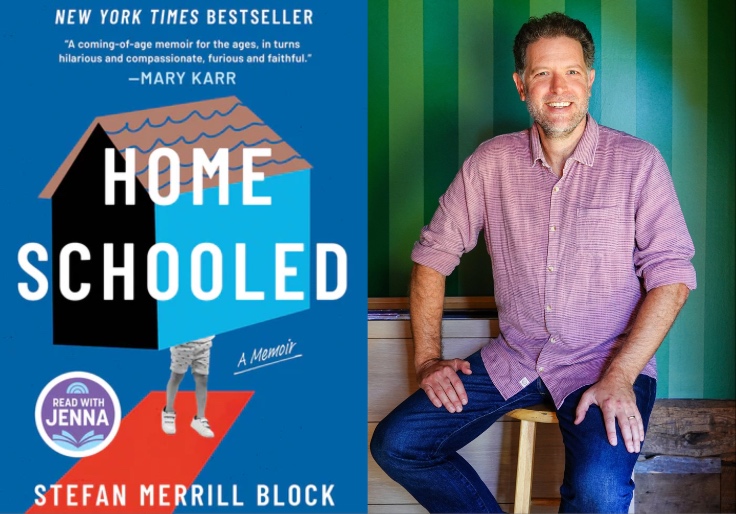
Homeschooled: A Memoir
by Stefan Merrill Block
Hanover Square Press, 288 pp., $30
Naomi Schaefer Riley, a senior fellow at the American Enterprise Institute and the Independent Women's Forum, is the author of No Way to Treat a Child: How the Foster Care System, Family Courts, and Racial Activists Are Wrecking Young Lives.