


When Manhunter was released in 1986, it was panned as a "hokey," "chic, well-cast wasteland," whose plot fell apart "like the shattered mirrors that figure in the crime" by the New York Times, the Los Angeles Times, and the San Francisco Chronicle, respectively. The mainstream media, as usual, were wrong. While the film was a box-office flop, making just $8.6 million on a $14-15 million budget, it has become a cult classic and is considered by some to be the best installment in the Hannibal Lecter franchise.
I would likely give that award to Jonathan Demme's 1991 The Silence of the Lambs. Nevertheless, Manhunter remains a close second, and the month of Halloween is the perfect time to make the case for the movie's deserved spot in thriller history.
The film was originally meant to be called Red Dragon, the same as Thomas Harris's 1981 novel the film was inspired by. The book was popular, earning a Washington Post review from the king of horror himself, Stephen King. A producer purportedly suggested the title change after another crime thriller, Year of the Dragon (1985), flopped.
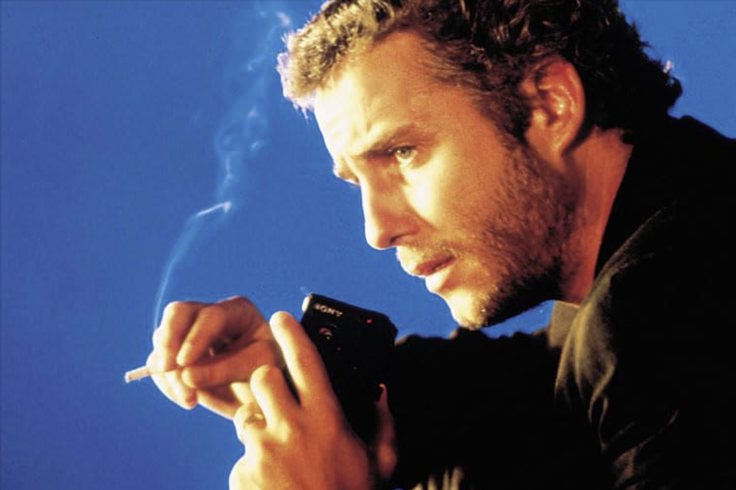
Directed by Michael Mann (producer of Miami Vice and nine years before Heat), Manhunter follows retired FBI criminal profiler Will Graham (William Petersen), who left the bureau following a mental breakdown—and a grisly wounding at the hands of Dr. Hannibal Lecktor (bizarrely changed from the original "Lecter"), played by Brian Cox. Cox is not the "small, lithe man" of Harris's novel, but his stature plays a good part in convincing the viewer of his capacity for brutal murder. This film introduced the world to the character who would go on to become one of the most talked-about villains in film history, and it deserves a great deal of credit for that, too.
At the movie's beginning, Graham is approached at his home by his old boss Jack Crawford (Dennis Farina, who played an occasional character on Miami Vice). Crawford has a job for Will—much to the dismay of Will's wife Molly (Kim Greist, who also appeared in Miami Vice). There's a new killer in America, and the FBI needs their old expert to catch him. Will promises his wife he'll only work on finding evidence and avoid actual danger, leaving her at home with their son. But upon visiting the gruesome, bloody scene left by the "Tooth Fairy" in Atlanta—so-named after the bite marks he leaves upon his victims—Will is hooked. The killer, during full-moon nights, smashes mirrors in the victims' houses after killing them, leaving small bits on their eyes and posing their bodies to "watch" his sick deeds. A piece of blonde hair and a DNA sample are found at one of the crime scenes, giving the FBI something, but not much, to go off.
The manhunt is on, and the next full moon is mere weeks away. Everything in this film comes with a sense of urgency: When Crawford needs a private jet or a helicopter on the roof (or both), he wants it "five minutes ago." With Will’s help, the FBI recovers partial prints, enough to convict the man if they can catch him. In his hotel room, Will watches home videos of the victims provided by the FBI to see what they were like. Throughout the movie, he obsesses over these films, sure that the key to the murders is hidden on the screen.
To "get the scent back," Will visits Lecktor at his psychiatric hospital cell in Baltimore, where the mise-en-scène tells the audience that the infamous cannibal is not the only one trapped. Each shot of their conversation prominently features the prison bars separating the conversants, as if they were both locked up. Color, too, plays a huge role in the film: Blue hues are seen when Will is with Molly; greens and purples characterize many scenes with the killer, evoking feelings of home and unease, respectively. The killer's home also has much gray, red, and orange, all colors associated with anxiety. As a result of all this, the film is beautiful. The score is also almost exclusively—with a notable exception of Iron Butterfly's "In-A-Gadda-Da-Vida"—non-diegetic, driving the tension and suspense for the viewer.
Lecktor, in a dazzlingly all-white cell, tells Will they're the same, and that if he wants to get the scent back, he should smell himself. Indeed, Will's career-ending mental breakdown was because he got too deep into the thoughts of a killer.
Through a pretend phone call to his lawyer, Lecktor acquires Will's home address. It is only after the warden finds a letter written on toilet paper apparently from the Tooth Fairy that the use for this address becomes clear. The letter contained instructions for Lecktor to communicate in code via personal ads in the National Tattler. Lecktor's ad, when decoded, told the Tooth Fairy to "kill them all, save yourself" with Will's address included.
Will takes an interview with Tattler journalist Freddy Lounds to cook up a falsified profile of the Tooth Fairy meant to enrage the killer. Will tells Lounds the killer molested all of his male victims, was impotent with members of the opposite sex, and likely had sex with his own mother. A sting operation to catch the killer fails—the Tooth Fairy had not been hunting Will, but rather Lounds, whose fake news infuriated the already unstable murderer. Journalists everywhere, take note.
He kidnaps Lounds, ties him to a wheelchair, and tells him the murders are meant to transform him into William Blake's "Great Red Dragon." In Harris's book, the killer has a back tattoo of Blake's illustration and even breaks into a museum to eat the original piece of artwork. Neither of these details made it into Mann's movie. Lounds is made to record a statement written by the Tooth Fairy—a name he detests—recanting his article, and is then set aflame in an unforgettable scene. All this, and we, the audience, still don't know the name of the killer!
Spoiler alert: He is revealed to be Francis Dollarhyde (again, a spelling change), a 6'7" blonde, balding film lab employee with a cleft lip. He is awkward about his physical appearance around everyone except maybe Reba, his blind coworker, whom he brings to his home where he watches, obsesses, rather, over home-video film of his next victims. But Dollarhyde later sees Reba escorted home by another coworker, whom he shoots to death in his rage before absconding Reba back to his place.
Meanwhile, Will figures out that the methods by which the killer gained entry to the victims' homes could have only been known by someone with inside knowledge of the houses, meaning either he cased the locations for much longer than the FBI checked for, or he… watched the same films Will was watching! Will calls the idea in, finds out both families had their films processed by the same company, and gets a list of employees. On that list, he finds the name and description of Francis Dollarhyde and beelines with Crawford to the man's listed address, with only seconds to spare.
The film is unmistakably a product of the 1980s. The score, settings, costumes, and indeed the way Dollarhyde chooses his victims are all relics of the past to an audience 40 years later. The homes and their interiors are modernist, making great use of the period-popular glass bricks. Characters are seen in floral-print shirts, shoulder-padded suits, oversized glasses, and salmon short shorts. Crockett and Tubbs served as lead costume designers. I jest, but Hugo Boss and Gucci both contributed to the film's wardrobe, and the soundtrack was critiqued at the time by the L.A. Times for being similar to Miami Vice, a complaint likely exacerbated by the prevalence of Miami Vice alumni in the cast. The movie does not have the same ending as the book, which King said left one "shaken and sober and afraid on a deeper level than simple 'thrills' alone furnish."
That and the other differences from Harris's phenomenal book do not make this a bad film by any stretch. In fact, quite the opposite. I like it better than the 2001 remake, starring Anthony Hopkins, Edward Norton, Ralph Fiennes, and Philip Seymour Hoffman.
Every October I rewatch The Silence of the Lambs. I think this year I'll rewatch Manhunter again, too.
Editor's note: This retrospective review is one in a series celebrating 1986, arguably the greatest year in movies—inarguably if you're Gen X.
Edwin Carlson is an assistant editor of the Washington Free Beacon.